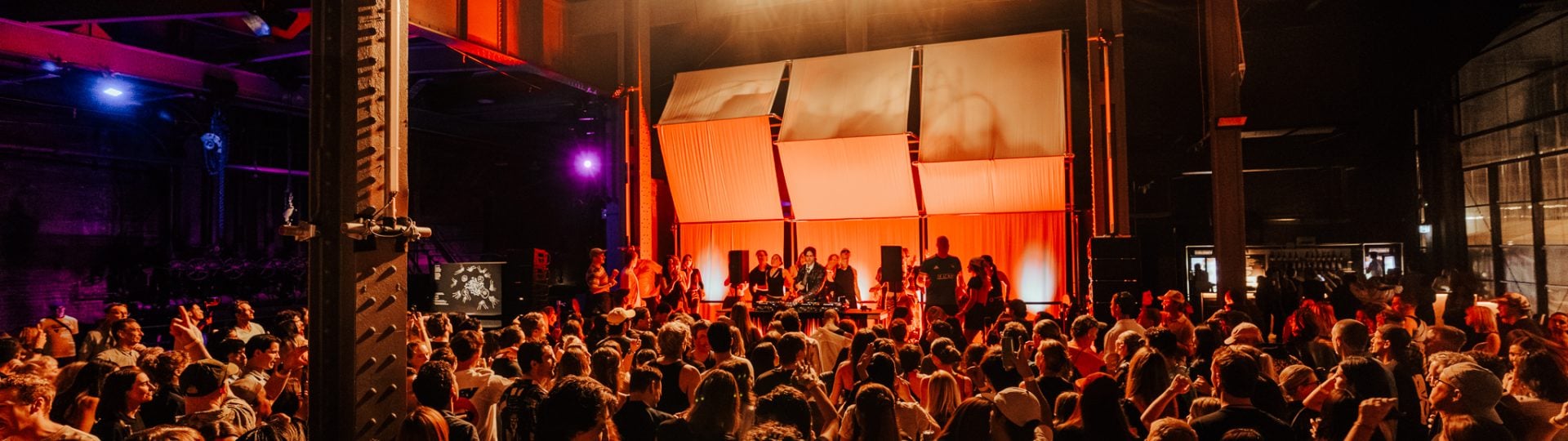
Sydney, Australia: The 25th Biennale of Sydney, titled Rememory, enters its final weeks before it closes on 14 June 2026, including a major Street Party as part of Vivid Sydney on 12 June with the line up announced today.
A major international art festival and the largest contemporary art event of its kind in Australia, the 25th Biennale of Sydney invites audiences to experience over 143 artworks by 83 artists and collectives from 37 countries and territories, alongside a dynamic public program, presented across the city.
Presented at Art Gallery of New South Wales, Campbelltown Arts Centre, Chau Chak Wing Museum at the University of Sydney, Lewers: Penrith Regional Gallery, Sydney Opera House and at White Bay Power Station, this expanded footprint reflects a deliberate focus on inclusivity and access, particularly across Greater Sydney, and is further amplified through public programs hosted at additional venues.
With the artistic direction led by internationally acclaimed curator Hoor Al Qasimi, the 25th Biennale of Sydney, titled Rememory, takes its name from celebrated author Toni Morrison, exploring the intersection of memory and history as a means of revisiting, reconstructing, and reclaiming histories. Through Rememory, artists from Australia and around the world reflect on their own roots while engaging with Sydney and its surrounding communities and histories, exploring global themes that connect us.
Announced today is the lineup of the free to attend Art After Dark: Last Light at White Bay Power Station on 12 June presented with Vivid Sydney. Transforming the iconic power station into a two-stage street celebration with music, food stalls and cutting-edge art, the lineup brings together Japanese-American indie artist Mei Semones, Central Desert DJ RONA, Acopia, Way Dynamic, US electropop act New York, Canadian / South Asian DJ duo Mastane, The Nikodimos Orchestra, and Kidskin.
Minister for Jobs and Tourism Steve Kamper said: “By bringing together the visionary programming of Vivid Sydney and the Biennale of Sydney, this free, after-dark experience at White Bay Power Station invites locals and visitors alike to explore world-class music, art and culture in a truly iconic setting.
“The NSW Government is proud to support vibrant, accessible events like this, which not only showcase diverse global talent but also energise our night-time economy and strengthen Sydney’s reputation as a premier destination for world-leading cultural experiences.”
Biennale of Sydney CEO, Barbara Moore said: “As Rememory, curated by Artistic Director Hoor Al Qasimi, enters its final days before closing on 14 June, we are proud of the powerful conversations and connections it has sparked across the city and Greater Sydney. The Biennale only truly comes to life through its audiences — through the time people spend with the works, the discussions they have, and the communities that gather in its spaces. Art After Dark: Last Light, presented with Vivid Sydney on 12 June, marks the beginning of our closing weekend — a free celebration that reflects the energy and generosity that have defined this edition. We invite everyone to join us, return, or visit for the first time, and be part of the final chapter of the 25th Biennale of Sydney before it closes on 14 June.”
Art After Dark: Last Light is a part of the NSW Government’s Open Streets Program, led by Transport for NSW.
WHAT TO SEE AT THE 25TH BIENNALE OF SYDNEY BEFORE IT CLOSES:
The iconic, industrial White Bay Power Station, featuring large-scale installations and artworks by acclaimed artists including Nikesha Breeze, Dennis Golding, Marian Abboud, Carmen Glynn-Braun, Edgar Calel and more. Visitors can join daily art tours Tuesday – Sunday to learn more about the artworks, and each Saturday and Sunday enjoy the Memory Lane Food Markets.
At the Art Gallery of New South Wales, a monumental 80 square meter floor canvas by the Ngurrara artists of the Great Sandy Desert Western Australia is displayed in Sydney for the first time, alongside works by celebrated artists including Abdul Abdullah, Frank Young and The Kulata Tjuta Project, Angélica Serech, Rose B. Simpson and more.
Spread across the Chau Chak Wing Museum, artworks range from monumental to intimate, including Ema Shin’s largest work to date, a two-meter-tall 3D handwoven heart, and Michael Rakowitz’s stop motion animation video work The Ballad of Special Ops Cody.
At first time exhibition location Lewers: Penrith Regional Gallery, audiences can experience Torres Strait artists John Harvey & Walter Waia’s powerful video work exploring the profound connection between the rising seas of Saibai Island in Torres Strait and the resilience of its people, as well as works by Monica Rani Rudhar, Wendy Hubert, Keith Piper and more.
At Campbelltown Arts Centre, dynamic and thought provoking works include Behrouz Boochani, Hoda Afshar and Vernon Ah Kee’s multi-channel video work Code Black/Riot, Basil Al-Rawi’s virtual reality installation of a traditional Iraqi ‘shanasheel’ home, and Helen Grace’s photographic series offering a symbolic snapshot of the power of a creative community organising to affect real change.
The Art After Dark program transforms White Bay Power Station on Friday evenings with music, art and outdoor food markets. The final three nights are curated by Vivid Sydney, with acclaimed Brooklyn-based ambient techno trio Purelink performing on 29 May, French-Senegalese, London-based singer-songwriter anaiis on 5 June, and the Biennale of Sydney Closing Night Party on 12 June will feature a free multi-stage party with music from across the globe.
To celebrate Africa Day 2026 at White Bay Power Station, Afro-arts collective BEKADE Entertainment curates a weekend of dynamic events. A special Art After Dark evening on 22 May showcases Afro and Afro-Caribbean artists taking to the stage, alongside Afro inspired food available on the night, and on 23 May, a full day celebration will feature traditional as well as modern African and Afro-Caribbean music and dance, food markets, arts and fashion stalls.
Projected free each evening on the Bennelong sails at the Sydney Opera House is Badu Gili: Story Keepers co-commissioned by the Sydney Opera House, Biennale of Sydney and the Fondation Cartier pour l’art contemporain. Badu Gili – meaning ‘water light’ in the language of the traditional owners of Bennelong Point, the Gadigal – explores First Nations stories in a spectacular six-minute animation featuring the artworks of Gooniyandi elder Mervyn Street and Inuk custodian Ningiukulu Teevee.
Family friendly events including a kids workshop on 23 May with Monica Rani Rudhar at Lewers: Penrith Regional Gallery, an afternoon of creativity at Chau Chak Wing Museum inspired by works on exhibition on 6 June, and a Family Day on 6 June at White Bay Power Station with FLENK Collective.
For the closing weekend from 13 – 14 June, audiences can enjoy a range of activations. On 13 June at White Bay Power Station, sample Andina Peruvian Cuisine cooked in Argentinian artist Gabriel Chaile’s functional adobe oven, and a performance by Nikesha Breeze within her monumental installation Living Histories. At Sydney Town Hall on 13 June, Richard Bell’s RESET invites audiences for conversations around what a constitution looks like in the 21st century.
Artists as part of the 25th Biennale of Sydney (2026) are:
Art Gallery of New South Wales
Abdul Abdullah (Australia / Thailand)
Angélica Serech (Maya Kaqchikel, Guatemala)
Chang En Man (Paiwan, Taiwan)
Dindga McCannon (USA)
Elverina Johnson (Yarrabah, Australia)
Frank Young and The Kulata Tjuta Project (Aṉangu Pitjantjatjara Yankunytjatjara (APY) Lands, Australia)
Kapwani Kiwanga (Canada / France)
Kuba Dorabialski (Poland / Australia)
Maritea Dæhlin (Norway / Mexico)
Merilyn Fairskye (Australia) & Michiel Dolk (Netherlands / Australia)
Nahom Teklehaimanot (Ethiopia / Kenya)
Ngurrara Artists (Walmajarri, Mangala, Juwaliny, Wangkajunga, Manjilarra / Great Sandy Desert, Australia) Rose B. Simpson (Santa Clara Pueblo, USA)
Sandra Monterroso (Maya Q’qchi’, Guatemala)
Taysir Batniji (Gaza, Palestine / France)
Yaritji Young (Aṉangu Pitjantjatjara Yankunytjatjara (APY) Lands, Australia)
Campbelltown Arts Centre
Basel Abbas (USA / Palestine) and Ruanne Abou-Rahme (USA / Palestine)
Basil Al-Rawi (Ireland / Iraq)
Behrouz Boochani (Kurdistan / Iran / Aotearoa (New Zealand)), Hoda Afshar (Iran / Australia) and Vernon Ah Kee (Kuku Yalandji, Waanji, Yidinji and Gugu Yimithirr, Australia)
Dread Scott (USA)
Feras Shaheen with Jonny Scholes
Helen Grace (Australia)
Joana Hadjithomas (Lebanon / France) and Khalil Joreige (Lebanon / France)
Mounira Al Solh (Lebanon / Netherlands)
Nasri Sayegh (Lebanon)
Nil Yalter (Turkey / France)
Norberto Roldan (Philippines)
Vicente Telles (USA)
Chau Chak Wing Museum at the University of Sydney
Belinda Kazeem-Kamiński (Austria)
Behrouz Boochani (Kurdistan / Iran / Aotearoa (New Zealand)), Hoda Afshar (Iran / Australia) and Vernon Ah Kee (Kuku Yalandji, Waanji, Yidinji and Gugu Yimithirr, Australia)
Benjamin Work (Tonga / Aotearoa New Zealand)
DAAR (DECOLONIZING ARCHITECTURE ART RESEARCH) (Palestine)
Derek Ogbourne (United Kingdom)
Dorothy Cross (Ireland)
Ema Shin (Japan / Australia)
Khalil Rabah (Palestine)
Lamia Joreige (Lebanon)
Michael Rakowitz (USA)
Niamh McCann (Ireland)
Richard Bell (Kamilaroi/Kooma/Jiman/Gurang Gurang, Australia)
Tuấn Andrew Nguyễn (Vietnam / USA)
Warraba Weatherall (Kamilaroi, Australia)
Lewers: Penrith Regional Gallery
Chang Wen-Hsuan (Taiwan / Netherlands)
Deirdre O’Mahony (Ireland)
Fernando Poyón (Maya Kaqchikel, Guatemala)
John Harvey (Kalaw Kawaw Ya/Saibai Island, Torres Strait, Australia) & Walter Waia (Kalaw Kawaw Ya/Saibai Island, Torres Strait, Australia)
Keith Piper (United Kingdom)
Khalid Albaih (Sudan / Norway / Qatar)
Kulpreet Singh (India)
Massinissa Selmani (Algeria / France)
Monica Rani Rudhar (Australia)
Nil Yalter (Turkey / France)
Nora Adwan (Palestine / Ireland / Norway / UK)
Wendy Hubert (Yindjibarndi Country, Australia)
White Bay Power Station
Abdullah Al Saadi (United Arab Emirates)
Ángel Poyón (Maya Cakchiquel, Guatemala)
Autumn Chacon (USA)
Bertille Bak (France)
Bouchra Khalili (Morocco / Austria)
CAMP (India)
Cannupa Hanska Luger (Standing Rock Indian Reservation, North Dakota / New Mexico, USA)
Carmen Glynn-Braun (Kaytetye, Arrernte, Anmatyerr, Australia)
Chen Chieh-jen (Taiwan R.O.C.)
Daisy Quezada Ureña (USA)
Dennis Golding (Kamilaroi/Gamilaraay/Biripi, Australia)
Edgar Calel (Kaqchikel, Guatemala)
Emily Jacir (Mediterranean)
Frank Sweeney (Ireland)
Gabriel Chaile (Argentina / Lisbon)
Gunybi Ganambarr (Yolŋu (Ŋaymil) people, Australia)
Hou I-Ting (Taiwan)
Hui Ye (China / Austria)
Joe Namy (USA / UK / Lebanon)
John Prince Siddon (Walmajarri, Australia)
Kiri Dalena (Philippines)
Marian Abboud (Australia)
Marianne Keating (Ireland / United Kingdom)
Maritea Dæhlin (Norway / Mexico)
Nancy Yukuwal McDinny (Garrwa / Yanyuwa, Australia)
Natalie Davey (Australia)
Nikesha Breeze (United States)
Nil Yalter (Turkey / France)
Peter Kennedy (Australia)
Richard Bell (Kamilaroi / Kooma / Jiman / Gurang Gurang, Australia)
Tania Willard (Secwepemcúlecw, Canada)
Tuan Mami (Vietnam)
Marrickville Town Hall
Gabriela Golder (Argentina)
Centenary Square, Parramatta
Joe Namy (USA / UK / Lebanon)
Blouza Hall
Mounira Al Solh (Lebanon / Netherlands)
The Children’s Choir (Australia)
Sydney Town Hall
Richard Bell (Kamilaroi / Kooma / Jiman / Gurang Gurang, Australia)
Key Dates
Saturday 14 March – Sunday 14 June 2026: 25th Biennale of Sydney open to the public
Admission is free.
For further information on the Biennale of Sydney, please visit biennaleofsydney.art.
Ends
MEDIA CONTACTS: For more information contact Articulate:
Jasmine Hersee, jasmine@articulateadvisory.com, 0451 087 196
Siân Davies, sian@articulateadvisory.com, 0402 728 462
Sasha Haughan, sasha@articulateadvisory.com, 0405 006 035
Kym Elphinstone, kym@articulateadvisory.com, 0421 106 139
ABOUT THE BIENNALE OF SYDNEY
The Biennale of Sydney is a leading international contemporary art event. It plays an indispensable role in Australia’s engagement with the world, and a meaningful role in the life of the nation. For over 50 years, the Biennale has been a unifying force in the Australian arts sector, embedding boldly creative art exhibitions and experiences in the everyday life of Sydney and putting the artistic excellence of Australia front and centre on the world stage. The Biennale of Sydney has commissioned and presented exceptional works of art by more than 2400 artists from more than 130 countries and territories. The Biennale of Sydney is committed to free access for all. https://www.biennaleofsydney.art/
ABOUT HOOR AL QASIMI
Hoor Al Qasimi is President and Director of Sharjah Art Foundation, the independent public arts organisation she established in 2009 as a catalyst and advocate for the arts in the UAE and beyond. She has expanded the Foundation’s scope to include major international exhibitions; residencies; commissions; publications; grants; performance and film festivals; architectural research and restoration; and educational programming.
In 2003, she co-curated Sharjah Biennial 6 and has remained Biennial Director ever since. She was elected President of the International Biennial Association (IBA) in 2017. Al Qasimi was also curator of Sharjah Biennial 15: Thinking Historically in the Present (2023).
Al Qasimi has curated major solo exhibitions at Sharjah Art Foundation, presenting works by CAMP (2022), Khalil Rabah (2022), Tarek Atoui (2020–2021), Zarina Bhimji (2020–2021), Amal Kenawy (2018–2019) and Yayoi Kusama (2016–2017) as well as a major touring retrospective of work by Hassan Sharif (2017 – 2021). She co-curated Kamala Ibrahim Ishag: States of Oneness, Serpentine Gallery, London (2022–2023), Bani Abidi’s survey at MCA Chicago (2021–2022); and a major touring exhibition of work by Joana Hadjithomas and Khalil Joreige (2016 – 2017).
Al Qasimi curated the UAE Pavilion, 56th Venice Biennale (2015), the second Lahore Biennale (2020) and Dream Projects, Dream City Festival, Tunis (2023).
President and Director of the Sharjah Architecture Triennial, Al Qasimi also serves as President of the Global Studies University, Sharjah, which includes The Africa Institute and The Asia Institute. In 2025, Al Qasimi curated the sixth Aichi Triennale, the first non-Japanese person to do so.
ABOUT FONDATION CARTIER POUR L’ART CONTEMPORAIN
The Fondation Cartier pour l’art contemporain is a space for artistic dialogue and experimentation that places the relationship between creation and exhibition at the heart of its institutional project, working in close collaboration with artists.
Since its creation in 1984 by Alain Dominique Perrin, then-President of Maison Cartier, it has exhibited artists from all walks of life, breaking down barriers between practices and fields of thought. Built over the years through a groundbreaking international programme, the Fondation’s collection reflects its multidisciplinary nature and the breadth of themes addressed in direct connection with contemporary issues.
The Fondation Cartier carries out its activities and commitments with the desire and ambition to make contemporary creation accessible to the widest possible audience. Through exhibitions projects and a programme of encounters and debates, live performances and talks, it creates bridges between cultural venues and fosters a genuine space for multicultural dialogue. With a new exhibition space, conceived by the renowned architect Jean Nouvel, on Place du Palais-Royal in Paris, the Fondation Cartier is reinventing itself in order to experiment and share with artists and audiences alike ever new ways of conceiving art.
Find out more here: www.fondationcartier.com