Nasri Sayegh
Born:
Lebanon
Lives in:
Beirut, Lebanon
Location
- Campbelltown Arts Centre
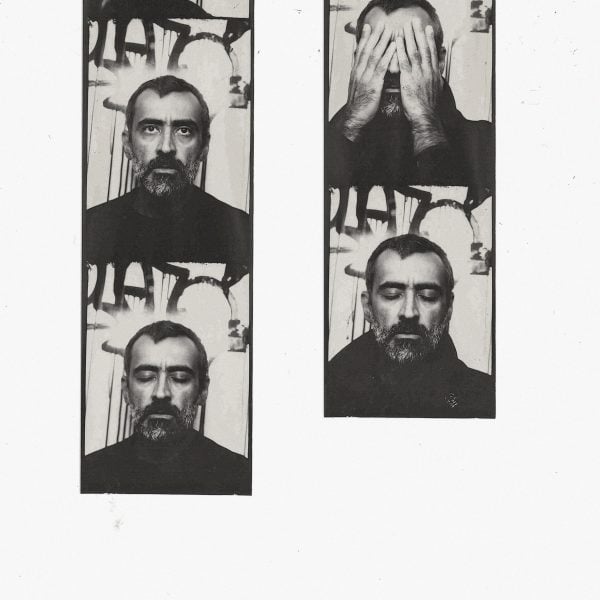
In a land where history remains fragmented and narratives severed, Nasri Sayegh approaches his practice as a way to reassemble what resists erasure. A Lebanese-French visual artist, writer, DJ, embroiderer, and performer, he works across photography, video, embroidery, text, and objects to interrogate the construction and deconstruction of memory. Excavating archives – family, official, and beyond – he composes visual constellations that evoke an atlas or cabinet of memory. Central to this process is embroidery, which Sayegh envisions as both a suture and a queer gesture of reparation, weaving delicately between absence and recollection, amnesia and resistance. His multidisciplinary works propose a fragile museum where text and image, stitch and pixel converge.
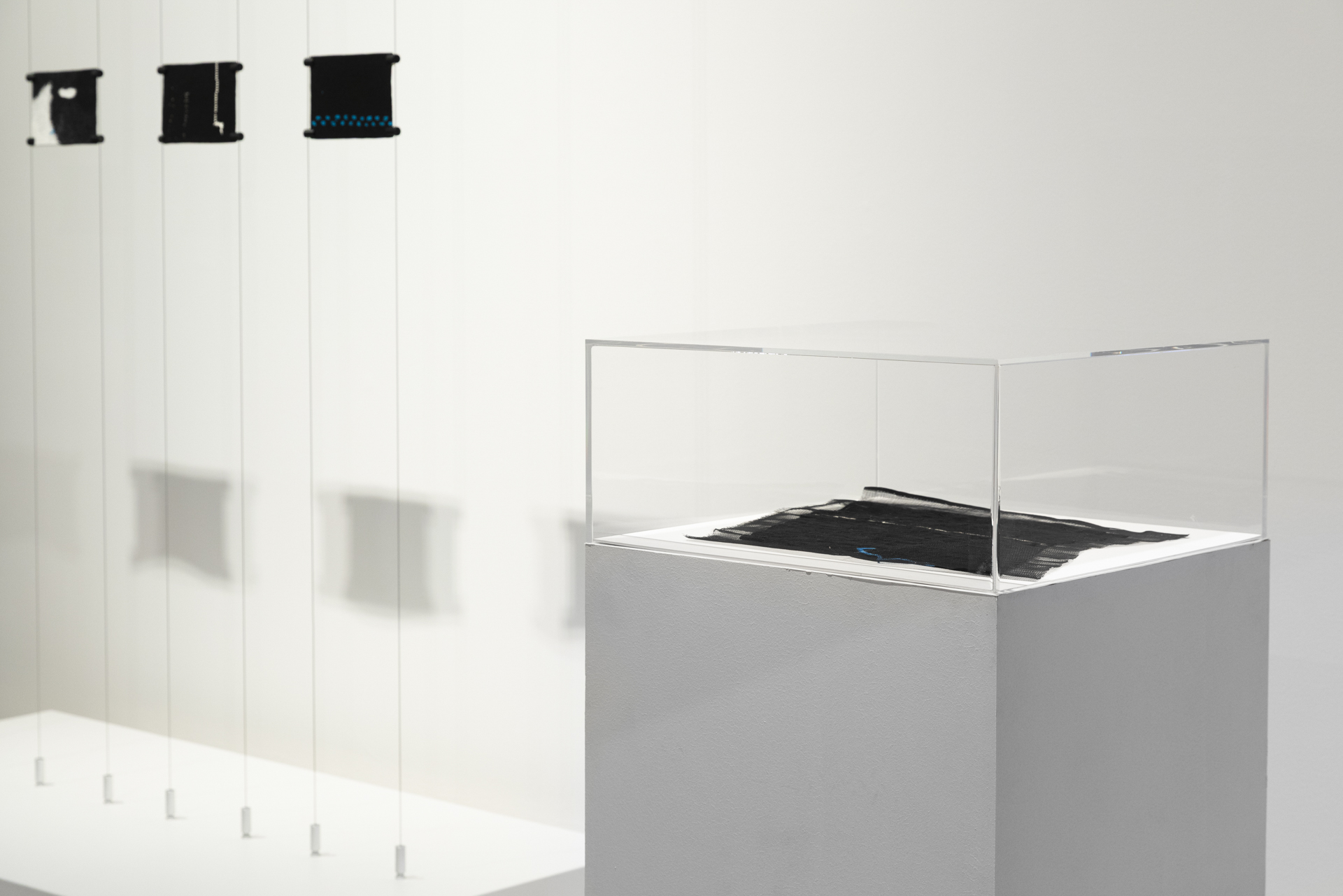
Left to right: Nasri Sayegh, Retinæ – 3, Retinæ – 2, Retinæ – 1, 2025. Commissioned by the Biennale of Sydney and Rubaiya Qatar, Qatar Museums with generous assistance from Australian Tapestry Workshop and Weaver, David Pearce. Nasri Sayegh, Stitch it, black!, 2025. Commissioned by the Biennale of Sydney and Rubaiya Qatar, Qatar Museums with generous assistance from Australian Tapestry Workshop. Courtesy of the artist © Nasri Sayegh. Installation view, 25th Biennale of Sydney, Rememory, 2026, Campbelltown Arts Centre. Photograph: Silversalt Photography.
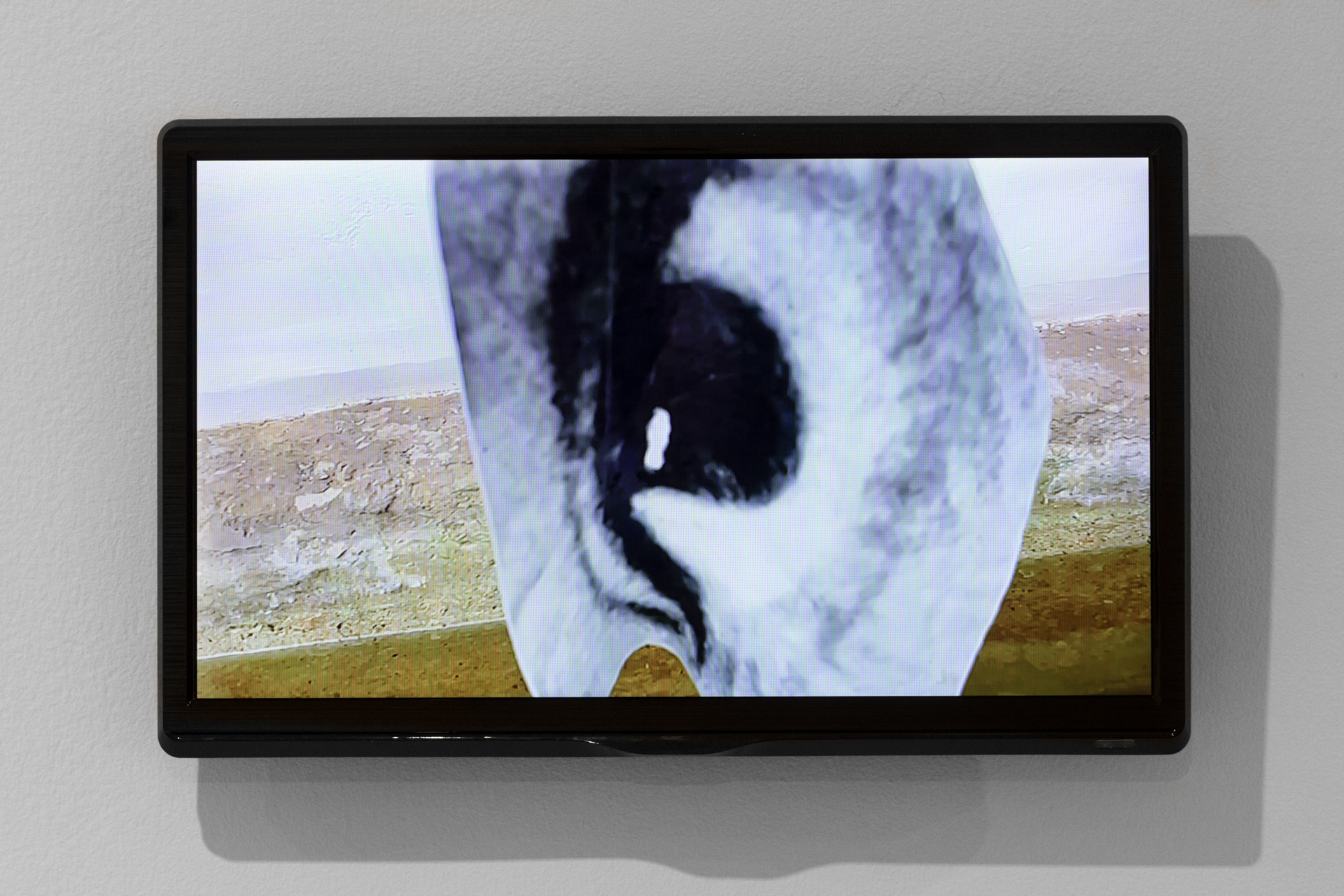
Nasri Sayegh, Tears Naturale, 2025. Commissioned by the Biennale of Sydney and Rubaiya Qatar, Qatar Museums. Courtesy of the artist © Nasri Sayegh. Installation view, 25th Biennale of Sydney, Rememory, 2026, Campbelltown Arts Centre. Photograph: Silversalt Photography.
Nasri Sayegh
Born 1978, Lebanon
Lives and works in Beirut, Lebanon
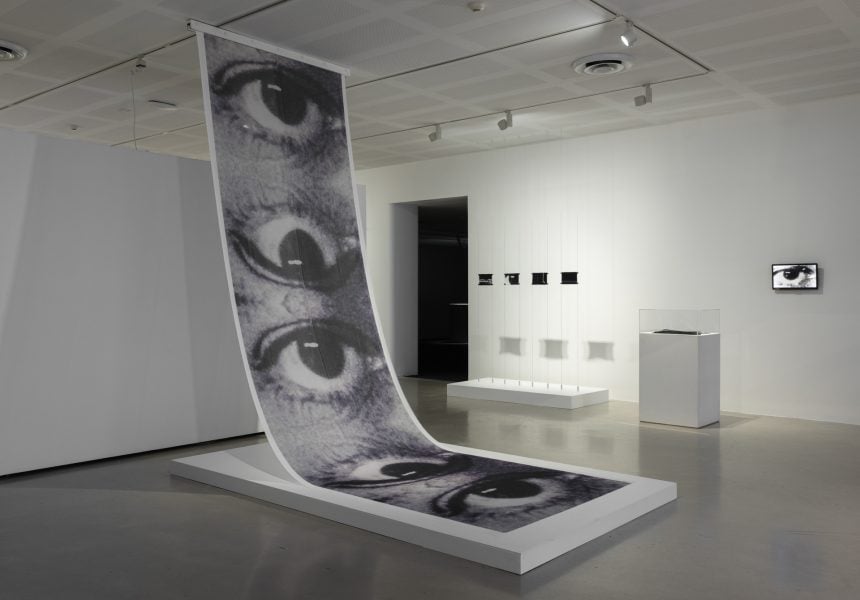
Retinæ – 1 2025
Retinæ – 2 2025
Retinæ – 3 2025
Retinæ – 4 2025
tapestry, wool, cotton
Commissioned by the Biennale of Sydney and Rubaiya Qatar, Qatar Museums with generous assistance from Australian Tapestry Workshop and Weaver, David Pearce
Courtesy of the artist
Les Yeux Sans Visage (Eyes without a face) 2025
polyester, digital sublimate on silk georgette
Commissioned by the Biennale of Sydney and Rubaiya Qatar, Qatar Museums with generous assistance from Australian Tapestry Workshop
Courtesy of the artist
Stitch it, black! 2025
needlepoint on aida cloth with needle, wool, cotton, lurex, high carbon steel
Commissioned by the Biennale of Sydney and Rubaiya Qatar, Qatar Museums with generous assistance from Australian Tapestry Workshop
Courtesy of the artist
Tears Naturale 2025
video, looped 4:08 mins
Commissioned by the Biennale of Sydney and Rubaiya Qatar, Qatar Museums
Courtesy of the artist
One day in the suburbs of Paris in 1986, an 8-year-old Nasri Sayegh adorned himself with his mother’s red lipstick and his sister’s tutu for a costume contest that would see him crowned the school “Mademoiselle”. This seminal day in the artist’s life marked the two-year anniversary of another seismic event, his family’s urgent fleeing from Lebanon and their arrival in Cyprus. Now both an exile and pseudo-princess, it was around this time that Sayegh created his first piece of cross-stitch embroidery, a picture of Mickey Mouse, and was transformed into what he describes as a “cross-dressing-cross-stitcher”.
Understanding this childhood passion as a medium through which to shift between genders and geographies – the remembered and forgotten – needlework has served Sayegh as a “suture” throughout his life and career. Passionate about both deconstructing and re-fabricating his personal identity and that of Lebanon, this new commission takes the artist’s own eye to respond to ideas of witness and mourning. As the artist writes, he is “embroidering in the midst of raging war to try and diagnose what’s left of our lives and loves after all these years – and oh so many chapters of perpetual violence. Using that fiberly habit, stitch by stitch, with my own fingers and those of the little boy in me, I intend to weave a new historical fabric filling the blanks of oblivion and amnesia.”