Norberto Roldan
Born & Lives in:
Philippines
Location
- Campbelltown Arts Centre
Norberto Roldan’s practice is rooted in political issues. His installations, assemblages and paintings of found objects, text fragments and found images address issues surrounding everyday life and collective memory. His artistic process engages with ways in which material objects are re-appropriated in another context. As a political activist during the dictatorial regime of Ferdinand Marcos Sr., he founded Black Artists in Asia (BAA), a group with a socially and politically progressive practice, immediately after the People Power Revolution in 1986. During his self-exile in Sydney between 1987 and 1989, Roldan organised and curated the Philippine contemporary art exhibition Images of the Continuing Struggle in Artspace.
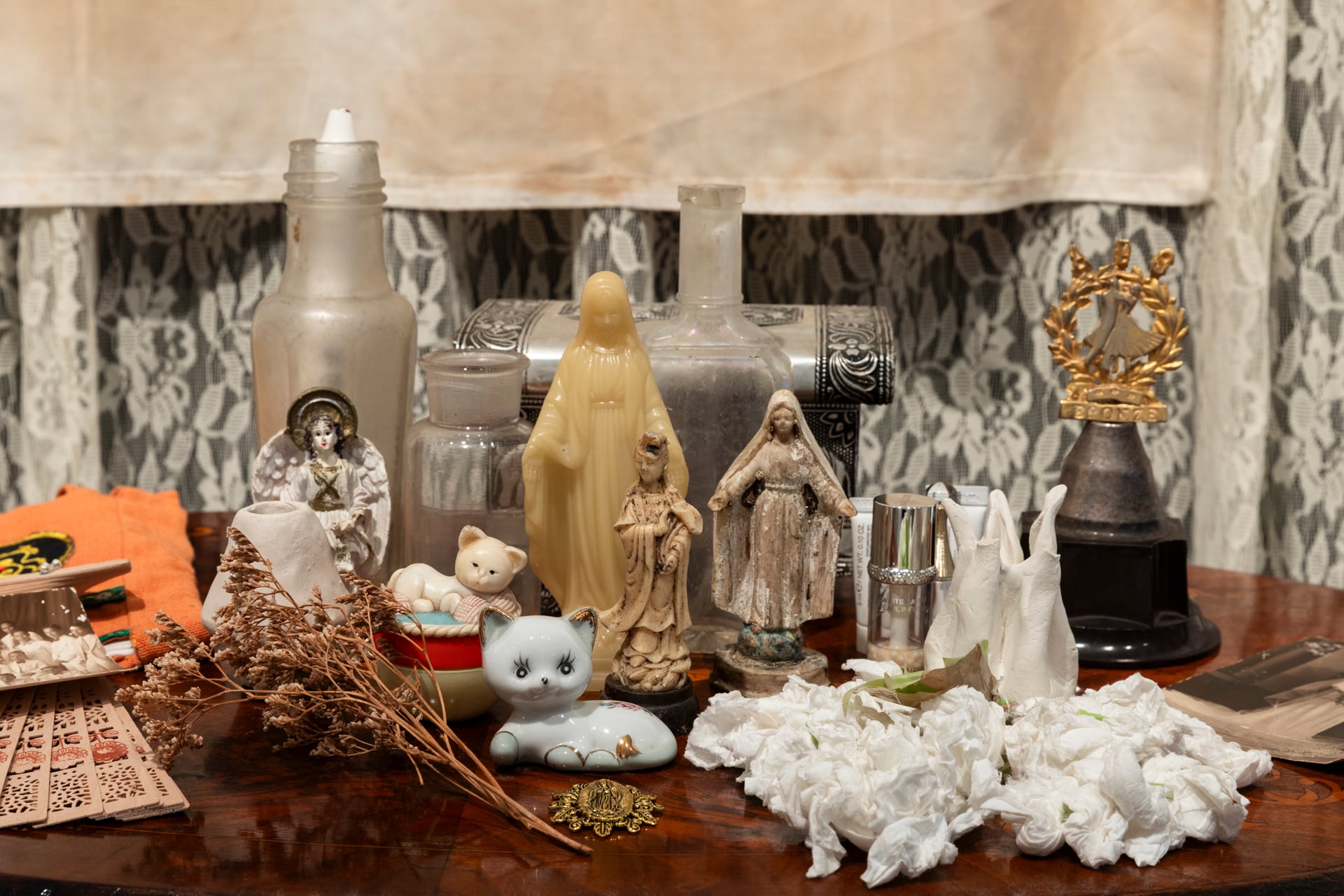
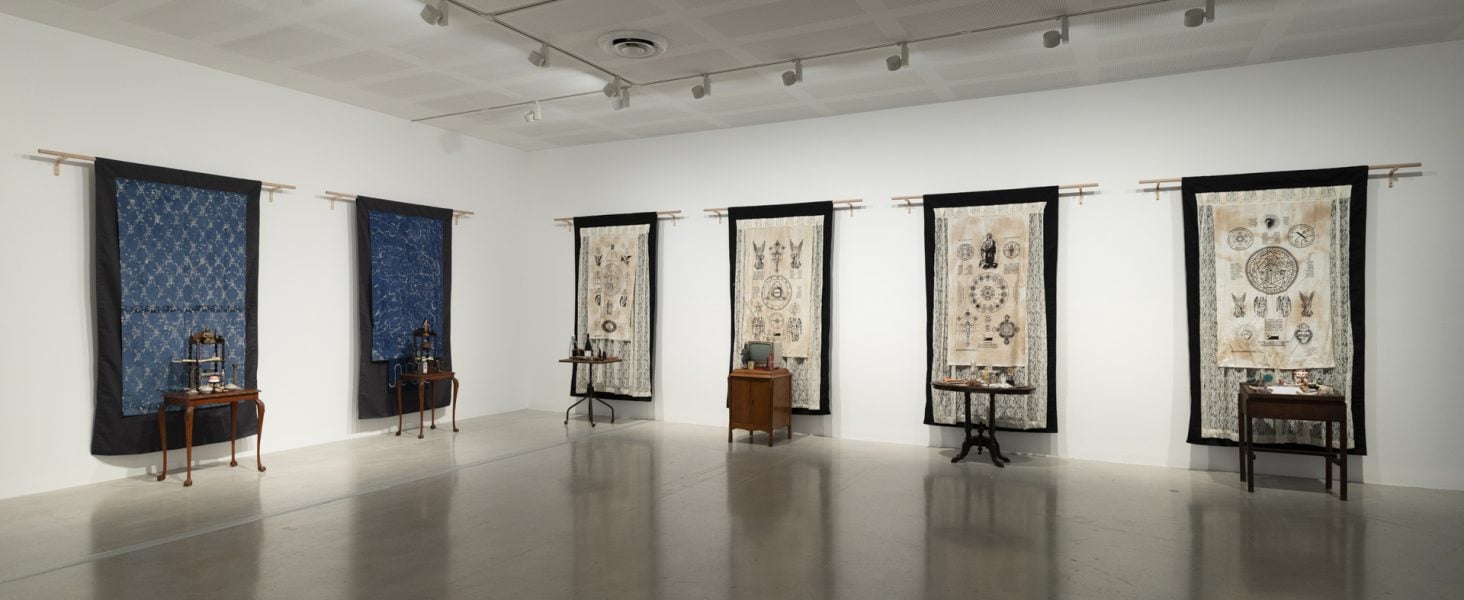
Norberto Roldan, Holy Mother (from the Sydney Shrines Series), 2026. Commissioned by the Biennale of Sydney with generous support from Mercedes U. Zobel, Artspace Sydney and Campbelltown Arts Centre. Courtesy of the artist and the families who donated the objects © Norberto Roldan. Installation view, 25th Biennale of Sydney, Rememory, 2026, Campbellotwn Arts Centre. Photograph: Silversalt Photography.
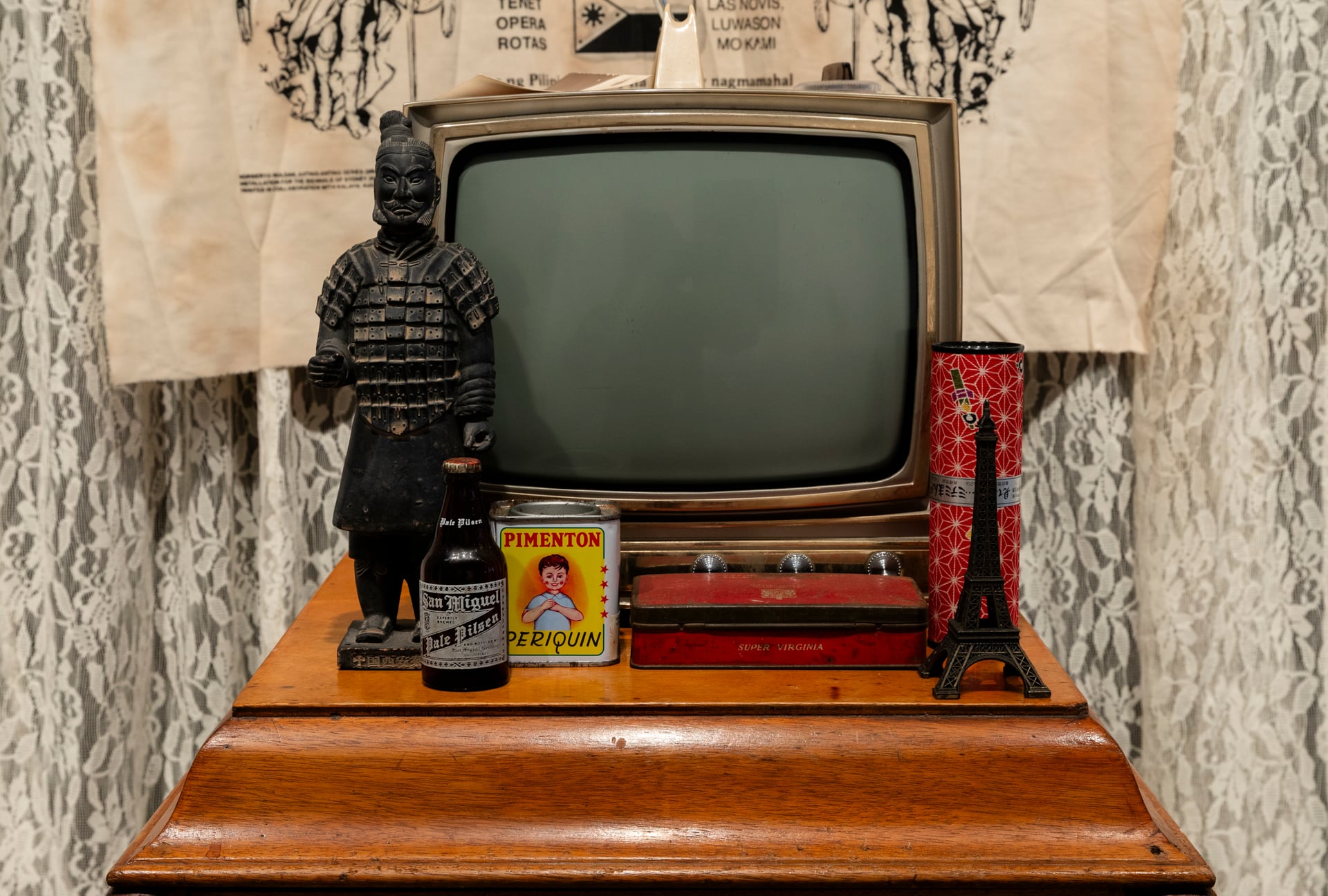
Norberto Roldan, Holy Father (from the Sydney Shrines Series), 2026. Commissioned by the Biennale of Sydney with generous support from Mercedes U. Zobel, Artspace Sydney and Campbelltown Arts Centre. Courtesy of the artist and the families who donated the objects © Norberto Roldan. Installation view, 25th Biennale of Sydney, Rememory, 2026, Campbellotwn Arts Centre. Photograph: Silversalt Photography.
Norberto Roldan
Born 1953, Philippines
Lives and works in Roxas City, Panay Island, Philippines
Holy Son (from the Sydney Shrines Series) 2026
installation with textiles, objects, found furniture
Commissioned by the Biennale of Sydney with generous support from Mercedes U. Zobel, Artspace Sydney and Campbelltown Arts Centre
Courtesy of the artist and the Roldan Family from Sydney, NSW
Holy Father (from the Sydney Shrines Series) 2026
Holy Mother (from the Sydney Shrines Series) 2026
Holy Family (from the Sydney Shrines Series) 2026
installation with textiles, objects, found furniture
Commissioned by the Biennale of Sydney with generous support from Mercedes U. Zobel, Artspace Sydney and Campbelltown Arts Centre
Courtesy of the artist and the families who donated the objects
Holy Buddha (from the Charleston Shrines Series) 2025-2026
Holy Anito (from the Charleston Shrines Series) 2025-2026
installation with textiles, objects, found furniture
Courtesy of the artist and the Foundation for Spirituality and the Arts, Charleston, South Carolina, USA
The Sydney Shrines Series is a collection of objects presented in an altar-like arrangement, shaped through acts of return, care, and collective remembrance. Created for the Biennale, the works reflect Norberto Roldan’s renewed engagement with Sydney, a city that offered refuge during his self-imposed exile in the late 1980s and shaped his early creative life.
Composed of personal objects, heirloom furniture, and vintage fabrics gathered from Filipino and Southeast Asian families across New South Wales, each shrine draws its depth and meaning from everyday materials carrying intimate histories. Removed from their original functions, these objects exist between private memory and shared experience, held in careful balance.
Through collaboration with local diasporic communities, the shrines operate as sites of “rememory”: places where personal narratives intersect with broader histories of migration and survival. Two shrines from Roldan’s Charleston Shrines Series accompany the body of work, produced during his residency at the Foundation for Spirituality and the Arts in Charleston, South Carolina, USA. Neither nostalgic nor fixed, the works propose memory as an active, relational process – one that connects past and present while affirming the ongoing life of community across generations.
Featured in