Ngurrara Artists
Born:
Walmajarri, Mangala, Juwaliny, Wangkajunga, Manjilarra
Lives in:
Great Sandy Desert, Australia
Location
- Art Gallery of New South Wales
Munmarriya Daisy Andrews, Milyinti Dorothy May, Kulyukulyu Trixie Shaw and Elsie Doondoon, Ngarralja Tommy May, Ngumumpa Walter Rose, Jukuja Dolly Snell, Nyirlpirr Spider Snell, Yilpara Jinny James, Purlta Maryanne Downs, Jijijar Molly Dededar, Kurtiji Peter Goodijie, Mayapu Elsie Thomas, Waninya Biddy Bonney, Kuji Rosie Goodjie, George Tuckerbox, Nyuju Stumpy Brown, Luurn Willie Kew, Nyanjarn Charlie Nunjun, Nyangkarni Penny K-Lyon, Nada Rawlins, Yukarla Hitler Pamba, Miltja Thursday Pindan, Killer Pindan, Murungkurr Terry Murray, Kunga Monday Kunga, Wajina Paji Honeychild Yankarr, Kurnti Jimmy Pike, Pijaji Peter Skipper, Rrarj David Chugana, Parlun Harry Bullen, Tapiri Peter Clancy, Maukura Jimmy Nerrimah, Jukuna Mona Chugana, Ngarta Jinny Bent, Minangu Huey Bent, Kapi Lucy Cubby, Pulukarti Honey Bulagardie, Pajiman Warford Pajiman, Ngurnta Amy Nuggett, Japarti Joseph Nuggett.
Murungkurr Terry Murray Ngurrara artist and Coordinator of the Ngurrara Canvas Management Group says:
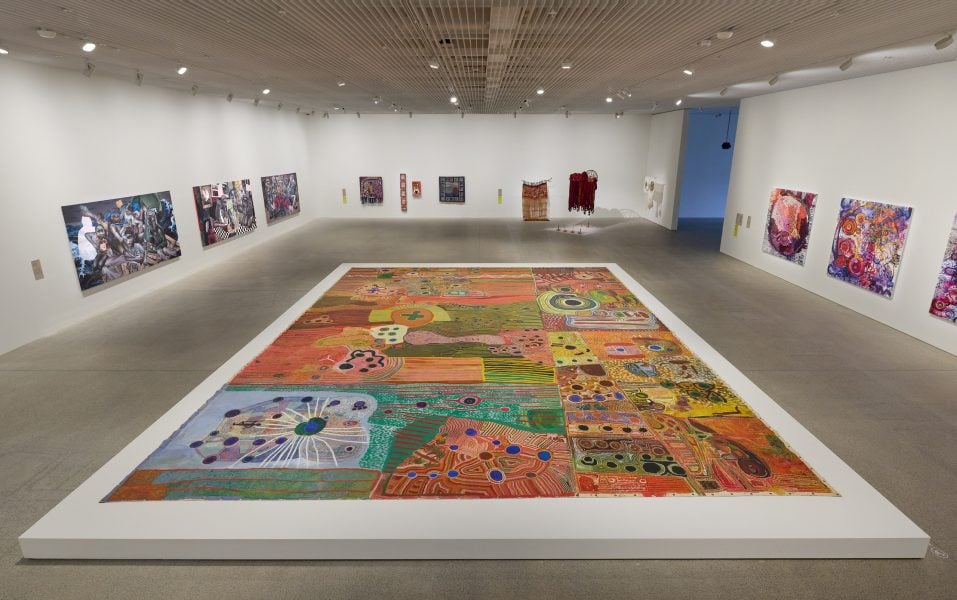
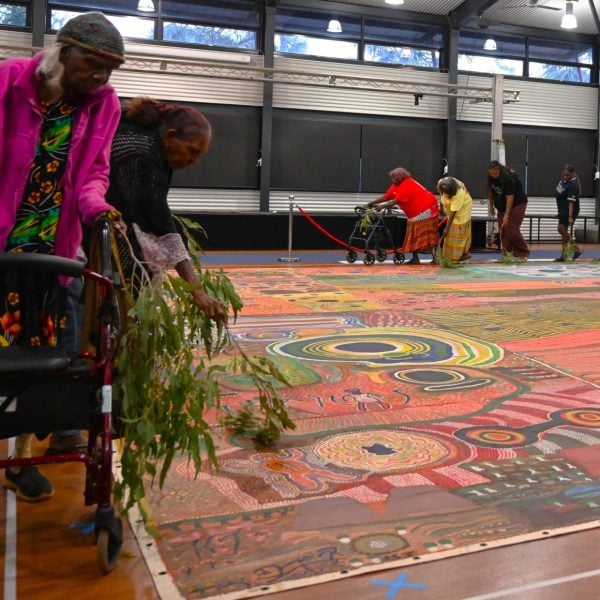
We want to look after this canvas properly and for all of the artists to be recognised. The senior artists told us the stories and we mapped it out and started to paint. I was so lucky to be the youngest painter to work on the canvas. I learnt about the journey of my family. Ngurrara Canvas II is a map. It shows Ngurrara people where we came from, what story we can tell, what we can sing, and what we can dance. When we were planning how to manage the canvas some people were thinking of money but it is more important than that. It is our turlpu, our heart, and pirlurr, our spirit.
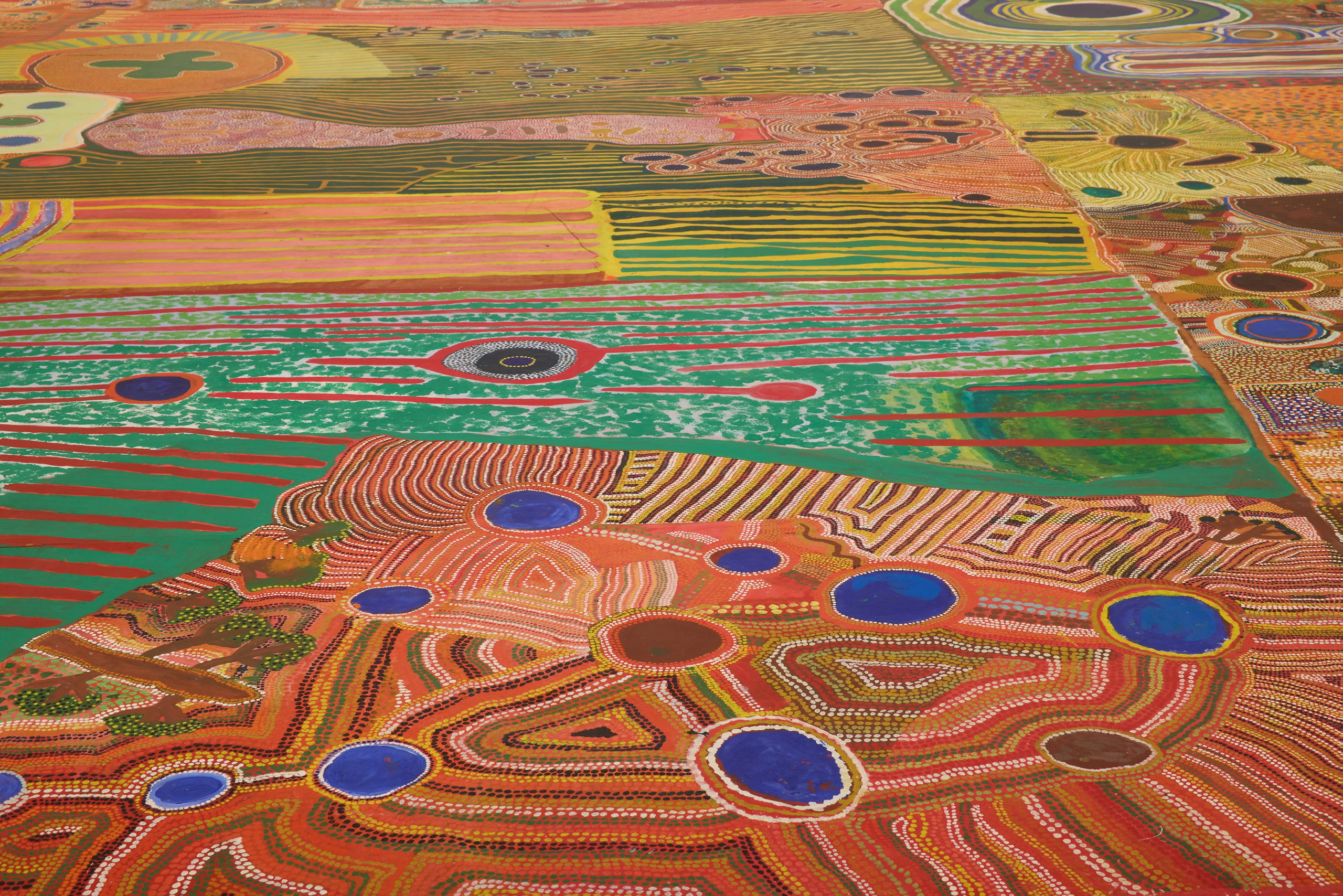
Ngurrara Artists, Ngurrara Canvas II, 1997. Presentation at the 25th Biennale of Sydney was made possible with generous support from the Oranges & Sardines Foundation. Courtesy of the artists and the Ngurrara Canvas Management Group (NCMG) © Ngurrara Artists.
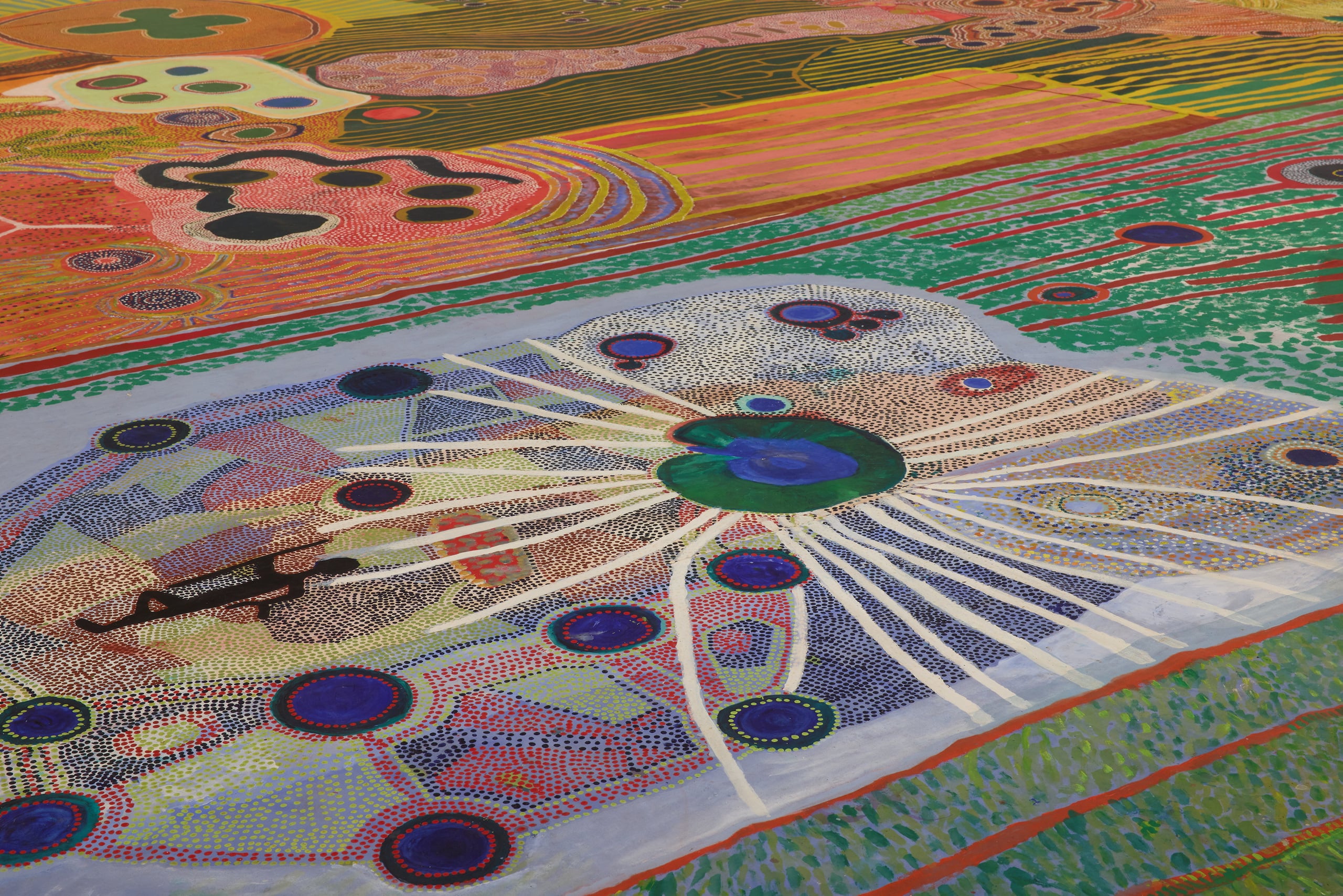
Ngurrara Artists, Ngurrara Canvas II, 1997. Presentation at the 25th Biennale of Sydney was made possible with generous support from the Oranges & Sardines Foundation. Courtesy of the artists and the Ngurrara Canvas Management Group (NCMG) © Ngurrara Artists
Ngurrara Artists
Munmarriya Daisy Andrews, Milyinti Dorothy May, Kulyukulyu Trixie Shaw, Elsie Doondoon, Ngarralja Tommy May, Ngumumpa Walter Rose, Jukuja Dolly Snell, Nyirlpirr Spider Snell, Yilpara Jinny James, Purlta Maryanne Downs, Jijijar Molly Dededar, Kurtiji Peter Goodijie, Mayapu Elsie Thomas, Waninya Biddy Bonney, Kuji Rosie Goodjie, George Tuckerbox, Nyuju Stumpy Brown, Luurn Willie Kew, Nyanjarn Charlie Nunjun, Nyangkarni Penny K-Lyon, Nada Rawlins, Yukarla Hitler Pamba, Miltja Thursday Pindan, Killer Pindan, Murungkurr Terry Murray, Kunga Monday Kunga, Wajina Paji Honeychild Yankarr, Kurnti Jimmy Pike, Pijaji Peter Skipper, Rrarj David Chugana, Parlun Harry Bullen, Tapiri Peter Clancy, Maukura Jimmy Nerrimah, Jukuna Mona Chugana, Ngarta Jinny Bent, Minangu Huey Bent, Kapi Lucy Cubby, Pulukarti Honey Bulagardie, Pajiman Warford Pajiman, Ngurnta Amy Nuggett, Japarti Joseph Nuggett
Walmajarri/Wangkajunga/Mangala/Juwaliny/Manjilarra, Western Desert region
Ngurrara Canvas II 1997
acrylic on cotton fabric
Presentation at the 25th Biennale of Sydney was made possible with generous support from the Oranges & Sardines Foundation
Courtesy of the artists and the Ngurrara Canvas Management Group (NCMG)
Inspired by the landmark Mabo decision of 1992 – a High Court ruling that recognised the land and water rights of the Meriam people in the Zenadth Kes/Torres Strait – the Ngurrara people of the Great Sandy Desert first lodged their native title claim in 1996. They devised a new form of testimony in direct response to the colonial legal system’s inability to comprehend Indigenous relationships to Country. Around 40 Ngurrara artist-claimants created Ngurrara Canvas II to support their claim over areas of the Great Sandy Desert in Western Australia. They painted jila (waterholes), places that support ceremony and hold powerful ancestral beings with whom people speak and interact, along with other sacred places that only custodians can paint. By laying a canvas on the red soil of Pirnini claypan, near the town of Fitzroy Crossing, the Ngurrara artists delivered a visual account of an area larger than Lutruwita/Tasmania and home to five different language groups: Walmajarri, Wangkajunga, Mangala, Juwaliny and Manjilarra.
Equally significant in Australian and Indigenous history, the canvas was presented to the National Native Title Tribunal in 1997. The work – neither a map nor a stylised aerial view, but a complex and deeply felt composition – is a powerful embodiment of a living Country, unbound by border lines or coordinates. Though it took a decade before the Ngurrara people were granted native title in 2007, Ngurrara Canvas II endures as both a masterwork and a landmark act of decolonial storytelling. It continues to reshape people’s understandings of Indigenous belonging and ownership.