Maritea Dæhlin
Born:
Norway
Lives in:
Norway & Mexico
Location
- Art Gallery of New South Wales
- White Bay Power Station
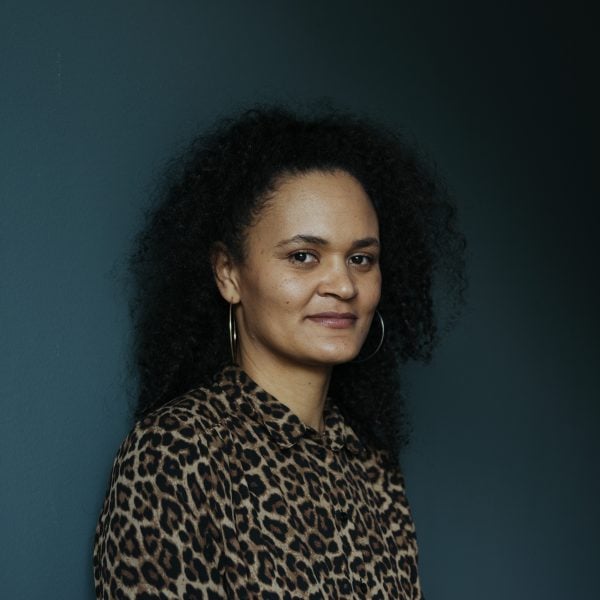
Maritea Dæhlin is an interdisciplinary artist raised between Mexico and Norway, with second-generation Bamiléké heritage from Cameroon. Her dynamic upbringing, navigating diverse cultures and languages, deeply influences her creative practice, providing a foundation for exploring themes of identity, multilingualism, and shifting perspectives. Dæhlin’s work spans video, sound, performance, photography and text. Her practice challenges boundaries, inviting audiences to engage with nonlinear narratives and complex identities.
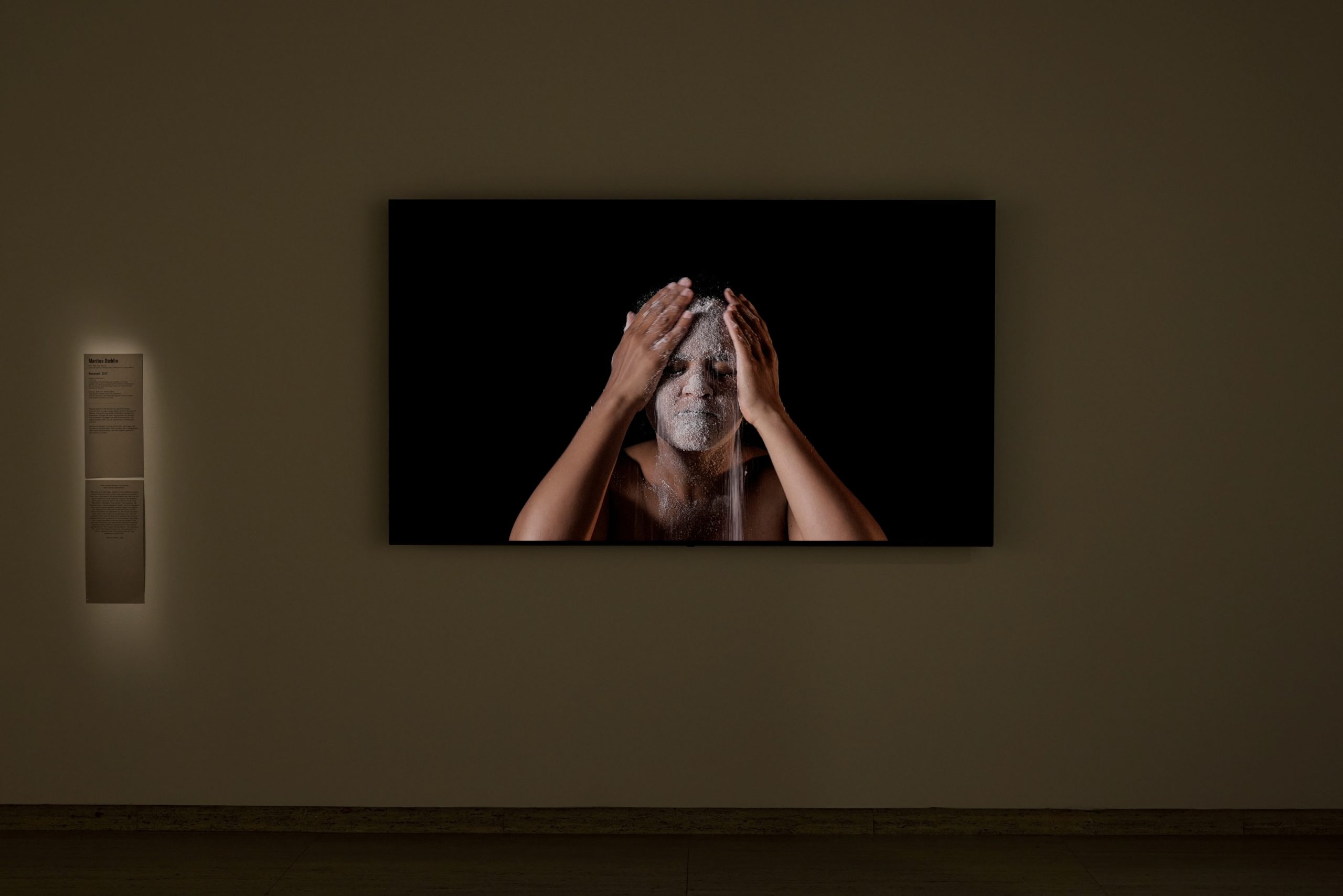
Maritea Dæhlin, Represent, 2022. Presentation at the 25th Biennale of Sydney was made possible with generous assistance from Office for Contemporary Art Norway, The Audio and Visual Fund, Arts Council Norway. Courtesy of the artist © Maritea Dæhlin. Installation view, 25th Biennale of Sydney, Rememory, 2026, Art Gallery of New South Wales. Photo © Art Gallery of New South Wales, Felicity Jenkins.
Maritea Dæhlin
Born 1986, Oslo, Norway
Lives and works between Oslo, Norway and San Cristóbal de las Casas, Mexico
I WANT TO BE TRADITIONAL 2017 / 2026
single channel video, audio, looped 21:14 mins Concept, performer, poems: Maritea Dæhlin Videographer and light: Isaac Diaz Valderrama Props and creative assistant: Ursula Lascurain Sound design: Truls Hannemyr
Presentation at the 25th Biennale of Sydney was made possible with generous assistance from Office for Contemporary Art Norway
Courtesy of the artist
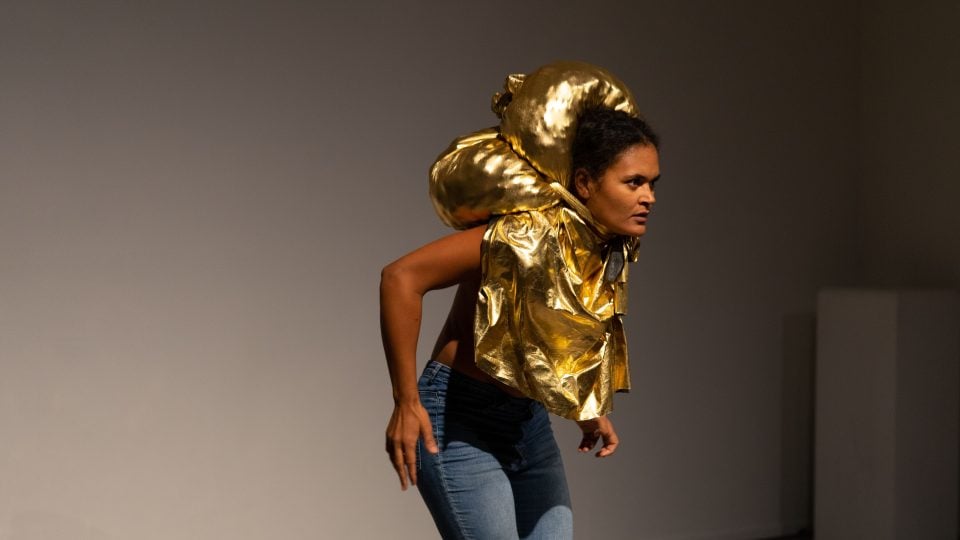
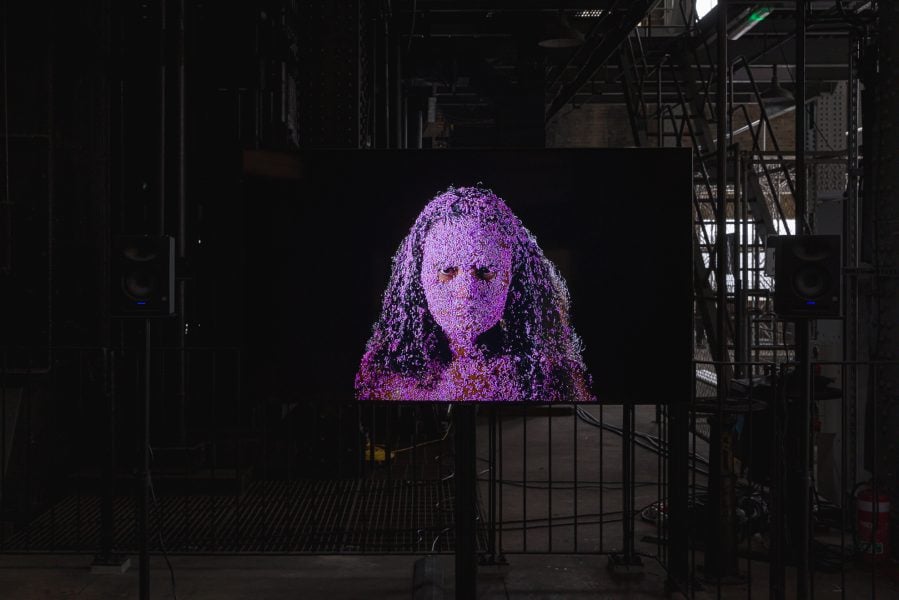
In I WANT TO BE TRADITIONAL, Maritea Dæhlin explores the role of language in reimagining and deconstructing identity for an increasingly globalised world. Raised between Norway and Mexico, with second-generation Bamiléké heritage from Cameroon, navigating diverse cultures and spaces shapes Dæhlin’s work and worldview. Spanning video, sound, theatre and text, her practice is as dynamic as the multi-lingual performances she enacts.
Moving quickly and seamlessly from Norwegian, to Spanish and English I WANT TO BE TRADITIONAL has a ritualistic quality which elevates the act of listening, however challenging, to the realm of the sacred. The multi-lingual and occasionally absurd nature of I WANT TO BE TRADITIONAL means Dæhlin is able to present language itself as secondary to the rhythms of communication, allowing space for meaning beyond understanding.
Represent 2022
single-channel video 14:32 min
Presentation at the 25th Biennale of Sydney was made possible with generous assistance from Office for Contemporary Art Norway
Courtesy of the artist
Concept, performer: Maritea Dæhlin Videographer, lighting: Isaac Díaz Valderrama
Creative assistants: Juan Sebastián Mariscal, Ursula Lascurain Videographer assistant: Juan Jara
Maritea Dæhlin’s interdisciplinary practice is deeply entwined with her upbringing, raised between Norway and Mexico, with second-generation Bamiléké heritage from Cameroon. Through her work, she explores the complex web of identity, language and shifting perspectives. Her practice spans video, sound, performance, photography and text.
Represent highlights themes around how we engage with the idea of representation. Who decides who is represented? Who needs representation, and who doesn’t want it for themselves or others?
‘They cannot represent themselves, they must be represented.’
The quote is by Karl Marx, written in a very different context and time than the one in which I was reading and feeling it from, yet it resonated in an uncomfortable way. Not with the need to know too much about the origin of the sentence, but to feel it, touch it, think it, eat it or throw it up. They. Represent. I represent. They cannot. You represent. We represent you. I cannot represent myself. I have to represent you, as you cannot represent yourself, even if you believe you represent me. We have to represent them, as they cannot represent. You represent me. We cannot represent each other. I don’t want you to represent me. I want to represent them, but not when they represent you and you represent him who represents her. We represent each other, but no one represents those who are not present. Who are those that cannot be represented? Who are those that represent? Who insists on representation? Who desires representation? Who needs representation? I will represent her, even if she doesn’t want me to. You represent me, when I represent them. Then there is the salt that preserves but also hurts.
— Maritea Dæhlin, 2022
Featured In