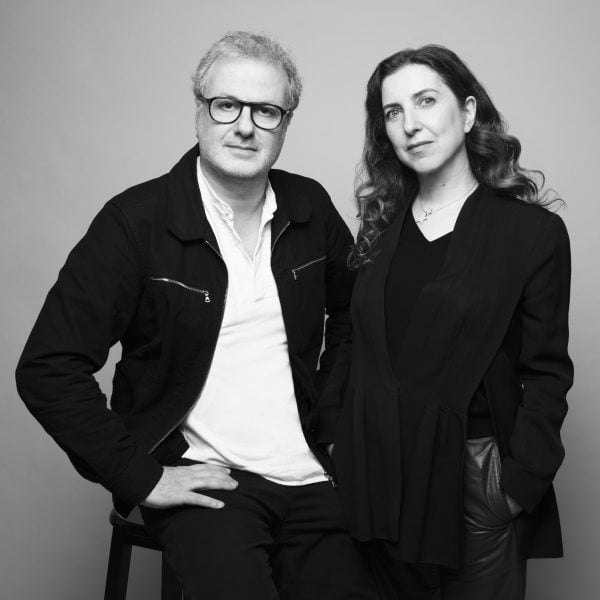
Joana Hadjithomas and Khalil Joreige
Born:
Lebanon
Lives in:
France
Location
- Campbelltown Arts Centre
Filmmakers and artists Joana Hadjithomas and Khalil Joreige work between photography, installations, video, and cinema, whether documentary or fiction films. They question storytelling, the fabrication of images and representations, the construction of imaginaries and the writing of history. Known for their long-term research based on personal or political documents, the artists have a particular interest in the traces of the invisible or absent and histories kept secret. Some projects include the latencies of wars, a forgotten space project from the 1960s, the strange consequences of internet scams, or the geological and archaeological underground of cities. Their artworks and films have been awarded many times throughout their career.
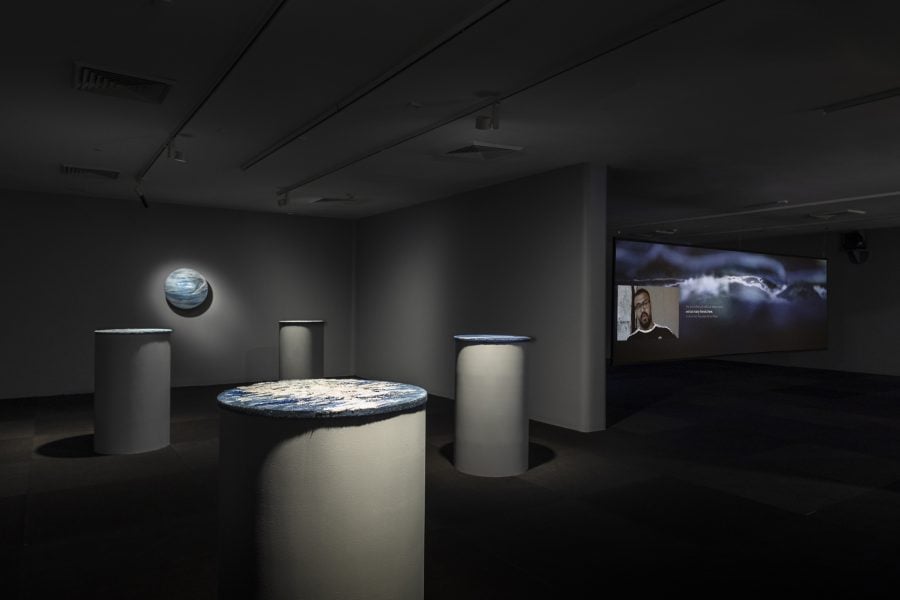
Joana Hadjithomas and Khalil Joreige, Asylum of our Dreams, 2026. Commissioned by the Biennale of Sydney and Rubaiya Qatar, Qatar Museums with generous support from Institut français and Trampoline Association in support of the French art scene, generous assistance from French Australian Cultural Exchange Foundation, and assistance from the Embassy of France. Embroideries commissioned to Le Temps Brodé. Courtesy of the artists, In Situ – fabienne leclerc, Paris and The Third Line, Dubai © Joana Hadjithomas and Khalil Joreige. Installation view, 25th Biennale of Sydney, Rememory, 2026, Campbelltown Arts Centre. Photograph: Silversalt Photography.
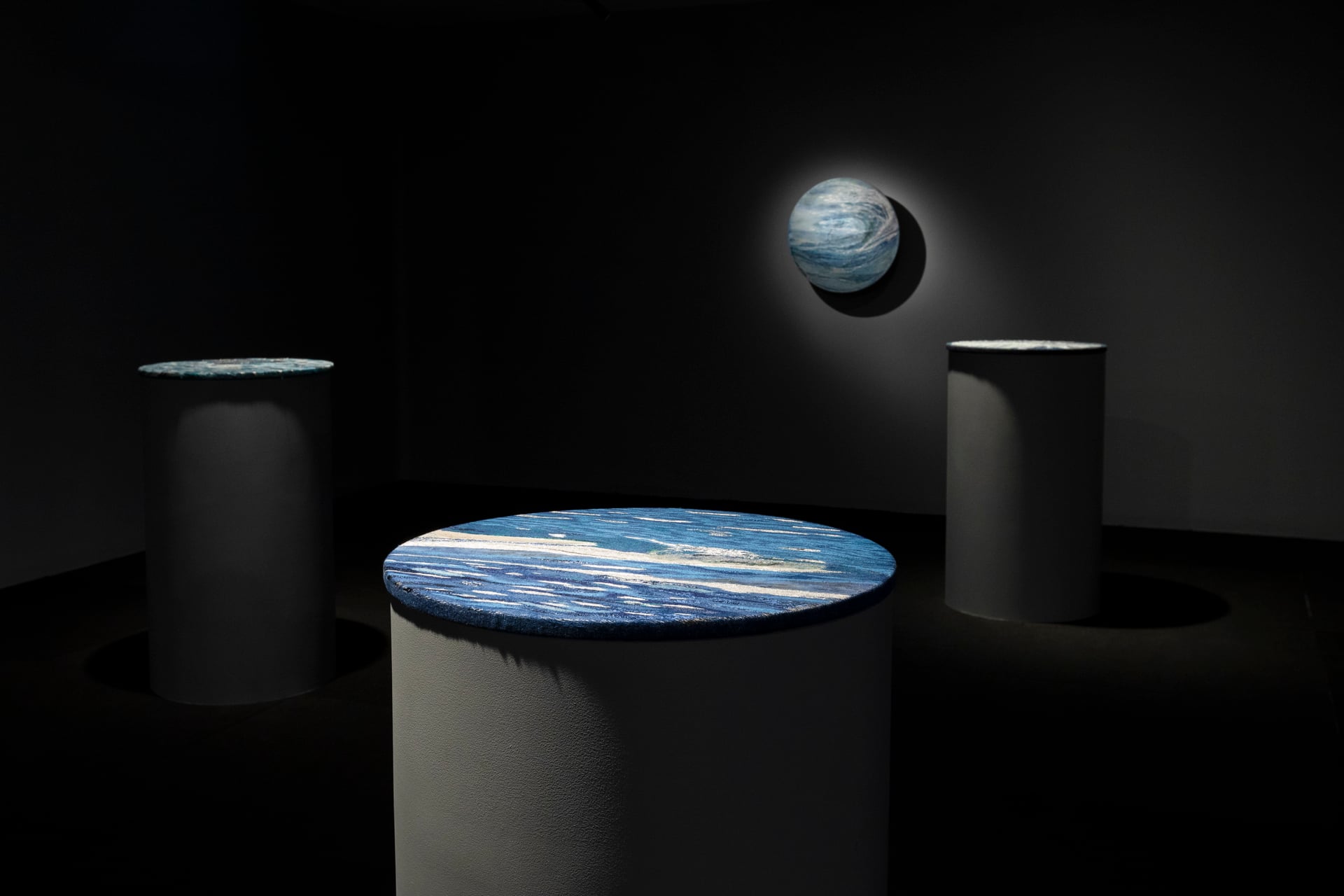
Joana Hadjithomas and Khalil Joreige, Asylum of our Dreams, 2026. Commissioned by the Biennale of Sydney and Rubaiya Qatar, Qatar Museums with generous support from Institut français and Trampoline Association in support of the French art scene, generous assistance from French Australian Cultural Exchange Foundation, and assistance from the Embassy of France. Embroideries commissioned to Le Temps Brodé. Courtesy of the artists, In Situ – fabienne leclerc, Paris and The Third Line, Dubai © Joana Hadjithomas and Khalil Joreige. Installation view, 25th Biennale of Sydney, Rememory, 2026, Campbelltown Arts Centre. Photograph: Silversalt Photography.
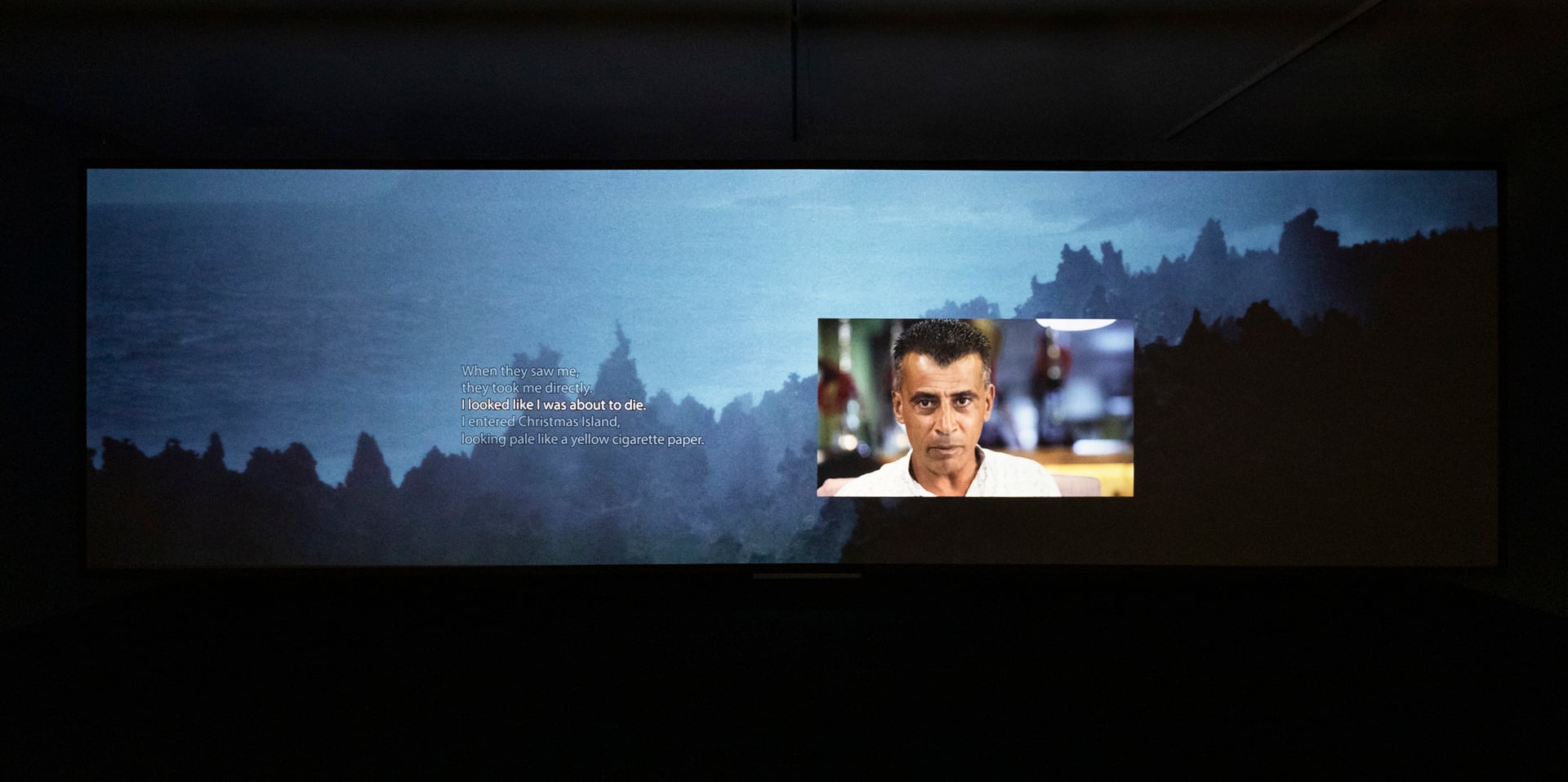
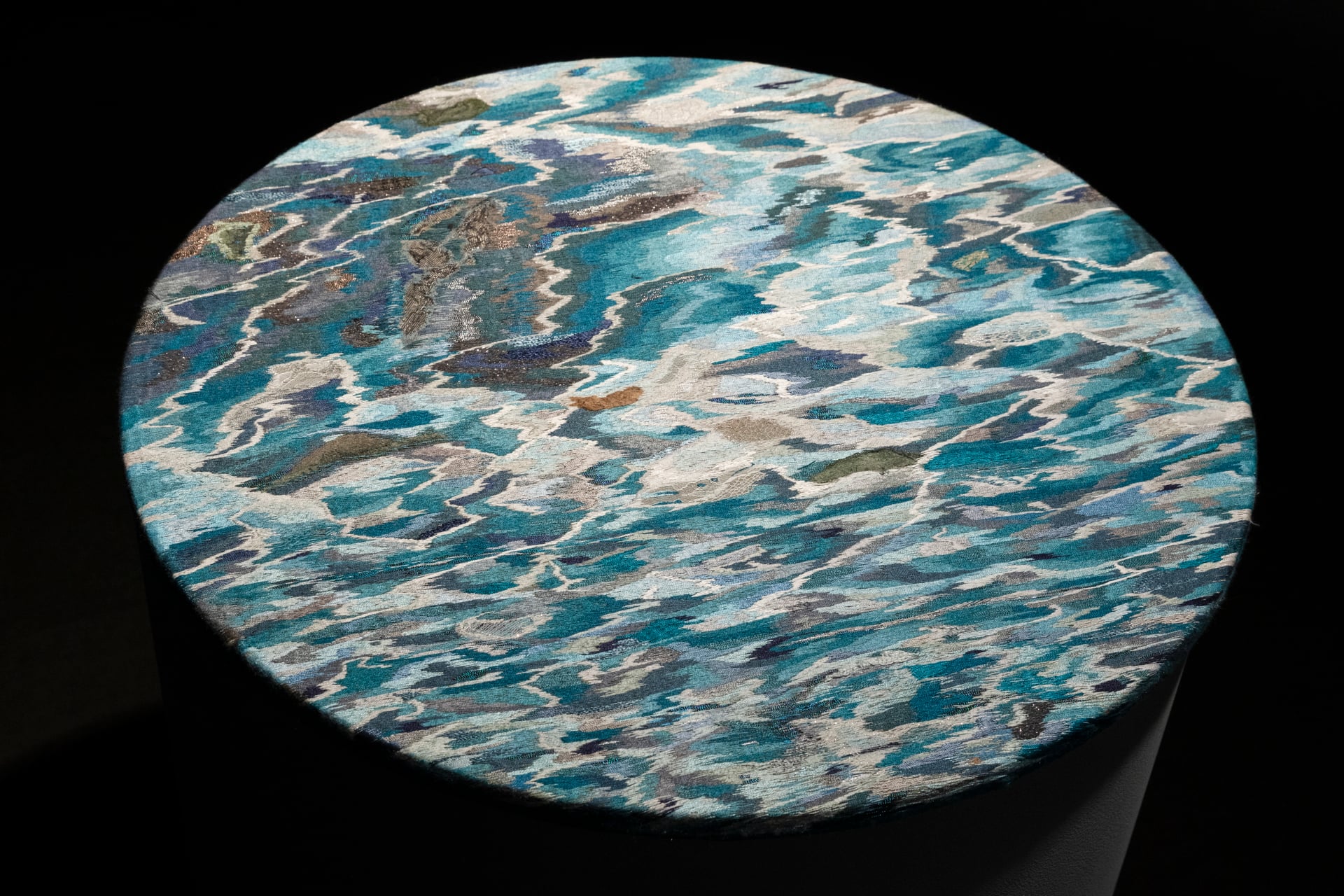
Joana Hadjithomas and Khalil Joreige, Asylum of our Dreams, 2026. Commissioned by the Biennale of Sydney and Rubaiya Qatar, Qatar Museums with generous support from Institut français and Trampoline Association in support of the French art scene, generous assistance from French Australian Cultural Exchange Foundation, and assistance from the Embassy of France. Embroideries commissioned to Le Temps Brodé. Courtesy of the artists, In Situ – fabienne leclerc, Paris and The Third Line, Dubai © Joana Hadjithomas and Khalil Joreige. Installation view, 25th Biennale of Sydney, Rememory, 2026, Campbelltown Arts Centre. Photograph: Silversalt Photography.
Joana Hadjithomas
Born 1969, Lebanon
Lives and works between Beirut, Lebanon and Paris, France
Khalil Joreige
Born 1969, Lebanon
Lives and works between Beirut, Lebanon and Paris, France
Asylum of our Dreams 2026
video installation, embroideries, looped 25 mins
Commissioned by the Biennale of Sydney and Rubaiya Qatar, Qatar Museums with generous support from Trampoline Association in support of the French art scene, generous assistance from French Australian Cultural Exchange Foundation, and assistance from the Embassy of France
Courtesy of the artists, In Situ – fabienne leclerc, Paris and The Third Line, Dubai
With Moustafa Yahya Arnaout, Fathi Omar Bashir, Mhamad Breis, Tawfiq Sobhi Rahmoun, Nazih Yassin.
Embroideries commissioned to Le Temps Brodé (NGO promoting artisan’s freedom & creativity by Isabelle Helou & Dominique Eddé)
Embroiderers: Randa al Seblani, Dima Eddé, Joumana el Hage, Jiana Reslane, Imane Salamé.
Images: Hassan Julien Chehouri, Ramzi Kadi, Talal Khoury
All the images of Christmas Island are excerpts from the film Island of the hungry ghosts, 2018
Directed by Gabrielle Brady Cinematographer: Michael Latham
Generously provided and shared by the production CHROMOSOM FILM GMBH and the director.
Studio Manager: Tara El Khoury Mikhael
Film Production: The Fourth Wall (Nazih Yassin & Maroon Asmar)
Editing: Pierre Mouzannar Animation: Alex Abdallah
Sound design: Rana Eid, Studio DB
Poems by Etel Adnan, Charles Baudelaire and Mahmoud Darwish
Mixing: Lama Sawaya
Grading: Chrystel Elias
In Lebanon, many dream of elsewhere, following invisible migratory cartographies that link specific towns to distant horizons. But from northern Lebanon, these imagined routes often point toward a place heavy with fantasy and collective longing: Australia. This dream is particularly strong in Bab al-Tabbaneh, one of the poorest areas along the Mediterranean, where Nazih, a friend of artists Joana Hadjithomas and Khalil Joreige, grew up. Like many around him, Nazih once planned to leave clandestinely, joining a small group intent on reaching Australia via Indonesia and a perilous sea crossing. At the last moment, he decided not to go. His four companions, Fathi, Mustapha, Mohamad, and Tawfiq, continued without him, sailing into uncertainty.
Their journey ended in prolonged confinement on Christmas Island, where Australia’s ‘elsewhere’ remained inaccessible and abstract. Time stretched into endless waiting, a suspended temporality, that Hadjithomas and Joreige evoke by collaborating with five women, most of whom had never traveled, asking them to embroider the sea, transforming waiting into a tactile, collective gesture.
For the artists, this story encapsulates the enduring power of the idea of paradise beyond the horizon. A promise ultimately quashed by the conditions of an Australian immigration system that has made Christmas Island a space of incarceration. Drawing on the very impressive annual forest-to-shore migration of the Christmas Island Red Crab, Asylum of Our Dreams reflects on movement that is arduous, interrupted, and often unsuccessful. Exile exposes global structures of exclusion, systems of control and geopolitical violence. The land is both imagined and denied. Yet the dream endures.