Hou I-Ting
Born & Lives in:
Taiwan
Location
- White Bay Power Station
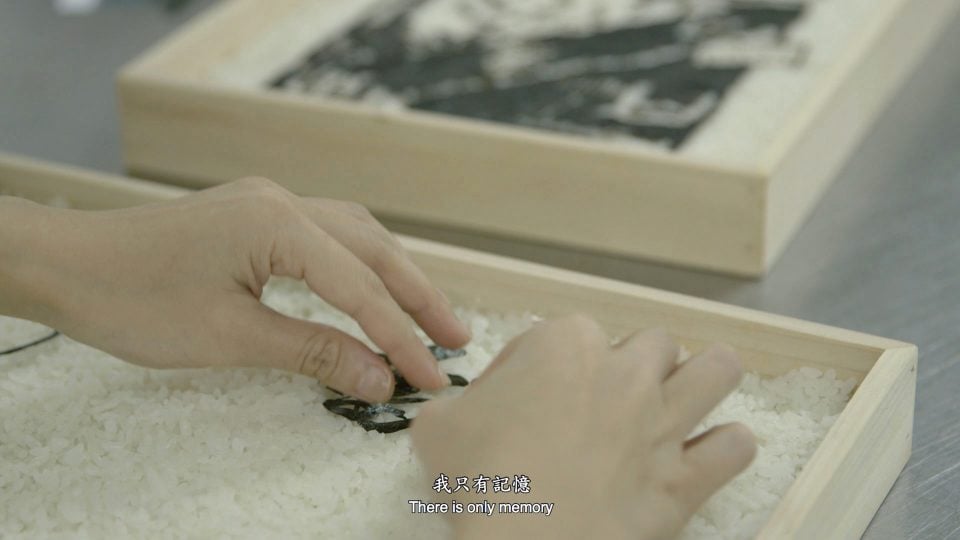
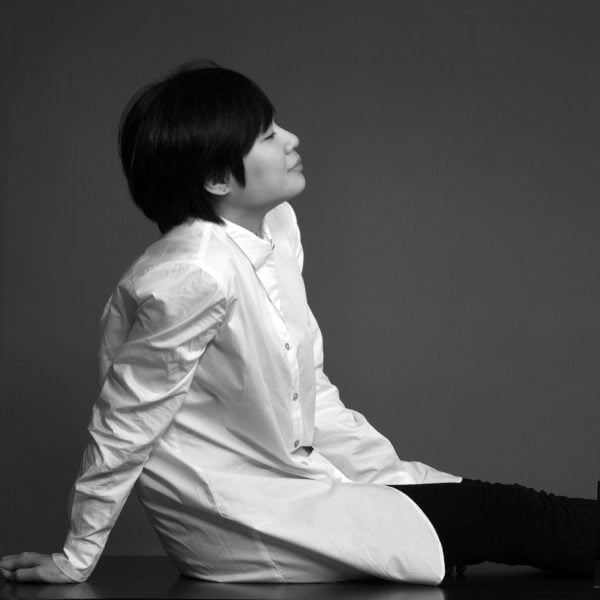
Hou I-Ting was born in Kaohsiung, Taiwan and is currently based in Taipei, Taiwan. She works across multiple media, often merging embroidery with video art, with a keen interest in the conditions of both past and present female labour within different socio-economic systems. Hou’s work explores the dynamic interplay between physical labour and visual representation while critiquing labour practices in capitalist society. In addition to her individual work, she regularly organises collective collaboration with various groups, developing experience-based, site-specific works that reveal the diverse forms of control and contradiction faced by historical and contemporary bodies in modern society.
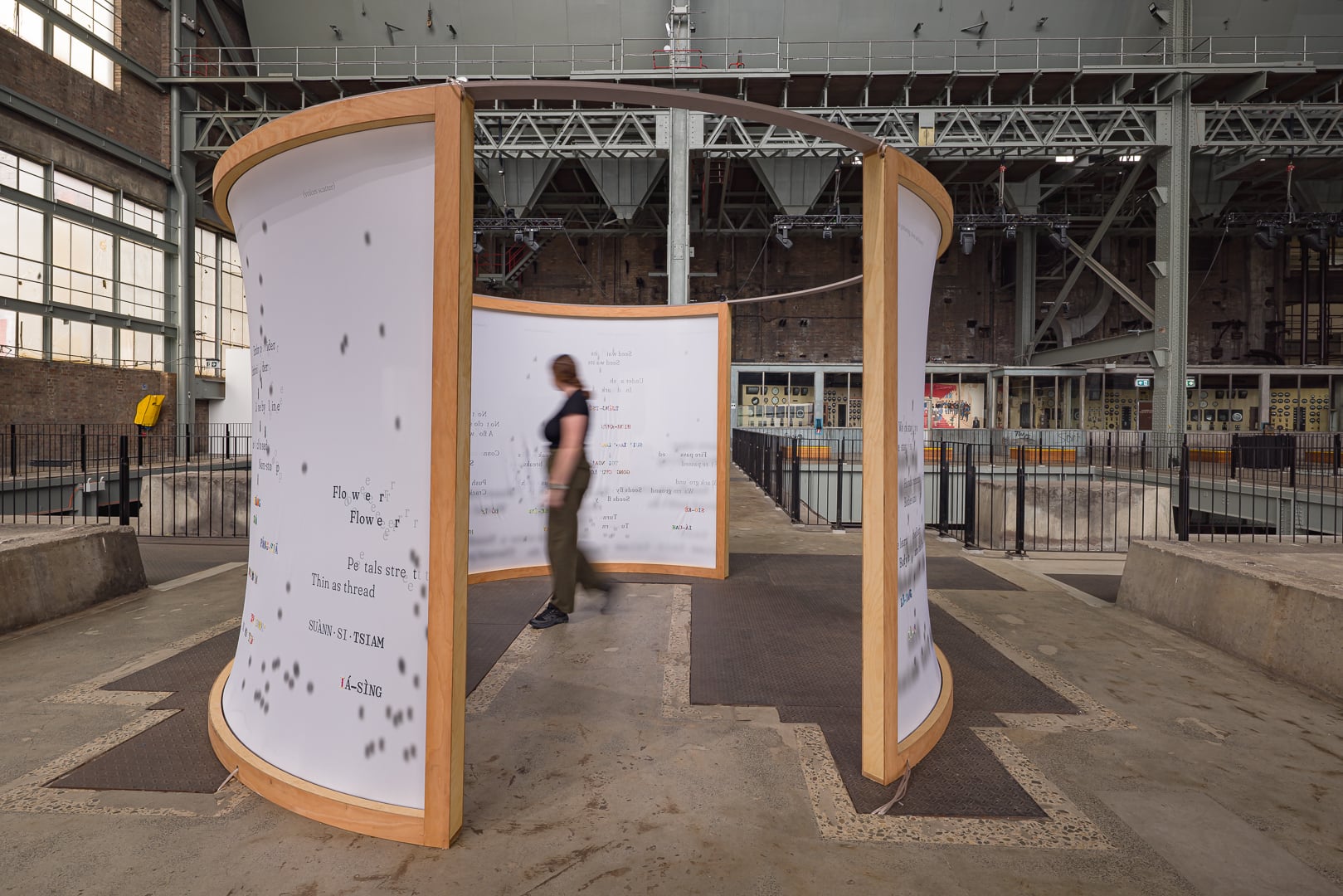
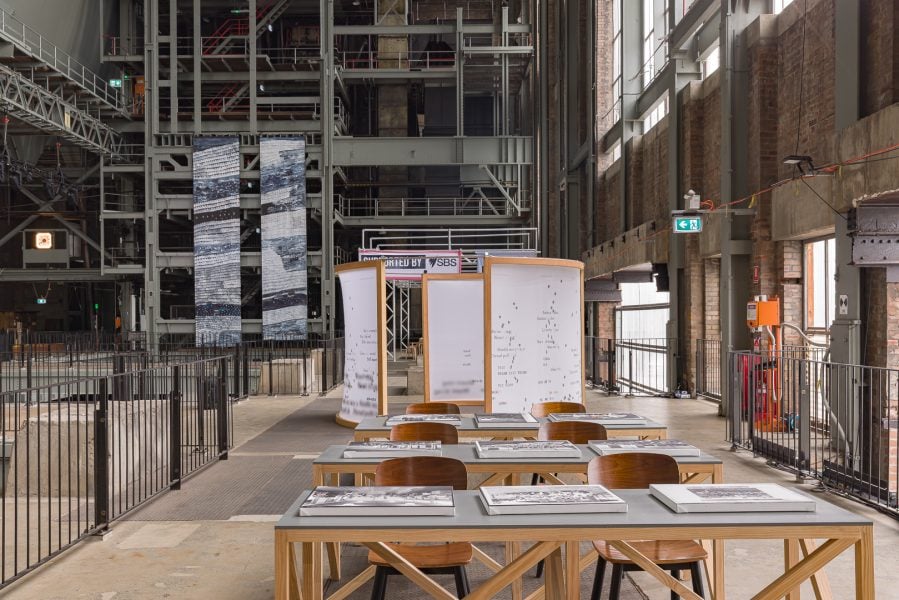
Hou I-Ting, All the Ladies (No.2), 2026. Commissioned by the Biennale of Sydney with generous support from Taipei Economic and Cultural Office, Sydney. Courtesy of the artist © Hou I-Ting. Installation view, 25th Biennale of Sydney, Rememory, 2026, White Bay Power Station. Photograph: Document Photography.
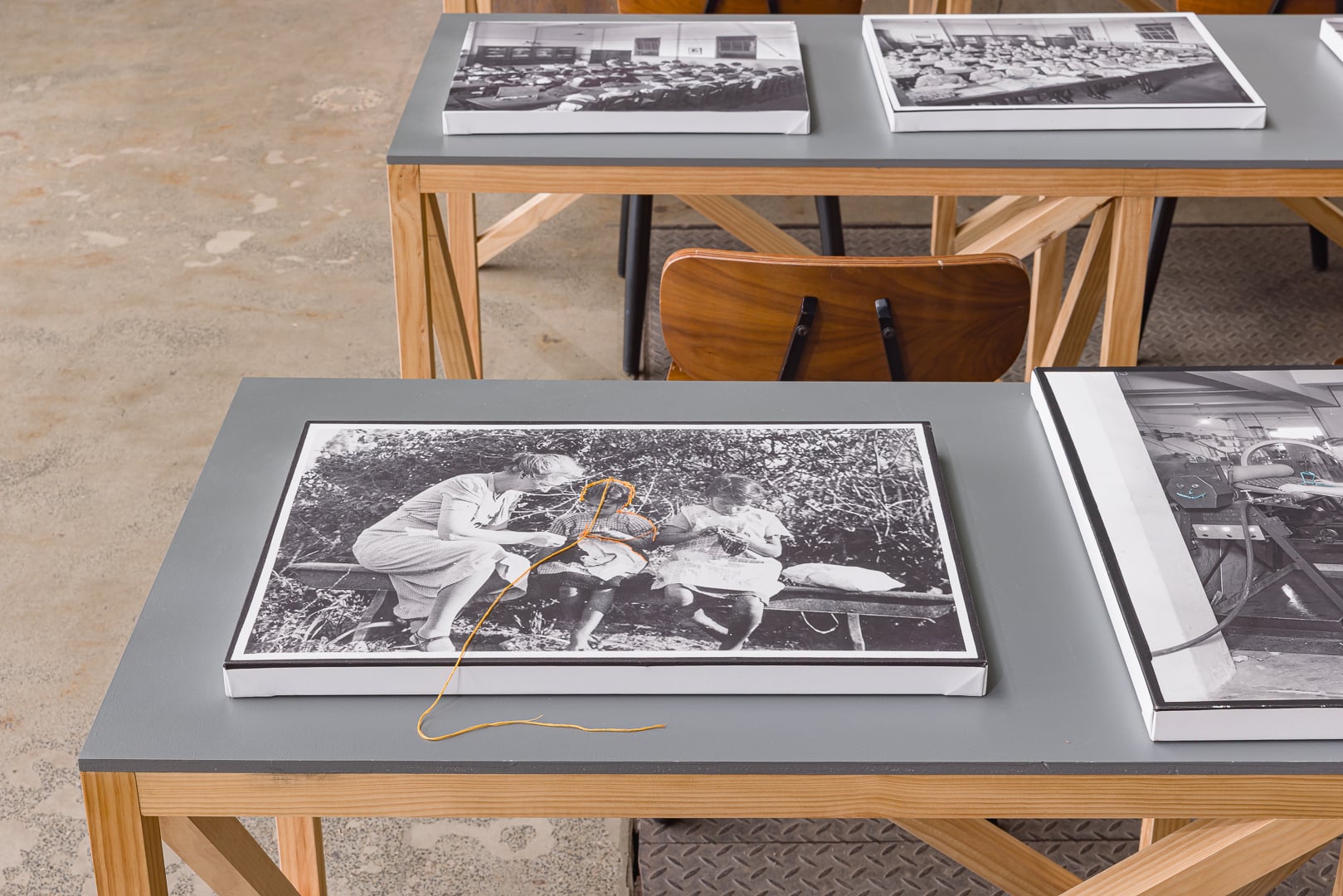
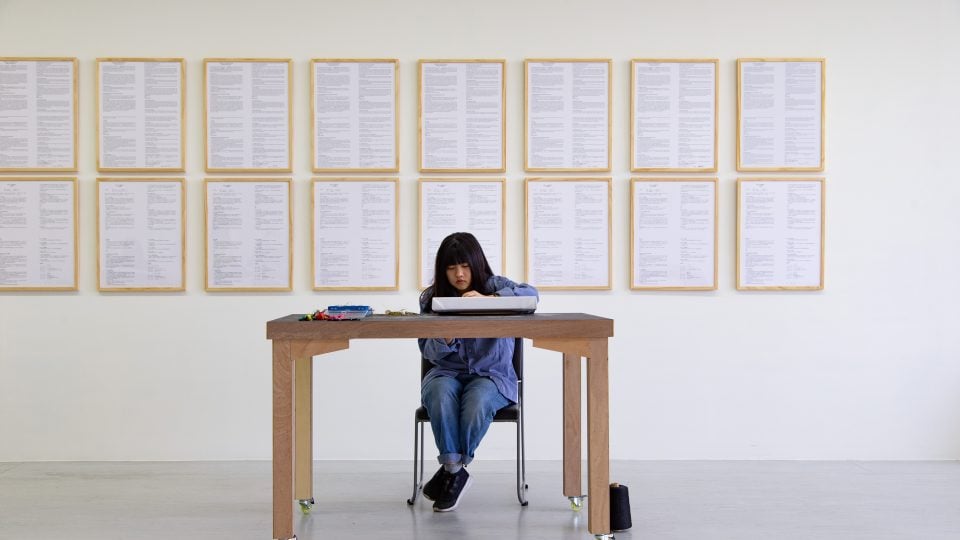
Hou I-Ting, Needlewomen in the Fields – When Needle Spark, 2025-2026. Special acknowledgement: Images sourced from the Museums of History NSW – State Archives Collection. Commissioned by the Biennale of Sydney with generous support from Taipei Economic and Cultural Office, Sydney. Courtesy of the artist © Hou I-Ting. Installation view, 25th Biennale of Sydney, Rememory, 2026, White Bay Power Station. Photograph: Document Photography.
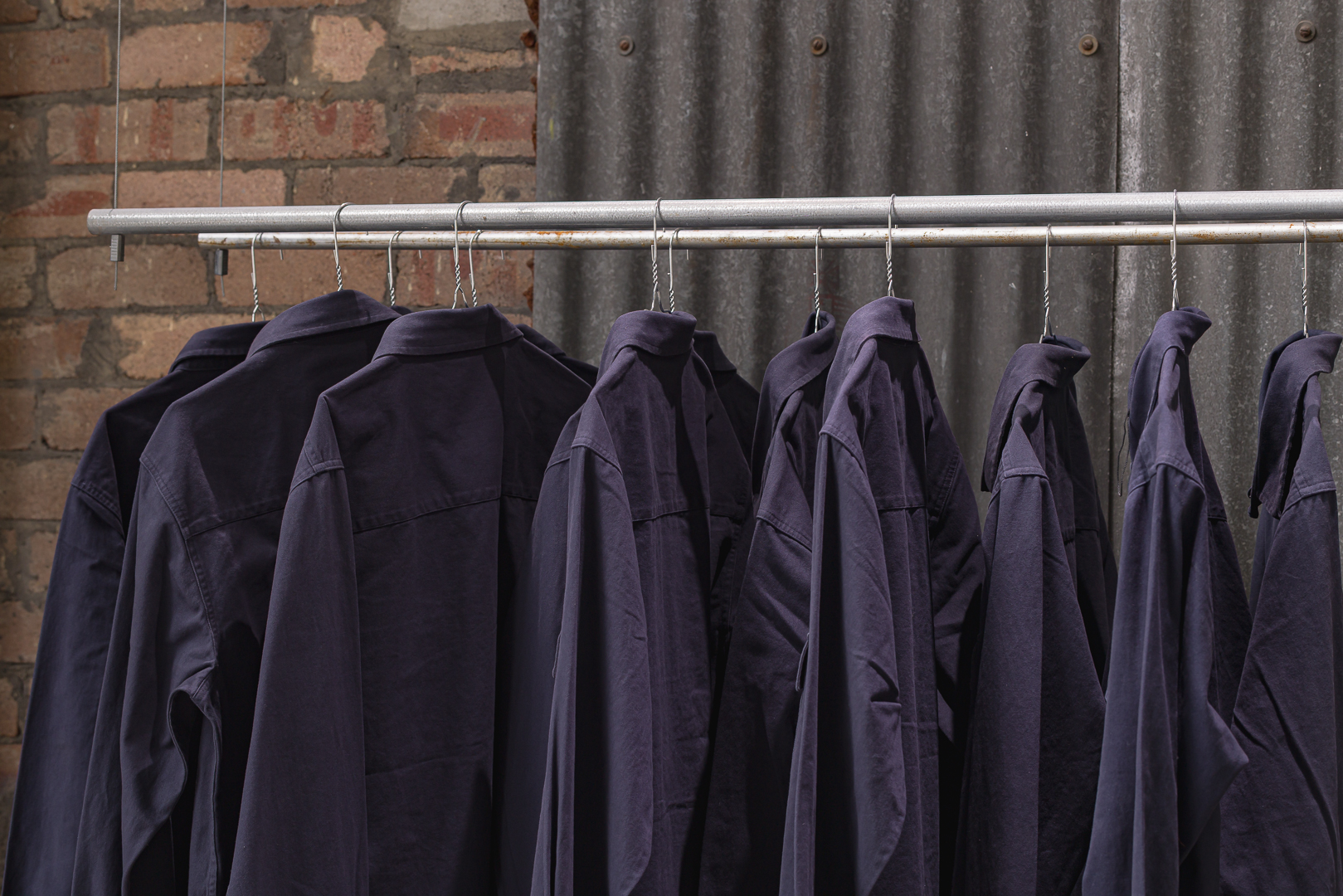
Hou I-Ting, Needlewomen in the Fields – When Needle Spark, 2025-2026. Special acknowledgement: Images sourced from the Museums of History NSW – State Archives Collection. Commissioned by the Biennale of Sydney with generous support from Taipei Economic and Cultural Office, Sydney. Courtesy of the artist © Hou I-Ting. Installation view, 25th Biennale of Sydney, Rememory, 2026, White Bay Power Station. Photograph: Document Photography.
Hou I-Ting
Born 1979, Kaohsiung, Taiwan
Lives and works in Taipei, Taiwan
Needlewomen in the Fields – When Needle Spark 2025 – 2026
site-specific and participatory installations, digital print on canvas, wooden tables and chairs, embroidery
Special acknowledgement: Images sourced from the Museums of History NSW – State Archives Collection
Commissioned by the Biennale of Sydney with generous support from Taipei Economic and Cultural Office, Sydney
Courtesy of the artist
Often audiences are privy only to the finished product of an artist’s work, not so in Hou I-Ting’s Needlewomen in the Fields – When Needle Spark wherein the public is invited to contribute to an ongoing project of embroidery and textile labour. Simultaneously textile, performance and literal work Needlewomen in the Fields – When Needle Spark extends I-Ting’s practice of interrogating the relationship between creative expression and the processes of production.
Particularly interested in the influences of colonial and political regime in Taiwan’s history on women’s labour, Needlewomen in the Fields – When Needle Spark intentionally uses a traditionally feminine craft, embroidery. Using this medium reveals the human hours, sweat and skill behind an ever-growing consumer culture.
In an extension of her existing work utilising archival photography from Taiwan, Hou I-Ting’s work for the Biennale of Sydney sees visitors invited to contribute their own work by colourfully embroidering printed archival photos of Australia’s textile working history. Literally reanimating the production chain, I-Ting positions audiences as consumers and artfully denies them the privilege of a blind eye.
All the Ladies (No.2) 2026
installation, circular wooden structure, digital print on canvas, embroidery, sounds, looped 12 mins (sound) Participant (storyteller): Jinran Wang, Parnia Ossiani Marnani, Cecilia Wong, Fereshteh Yousefiniaye Shad
Text: Hou, I-Ting
Sound recordist: Hou, I-Ting Sound engineer: Feng Chin Ming
Graphics Designer: moho (Mariana Alfaro and Surya Son)
Commissioned by the Biennale of Sydney with generous support from Taipei Economic and Cultural Office, Sydney
Courtesy of the artist
All the Ladies (No.2) is a text-score sound installation that can be read, sung, performed, and activated through embodied action. It is the second addition of All the Ladies series. Both versions focus on songs of women’s labour.
The core melody of this second version is adapted from the original Hakka tea picking songs, specifically from sections that traditionally adopt the perspective of matchmaking and being watched. This viewpoint is rewritten from a female-centred perspective, shifting toward women’s own embodied experiences of labour. Here, nature becomes an extension of the body. The song no longer speaks of being seen or desired, but instead becomes a self-narrated lyric—voiced from within labour itself. The text is also reflecting by the particular life experiences of several women who have migrated to Australia, reflecting their stories and their pursuit of freedom.
The dynamic imagery of the text-score is inspired by plant species unique to ecosystems shaped by Australian wildfires, such as Banksia. Without fire, these plants cannot release their seeds. Through intense heat, seed pods open; thousands of winged seeds are lifted by hot winds, scattered into the air, and mixed with ash as they settle onto the scorched ground. In doing so, they reclaim landscapes that were once difficult to penetrate, spreading across dense shrublands. This fire-mediated dispersal becomes a central metaphor throughout the work—symbolising regrowth, revival, and evolution—and runs through both the sonic and textual imagery of the piece.
Featured In