Gunybi Ganambarr
Born & Lives in:
Australia
Yolŋu (Ŋaymil) people
Location
- White Bay Power Station
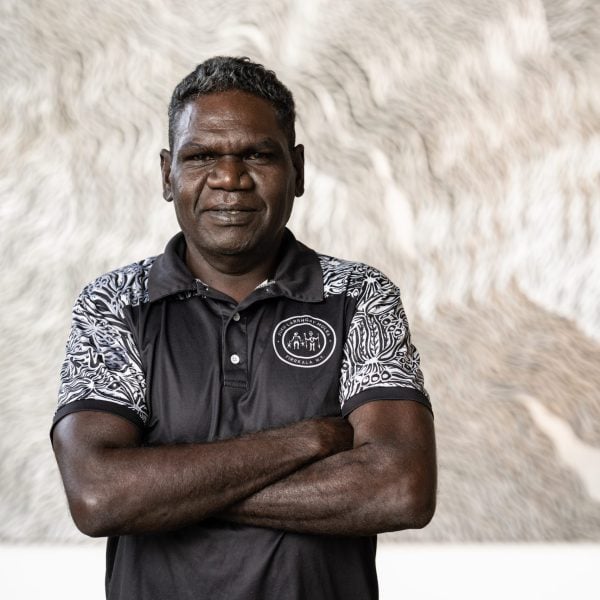
Gunybi Ganambarr is a remote First Nations artist from the Ŋaymil clan of the Dhuwa moiety of the Yolŋu nation. He lives and works in Gäṉgan, a remote homeland in North East Arnhem Land, Northern Territory.Ganambarr’s practice bridges Yolŋu cultural knowledge with contemporary forms, incorporating reclaimed industrial materials into his artworks. Drawing on his experience in house construction, he repurposes materials such as aluminium, rubber, and steel to create powerful works that reflect both ancestral law and contemporary environmental concerns.
As the initiator of the ‘Found’ movement in North East Arnhem Land, he pioneered the use of reclaimed materials in Indigenous art – a practice later affirmed by Yolŋu Elders. This innovation has opened new creative pathways while raising awareness of the impact of both land rights and mining on Country.
Ganambarr has received multiple major awards, including First Prize in the National Aboriginal and Torres Strait Islander Art Award.
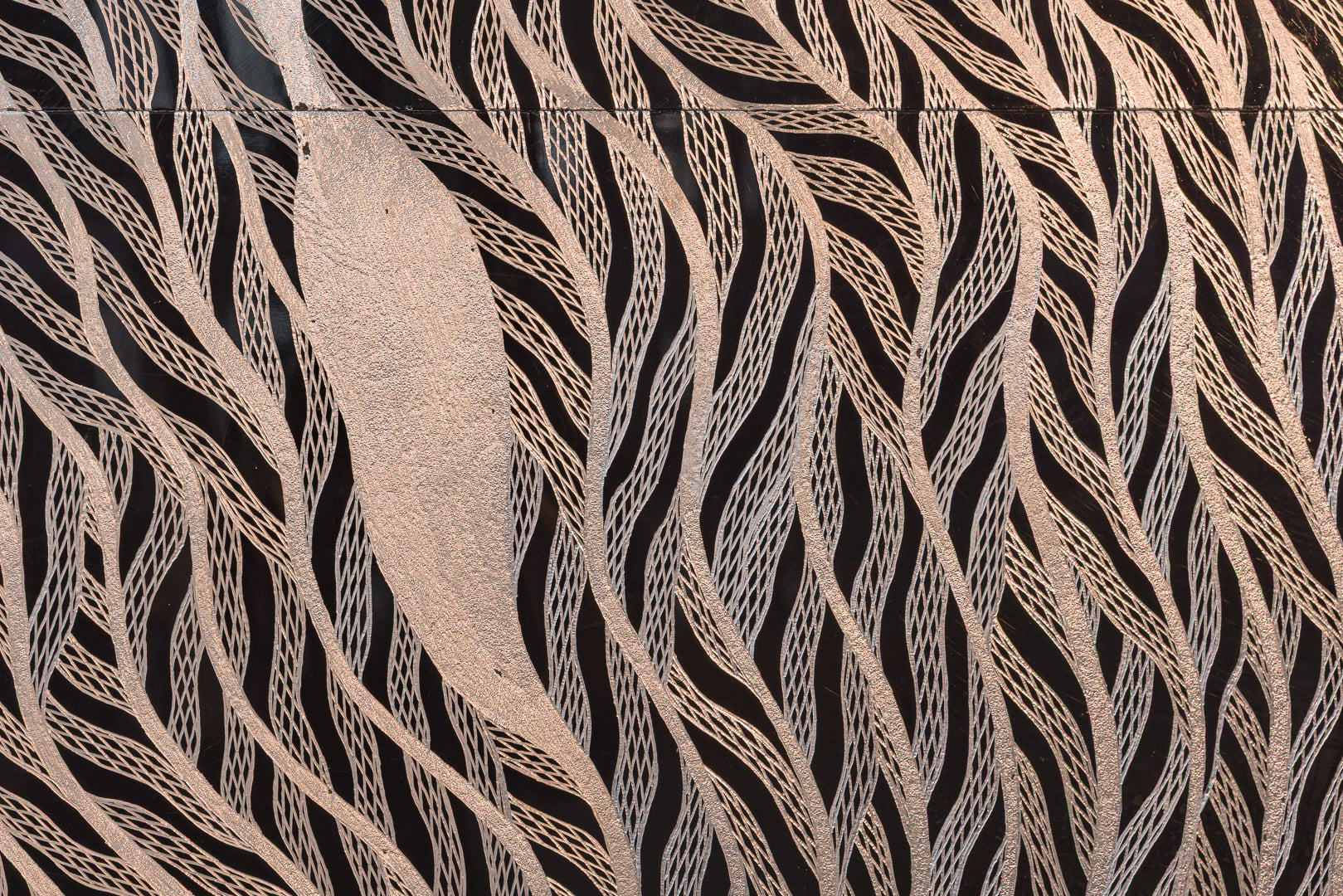
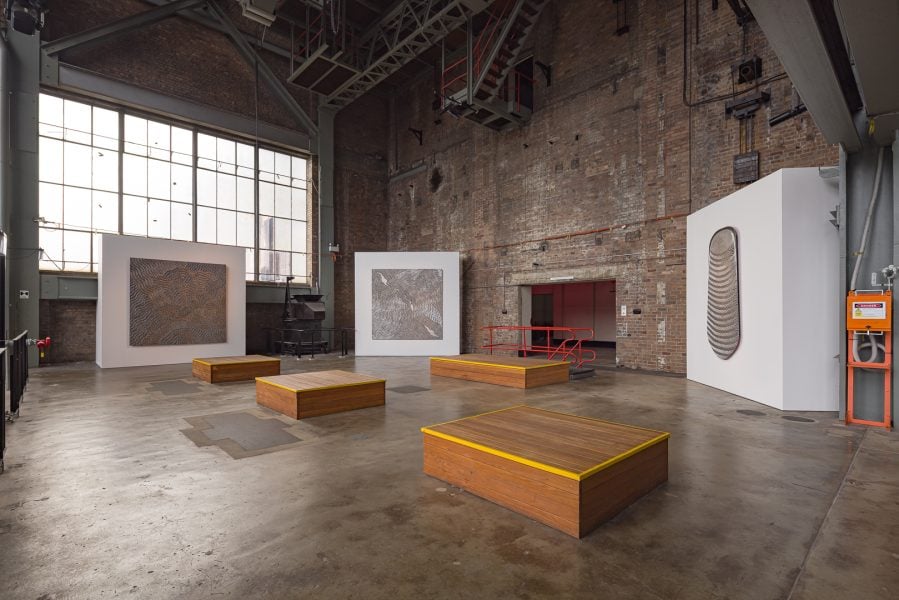
Gunybi Ganambarr, Dhuwa spring, 2025. Commissioned by the Biennale of Sydney and the Fondation Cartier pour l’art contemporain. Courtesy of the artist; Buku-Larrŋgay Mulka Art Centre; and Yirrkala, Northern Territory © Gunybi Ganambarr. Installation view, 25th Biennale of Sydney, Rememory, 2026, White Bay Power Station. Photograph: Document Photography.
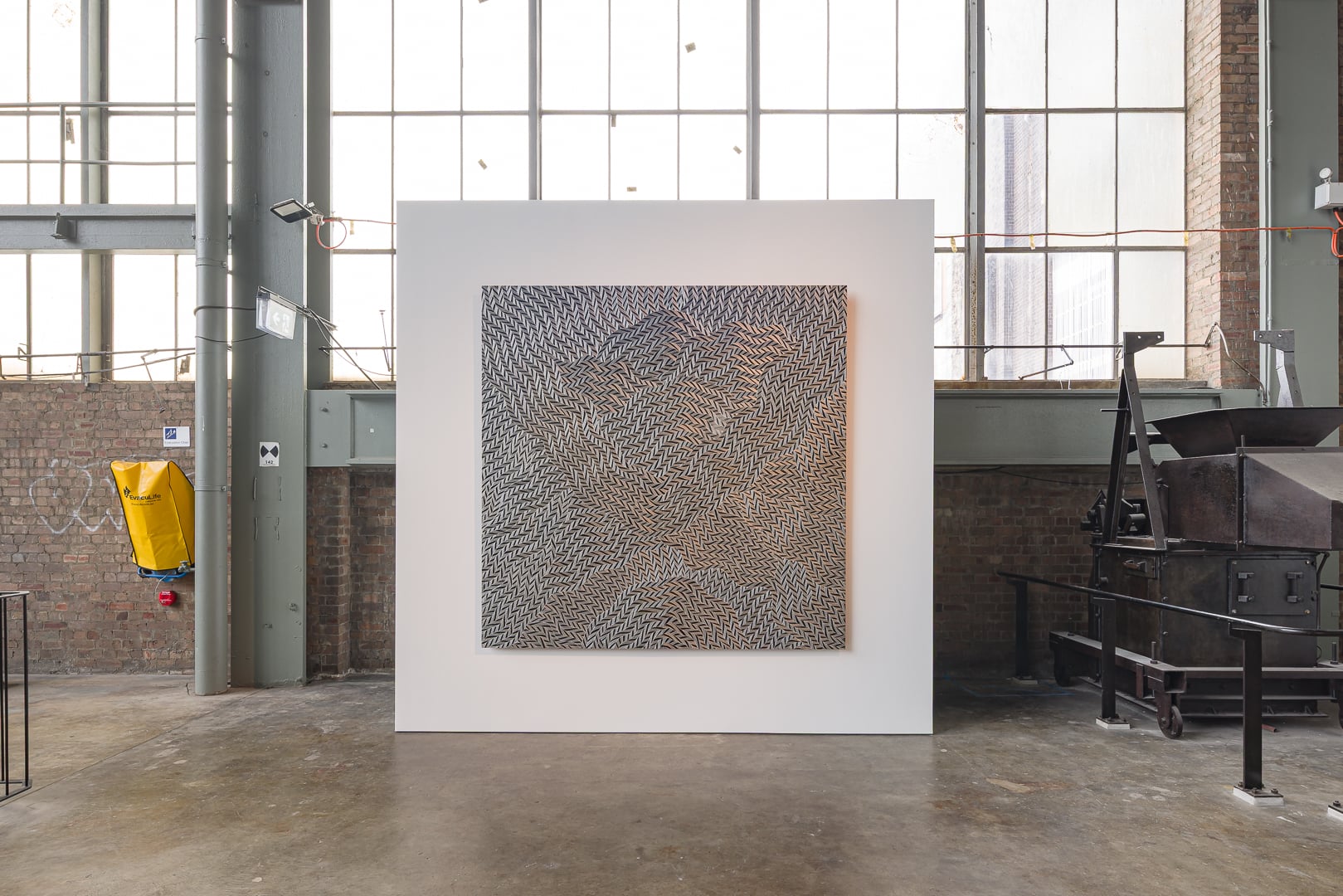
Gunybi Ganambarr, Ŋaymil font, 2024. Commissioned by the Biennale of Sydney and the Fondation Cartier pour l’art contemporain. Courtesy of the artist; Buku-Larrŋgay Mulka Art Centre; and Yirrkala, Northern Territory © Gunybi Ganambarr. Installation view, 25th Biennale of Sydney, Rememory, 2026, White Bay Power Station. Photograph: Document Photography.
Gunybi Ganambarr
Born 1973, Yirrkala (Northern Territory), Australia
Lives and works in Gängän (Northern Territory), Australia Yolŋu (Ŋaymil) people
Ŋaymil font 2024
etched aluminium
Commissioned by the Biennale of Sydney and the Fondation Cartier pour l’art contemporain. Courtesy of the artist, Buku-Larrŋgay Mulka Art Centre and Yirrkala, Northern Territory.
Dhuwa spring 2025
etched aluminium
Commissioned by the Biennale of Sydney and the Fondation Cartier pour l’art contemporain. Courtesy of the artist, Buku-Larrŋgay Mulka Art Centre and Yirrkala, Northern Territory.
Mundatjŋu 2024
etched aluminium
Commissioned by the Biennale of Sydney and the Fondation Cartier pour l’art contemporain. Courtesy of the artist, Buku-Larrŋgay Mulka Art Centre and Yirrkala, Northern Territory
Gunybi Ganambarr is renowned for his experimental approach to artmaking, using conventional materials like bark or timber as readily as he uses chicken wire, glass, roofing insulation or salvaged aluminium. In line with tradition, Ganambarr only uses materials sourced from Country, arguing that once discarded, this kind of industrial waste becomes part of the landscape itself. Recently, Ganambarr has also begun using Alupanel, a commercial product made from the Bauxite mined from north-east Arnhem Land. This act of repatriation and reculturing of stolen land has opened new pathways within strict Yolŋu art traditions.
Incised with fine line work Mundatjŋu takes on the form of Ŋanmarra, the sacred woven mat of the Dhuwa people which concealed the Djang’kawu sisters’ sacred objects, as they journeyed through Creation giving birth to the clans of the Dhuwa moiety. Ŋaymil font and Dhuwa spring depict the reservoirs of the Ŋaymil/Ḏäṯiwuy clans.
Ŋalkan is an area on Ŋaymil land and sea between the Gurrumuru and Cato Rivers that run into Arnhem Bay. Within this area is a sacred Milngurr, or freshwater spring, with special qualities called ‘Balawurru’. Dhangultji or Brolga dances as Djanda, the sacred goanna, swims in the lagoon; their actions cause rippling patterns on the skin of the water, displacing Ḏarra, the totemic water weed. These designs have been attached to place since time immemorial and denote responsibility for, and understanding of, Country; an understanding that will be retained, respected and re-carved even as the land itself is eroded.
Featured In