Emily Jacir
Born:
Mediterranean
Lives in:
Italy / Palestine
Location
- White Bay Power Station
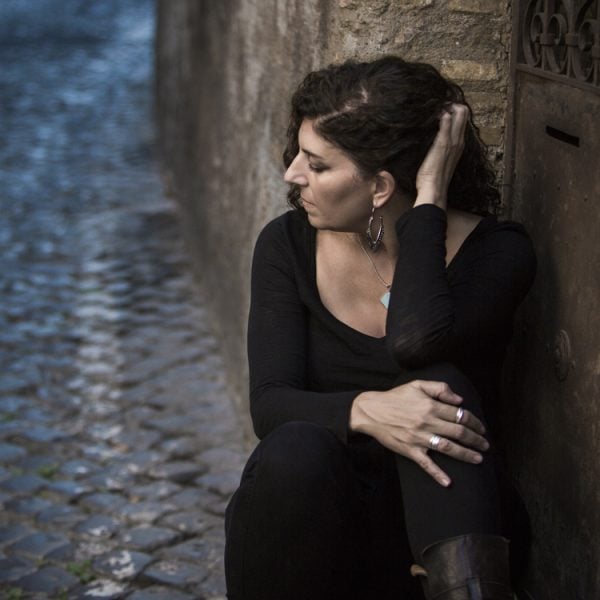
Emily Jacir’s interdisciplinary practice encompasses film, photography, installation, performance, sound, and text. Her work explores both personal and collective movement in public space, examining its implications on the physical and social experience of trans-Mediterranean geographies and temporalities. Through historical and archival research, she has built a layered and resonant body of work rooted in gathering, community, and social affiliations. Jacir has been actively involved in education in Palestine since 2000 and invested in creating alternative spaces for knowledge production internationally. In 2014, she founded Dar Yusuf Nasri Jacir for Art and Research in Bethlehem, transforming her historic family home into a cultural space for artists, researchers, farmers, archivists, musicians and dancers. This gesture of reclaiming both space and narrative resonates in her practice: rooted, reparative, and generative.
Emily Jacir
Born in the Mediterranean
Lives and works between Rome, Italy and Bethlehem, Palestine
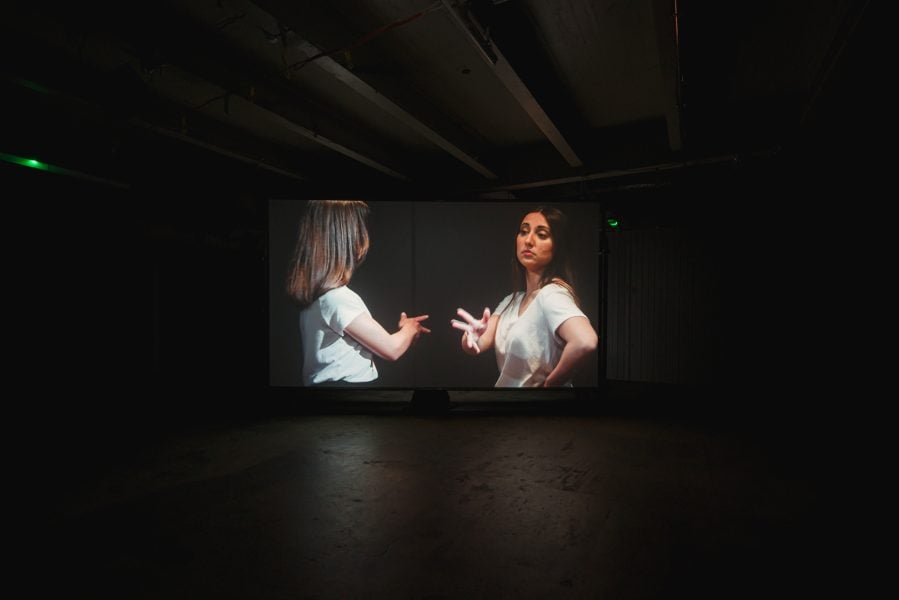
We Ate the Wind 2023
two-channel video installation and ambisonic sound installation, looped 31 mins
Presentation at the 25th Biennale of Sydney is made possible by Rubaiya Qatar, Qatar Museums. Originally commissioned by Musée cantonal des Beaux-Arts de Lausanne
Courtesy of the artist; Milani Gallery, Brisbane; Francesco Pantaleone Arte Contemporanea, Palermo; and Experimenter Gallery, Kolkata
In the aftermath of the Second World War, Switzerland developed a policy on the recruitment of ‘guest workers’, the largest group of which were more than two million Italians mainly from the south. Under the “seasonal workers” policy in force until 2002 in Switzerland, these workers were not permitted to bring their families. As a result, thousands of Italian children entered illegally and were forced to live in secrecy hidden inside their homes, unable to go outside to play, or go to school. On the other side of the border an unknown number of Italian children grew up without their parents – left behind in Italy or stuck in so-called “orphanages” on the Swiss-Italian border. In 1965 Swiss playwright and novelist Max Frisch summarised his country’s post-war recruitment of ‘guest’ labourers when he said, “we wanted workers, but we got people instead”.
Confronting the imposed family and community separations and the related inter-generational trauma, Emily Jacir’s We Ate the Wind mixes new and archival footage contrasting the silence, sound, and confinement of living apart and in the shadows with the joy of rhythm and movement gathering in community in public spaces. A traverse between those who are forced to whisper and those who can scream, between proximity and distance, between personal history and collective trauma, Jacir gives form to historical memory through the fragmentary montage of images and sound.
Summoning the popolare (popular) dances from Southern Italy, Jacir works in collaboration with dancers and musicians with whom she has been dancing, singing and living for the past decade —many of whom have family members who worked in Switzerland. She contrasts the rhythm of collective ritual with the silence imposed on workers’ children. Situating the historic confinement of workers’ families within a broader capitalist system that separates labourers from profit, personhood and community, We Ate the Wind emphasises the importance of collective resistance.
Featured In