Derek Ogbourne
Born:
England
Lives in:
High Wycombe, United Kingdom
Location
- Chau Chak Wing Museum at the University of Sydney
Derek Ogbourne is best known for his exhilarating, at times wildly physical works across all art forms, centred around an ongoing plot of big themes: life and death, vision, landscape, beauty and the sublime. His work is deeply rooted int he dichotomy between resilience and fragility, what is it to endure and what is it to be fragile – essentially, it is rooted in what it is to be human. Ogbourne’s often obsessive preoccupations result in profoundly complete and emotionally engaging works. Ogbourne’s oeuvre encompasses a wide range of media, from abstract painting to performance, video works, and monumental installations film, drawings, objects and machines.
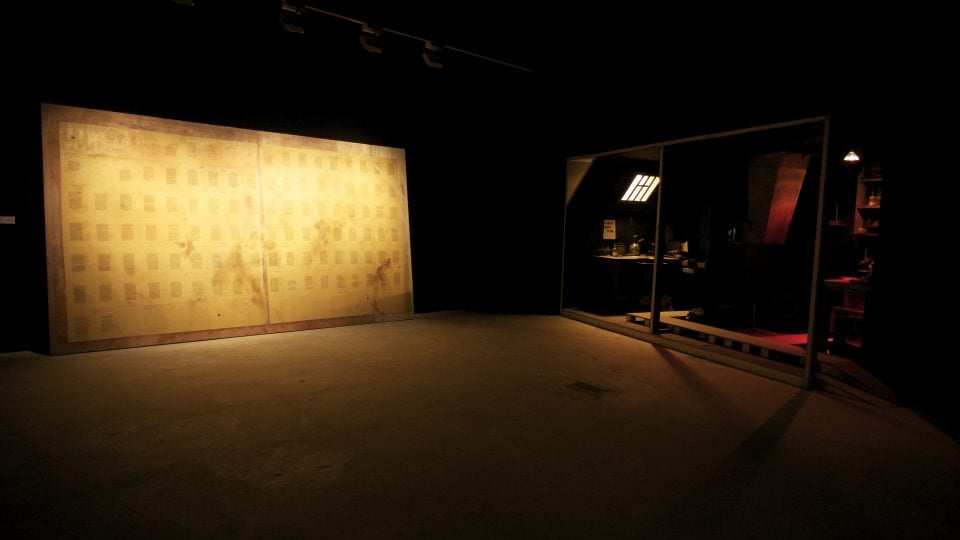
Derek Ogbourne, Land of Fovea, 2026. Commissioned by the Biennale of Sydney with generous assistance from British Council in Sydney. Courtesy of the artist © Derek Ogbourne, The British Optical Association Museum and Chau Chak Wing Museum, The University of Sydney. Installation view, 25th Biennale of Sydney, Rememory, 2026, Chau Chak Wing Museum, The University of Sydney. Photograph: David James.
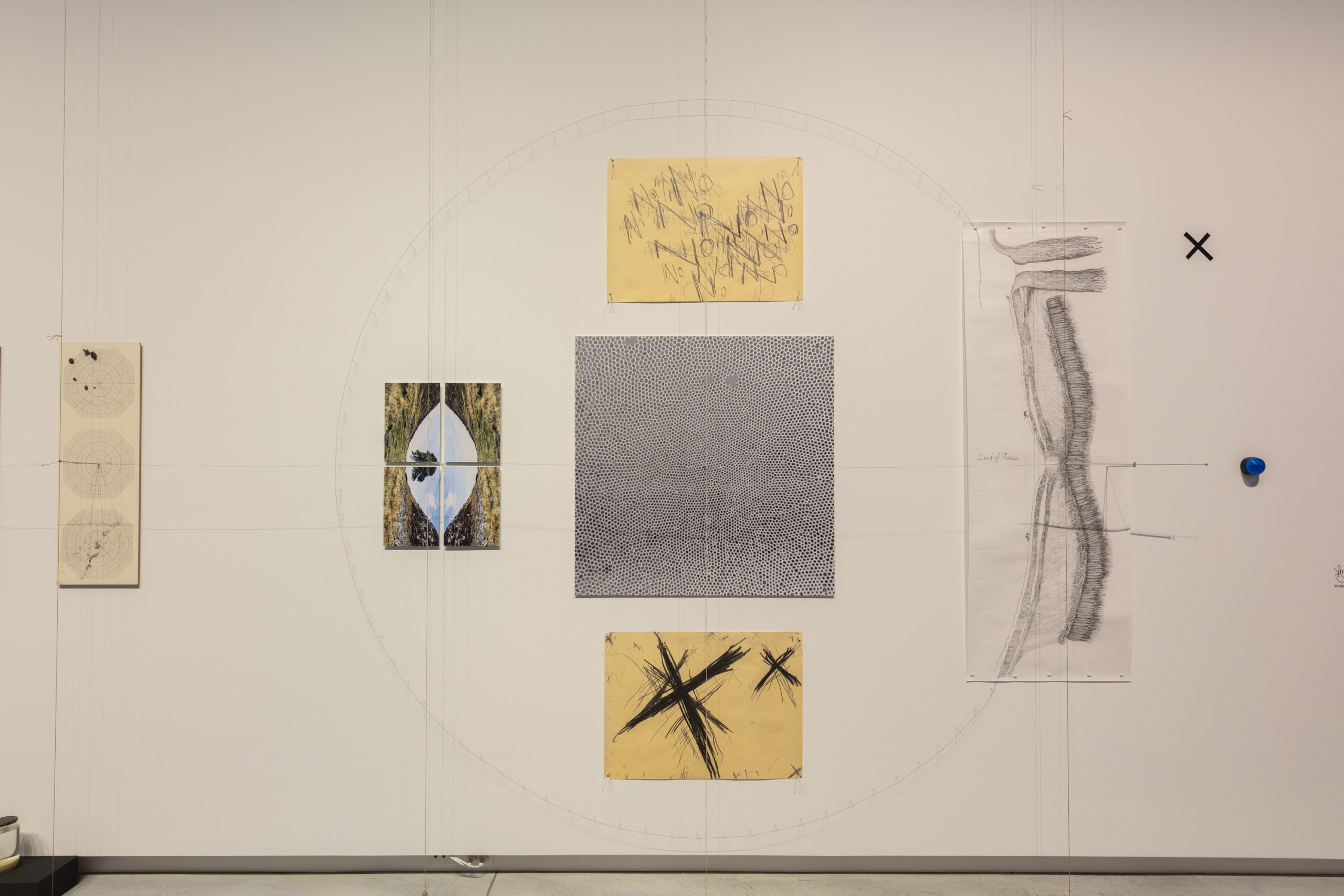
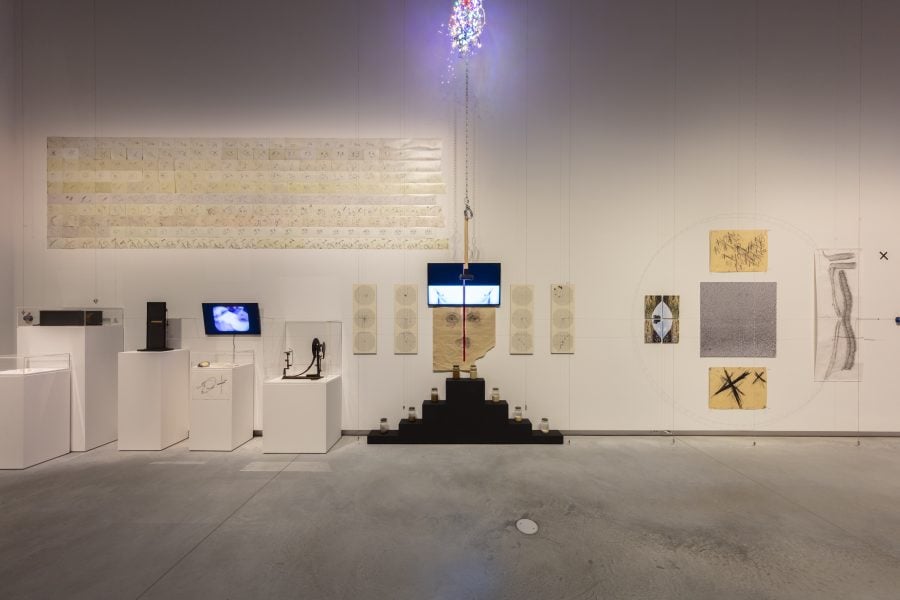
Derek Ogbourne, Land of Fovea, 2026. Commissioned by the Biennale of Sydney with generous assistance from British Council in Sydney. Courtesy of the artist © Derek Ogbourne, The British Optical Association Museum and Chau Chak Wing Museum, The University of Sydney. Installation view, 25th Biennale of Sydney, Rememory, 2026, Chau Chak Wing Museum, The University of Sydney. Photograph: David James.
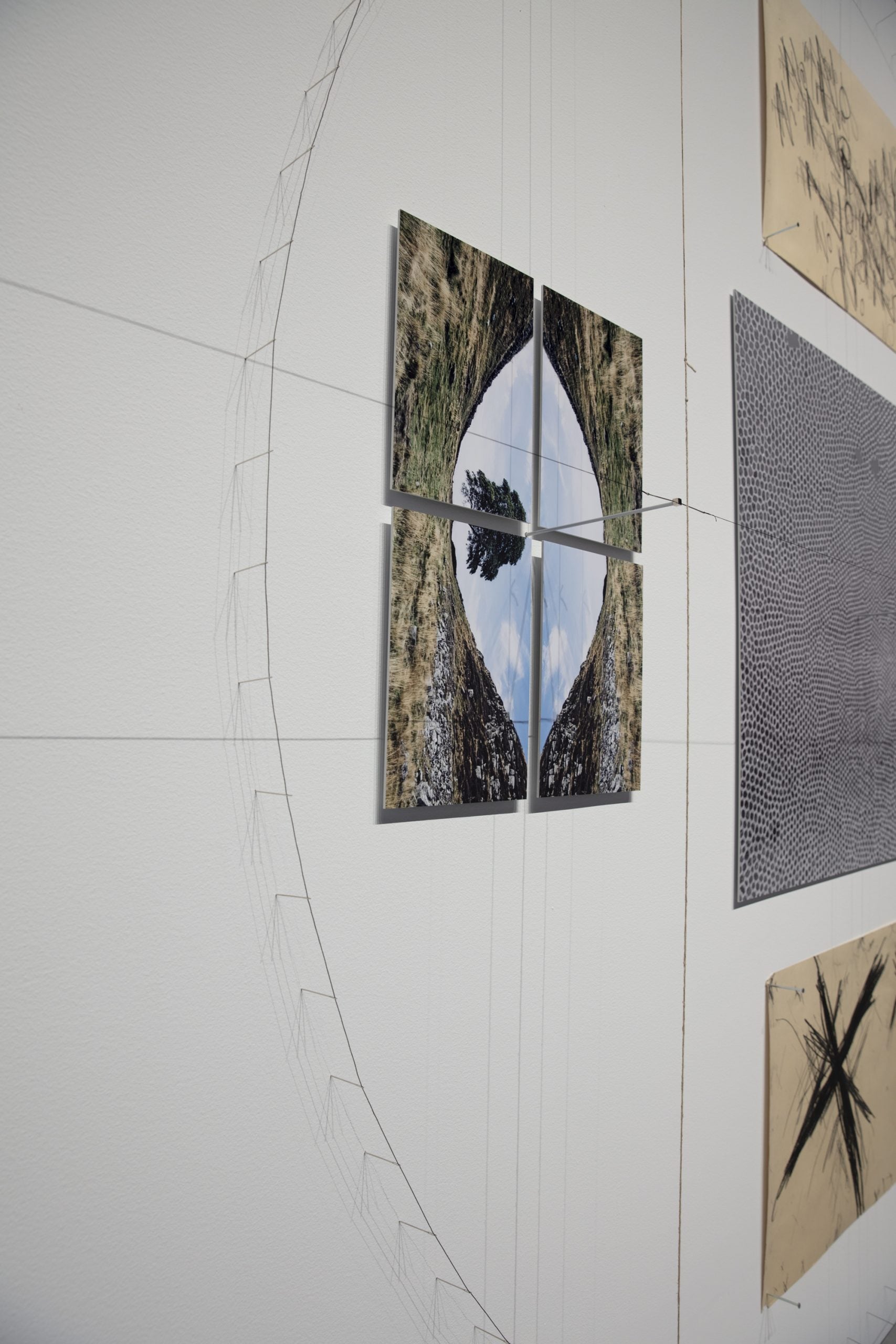
Derek Ogbourne, Land of Fovea, 2026. Commissioned by the Biennale of Sydney with generous assistance from British Council in Sydney. Courtesy of the artist © Derek Ogbourne, The British Optical Association Museum and Chau Chak Wing Museum, The University of Sydney. Installation view, 25th Biennale of Sydney, Rememory, 2026, Chau Chak Wing Museum, The University of Sydney. Photograph: David James.
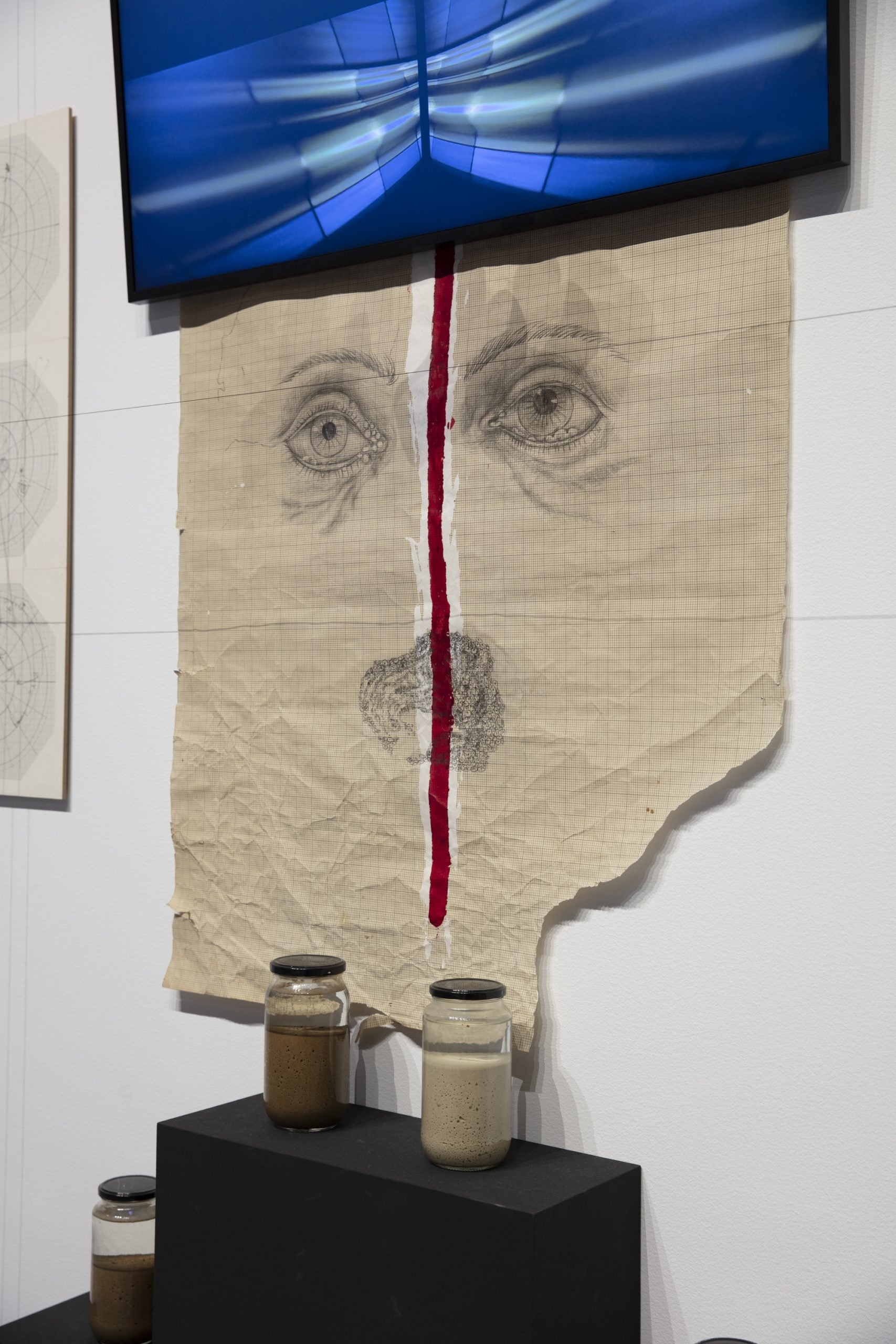
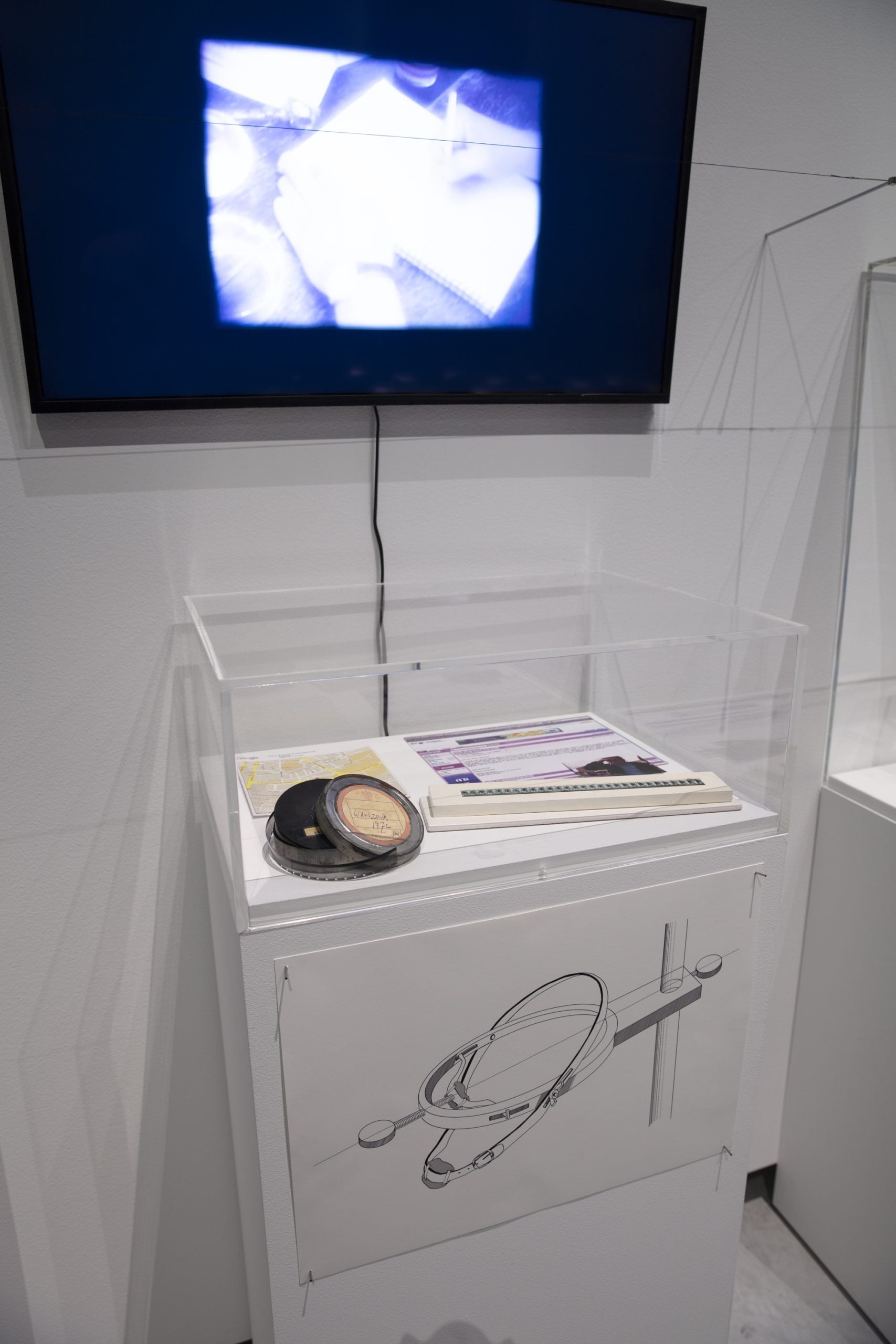
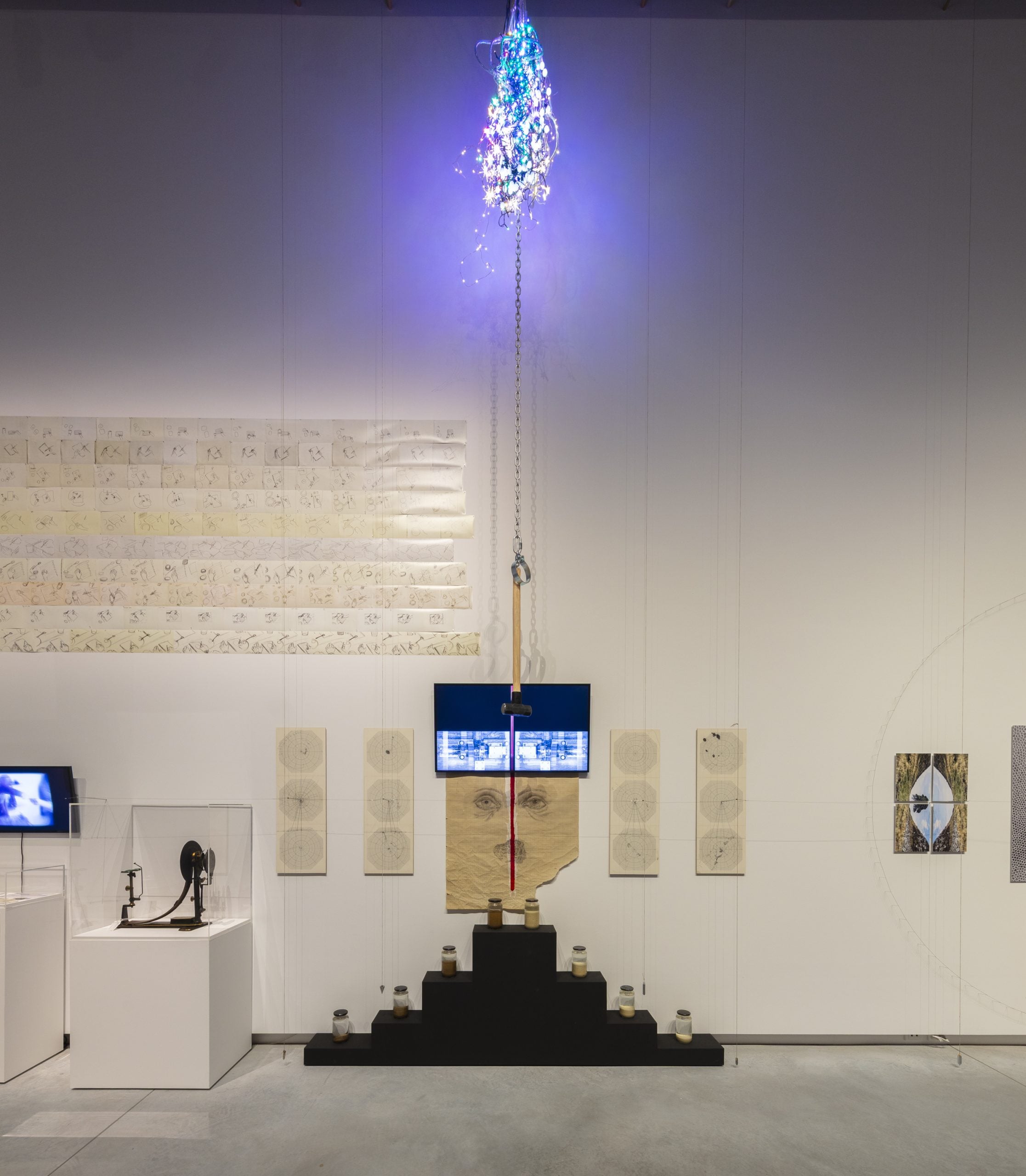
Derek Ogbourne, Land of Fovea, 2026. Commissioned by the Biennale of Sydney with generous assistance from British Council in Sydney. Courtesy of the artist © Derek Ogbourne, The British Optical Association Museum and Chau Chak Wing Museum, The University of Sydney. Installation view, 25th Biennale of Sydney, Rememory, 2026, Chau Chak Wing Museum, The University of Sydney. Photograph: David James.
Derek Ogbourne
Born 1964, England
Lives and works in High Wycombe, United Kingdom
Land of Fovea 2025
mixed media
Commissioned by the Biennale of Sydney with generous assistance from British Council in Sydney
Courtesy of the artist, The British Optical Association Museum and the Chau Chak Wing Museum, the University of Sydney
What if the last image your eyes ever saw remained imprinted on your retina, as you left this life? Optography is the study of such images, also known as optograms. Whilst popular in the late 19th and early 20th centuries, it is no longer considered valuable as a scientific or forensic technique.
Optography is at the core of artist Derek Ogbourne’s ever-evolving installation The Museum of Optography. First becoming interested in optography after a violent eye injury, Ogbourne has created a museum within a museum in a kind of Russian doll of ideas where trauma sits at its centre and schematically spreads out into a myriad of visual and auditory ocular connections.
Land of Fovea (part of The Museum of Optography) takes the fine line between life and death, being and not being – as embodied by the optogram – as its primary focus. Presenting historical collections as a perfect distillation of this concept, Ogbourne reconstitutes, reanimates or invents archival objects to transform the museum into a space between life and obliteration. Neither critical nor conciliatory, objects from the Museum collection (such as Kuhne’s Artificial Eye) are revived for the moment of this exhibition with a suitably unblinking clarity.
Description of objects featured in the work:
Kühne’s Artificial eye apparatus
Late-19th to early-20th century
Manufacturer unknown
Transferred from the Discipline of Physiology, 2021
Macleay Collections, Chau Chak Wing Museum, SC2021.21
The artificial eye instrument was first designed by Wilhelm (Wily) Friedrich Kuhne to demonstrate refraction. In use, the tank is filled with water that has fluorescein added so that the light path can be seen in the water. This version probably made by Physiology technical officers.
Tachistoscope
1912–1930
Manufacturer E Zimmermann, Germany Transferred from the School of Psychology, 2024
Macleay Collections, Chau Chak Wing Museum, SC2024.28
A tachistoscope is a device used to study visual perception, attention and memory. Today similar studies and tests are computer-based.
Professor McHardy’s Perimeter
1882–1920
Manufacturer Pickard & Curry, England Transferred from the Discipline of Physiology, 2021
Macleay Collections, Chau Chak Wing Museum, SC2021.17
In order to measure a subject’s peripheral vision, their chin was positioned on the felt-covered platform and targets would be moved along the rotatable arc. When a target disappeared from view, the subject recorded the result by punching a paper chart (held by the circular frame) with the protruding pricker pin.
Featured in