Chen Chieh-jen
Born & Lives in:
Taiwan R.O.C.
Location
- White Bay Power Station
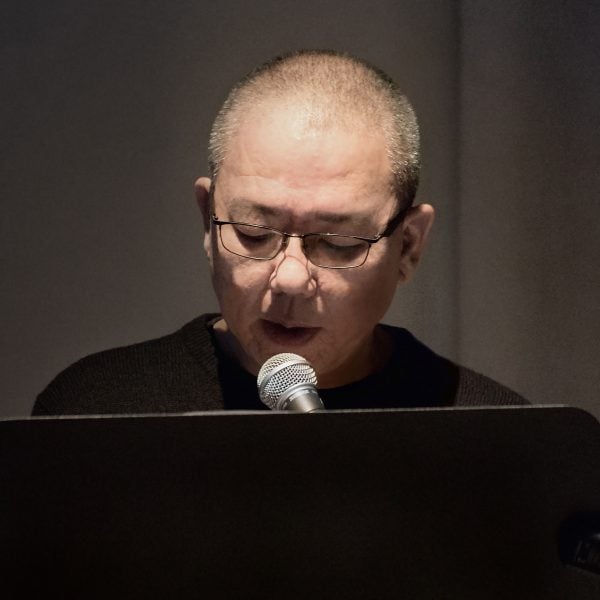
Born in 1960 in Taoyuan, Taiwan, Chen Chieh-jen is a Taipei-based artist whose work explores the impact of corporatocracy and technological control on contemporary society. Since 2010, he has focused on the global shift toward temporary employment and the resulting loss of individual agency, referring to this condition as “global imprisonment” or “at-home exile.” Drawing on Buddhist philosophy, he examines how desire can be transformed, and illusion can be challenged using māyā—a concept that questions the deceptive nature of reality. Through his practice, Chen seeks to reimagine the possibilities for resistance and change in an era of pervasive surveillance and automation.
Chen Chieh-jen
Born 1960, Taoyuan, Taiwan (R.O.C.)
Lives and works in Taipei, Taiwan (R.O.C.)
Voices of Pathologized Bodies 2025
single channel video, audio, looped 55 mins
Commissioned by the Biennale of Sydney with generous support from Ministry of Culture, R.O.C., Taiwan Content Plan
Courtesy of the artist
Contemporary Lo-deh Sao 2002 – 2025
single channel video, audio, looped 65 mins
This version was created for the Biennale of Sydney with generous support from Ministry of Culture, R.O.C., Taiwan Content Plan
Courtesy of the artist
Worn Away 2022 – 2023
three-channel video, audio, looped 17:53 mins; 24:36 mins; 23:52 mins
Courtesy of the artist
In the off-seasons of agricultural-era Fujian, Minnan and Taiwan, farmers would clear a small area of ground in the village, or beneath a tree, to perform for their fellow townspeople. Known as ‘Lo-deh sao’ (ground sweeping) this form of self-organised folk opera evolved into a distinct performance style associated with the annual Mazu pilgrimage that continues to this day.
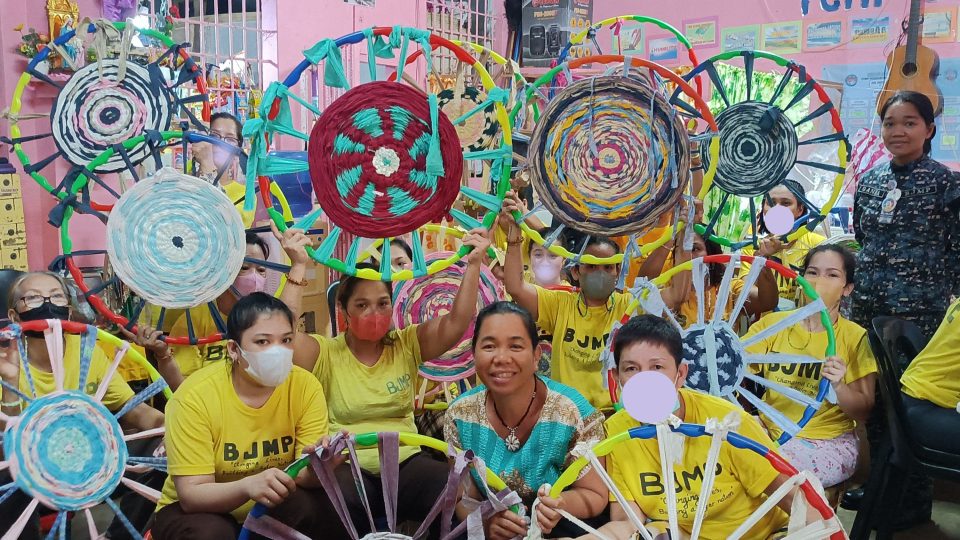
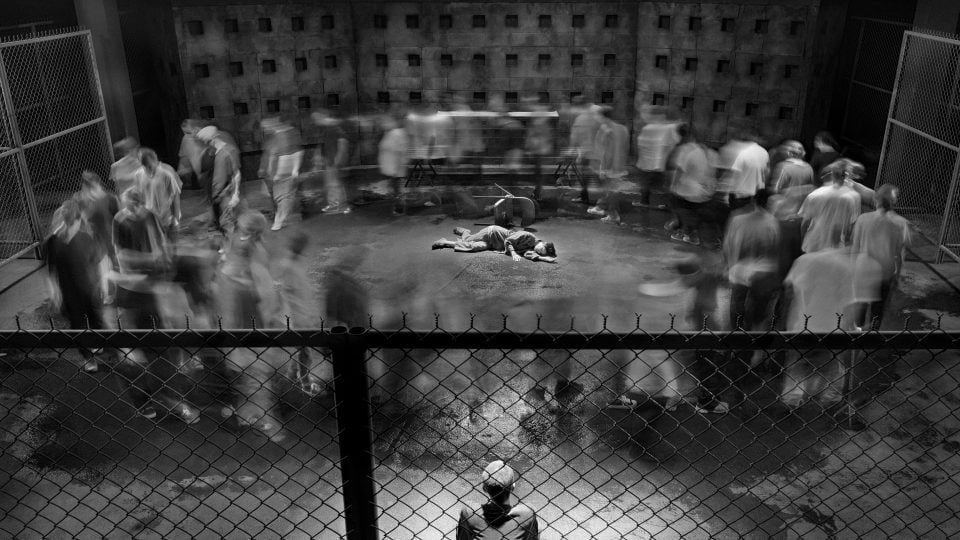
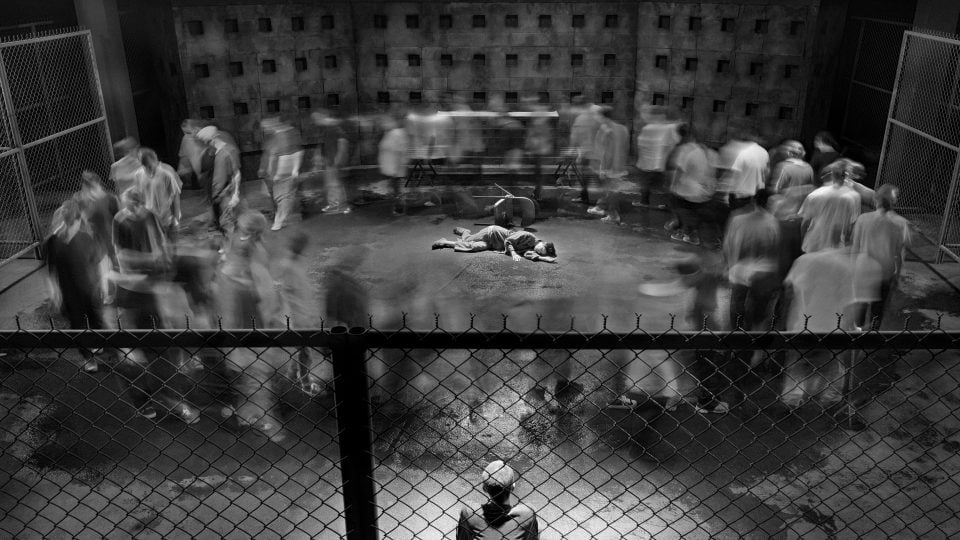
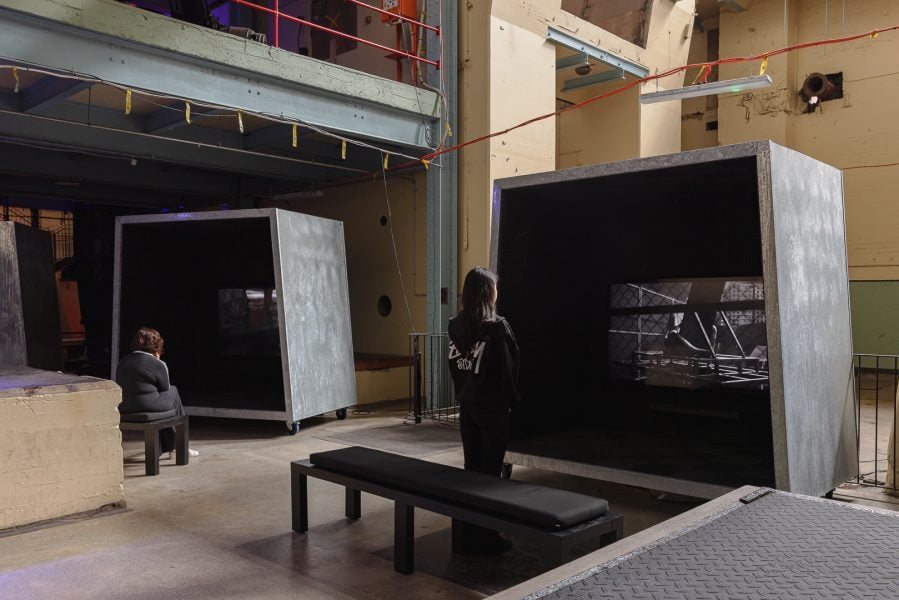
Taking this workers theatre as inspiration, Chen Chieh-jen’s installation for the 25th Biennale of Sydney brings together a collection of new and existing video works, housed within five brutal sculptural casings speaking to the punitive labour conditions endemic to a globalised and capitalist economy. Worn Away posits a New Dark Age of accelerated Neoliberlism in which a collection of discarded people navigate a complex structure of chain link fencing. Voices of Pathologized Bodies features unemployed and temporary workers, depicting the plights of those labouring in an increasingly technologised and atomised future. Contemporary Lo-deh Sao documents the artist’s long-held practice of working with non-professional performers.
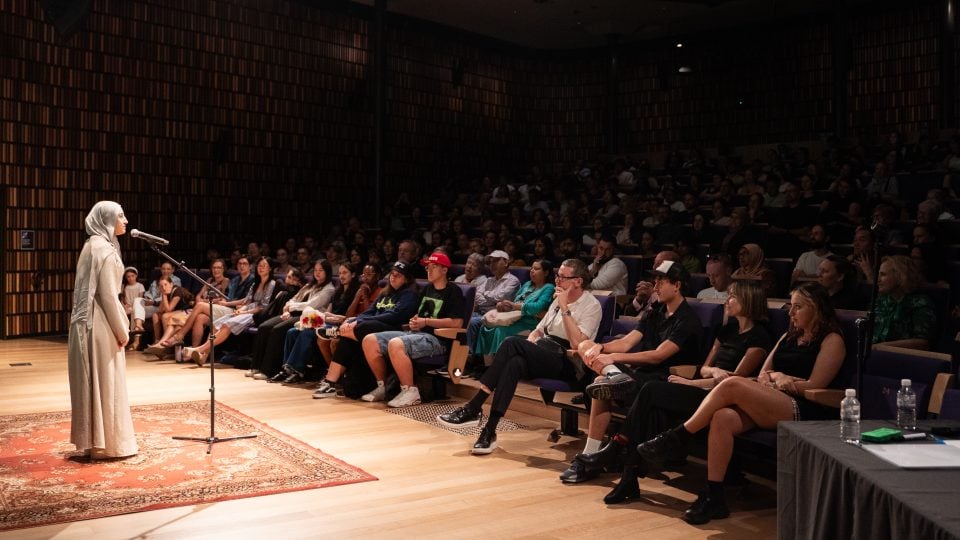
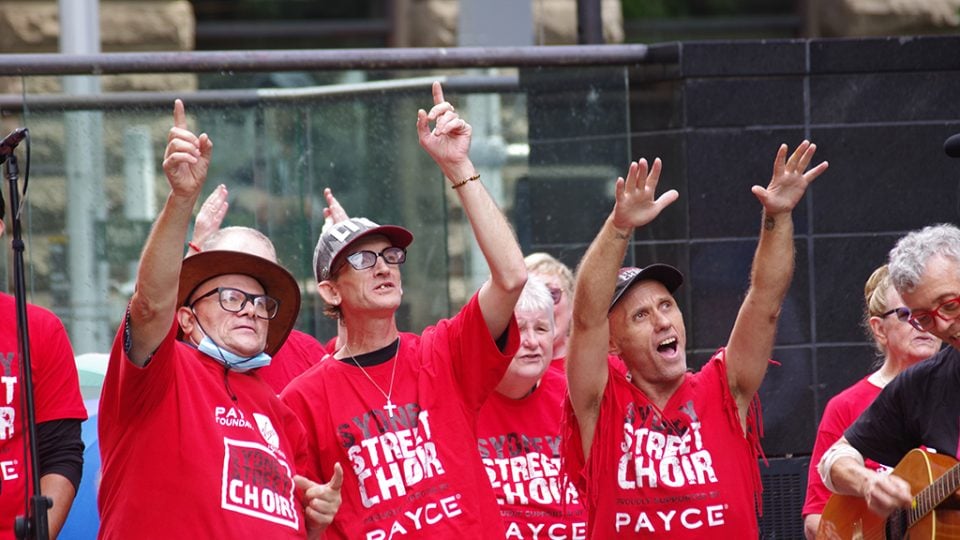
Periodically the installation is transformed into a modern Lo-deh sao as part of the Biennale of Sydney’s scheduled programming, activated by socially engaged community arts organisations in the spirit of self-determined storytelling through live performances.
Together, the installation, film, and performances form a critique of economic alienation, while reclaiming performance as a tool for solidarity, visibility, and resistance.
Featured In