Chang En Man
Born & Lives in:
Taiwan
Paiwan
Location
- Art Gallery of New South Wales
Born in Taitung, Taiwanese artist Chang En Man currently lives and works in Taipei, Taiwan. Utilising mediums such as moving image, photography, installation, and forms of creative collaboration, Chang’s practice explores how the Indigenous people of Taiwan negotiate the ever-shifting socio-cultural terrains and conditions for survival in contemporary Taiwan against the backdrop of modernisation and urbanisation, rooted in her own experiences and heritage as a half-Indigenous person. With this as a point of departure for her practice, Chang excavates lost histories and narratives to explore the world at large, aiming to embody the transformative potential that art holds.
Chang En Man
Born 1967, Taitung, Taiwan
Lives and works in Taipei, Taiwan
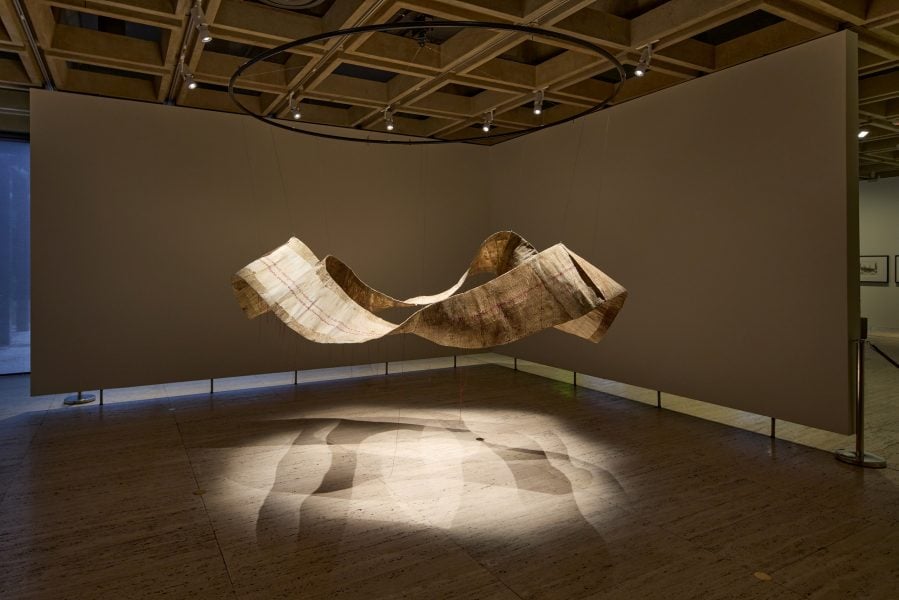
The Future is the Past, the Path to the Ancestral Spirits 2026
cotton thread embroidery on paper mulberry bark, motor
Commissioned by the Biennale of Sydney with generous support from Taipei Economic and Cultural Office, Sydney
Courtesy of the artist
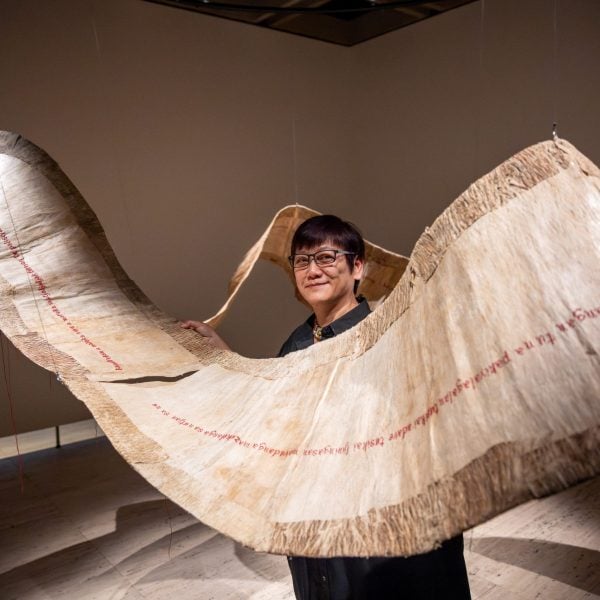
Language is central to how Chang En-Man reconciles the distance between contemporary urban life in Taiwan and her Paiwan Indigenous culture. Borrowing from the healing traditions of Paiwan’s shamanic tradition, The Future is the Past, The Path to the Ancestral Spirits features nine foundational Paiwan scriptures embroidered on the bark of the native paper mulberry tree.
The Paiwan term for ‘the future is the past’, nutjaivililj, reflects the sentiment also found in the language of the Amis, another of the 16 recognised Taiwanese Indigenous peoples. The Amis refer to the paper mulberry tree as lolang, derived from the root word ‘lolol’, which signifies restoration, return and transformation. Using a language that is simultaneously native and unfamiliar to the artist, Chang’s needlework symbolically mends the rupture between herself and her ‘mother culture’. This doubling quality, emphasised by the work’s unending mobius strip construction, reflects the Paiwan people’s cosmological understanding of the cyclical nature of life, as well as the artist’s own journey back, then onward, to self.