Benjamin Work
Born & Lives in:
Aotearoa, New Zealand
Location
- Chau Chak Wing Museum at the University of Sydney
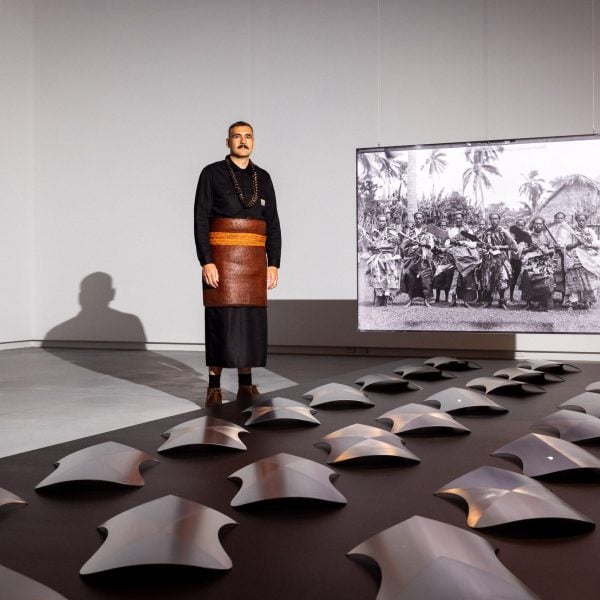
Benjamin Work is an artist based in Tāmaki Makaurau (Auckland), of Tongan and Orcadian/Shetlander lineage. His practice weaves together contemporary and traditional Tongan influences, reflecting the layered complexities of cultural identity across the Moana Oceania diaspora. Deeply informed by the transference of oral histories and archival documentation, his work becomes a vessel where past, present, and future intersect. Work’s MFA (Master of Fine Arts), completed in 2024, explored what he terms tu’u vaha’a – occupying the in-between, – a conceptual and spatial position that informs his investigation into Tongan narratives embedded within his maternal lineage. This stance also underpins his ongoing engagement with museum collections and the politics of cultural restitution.
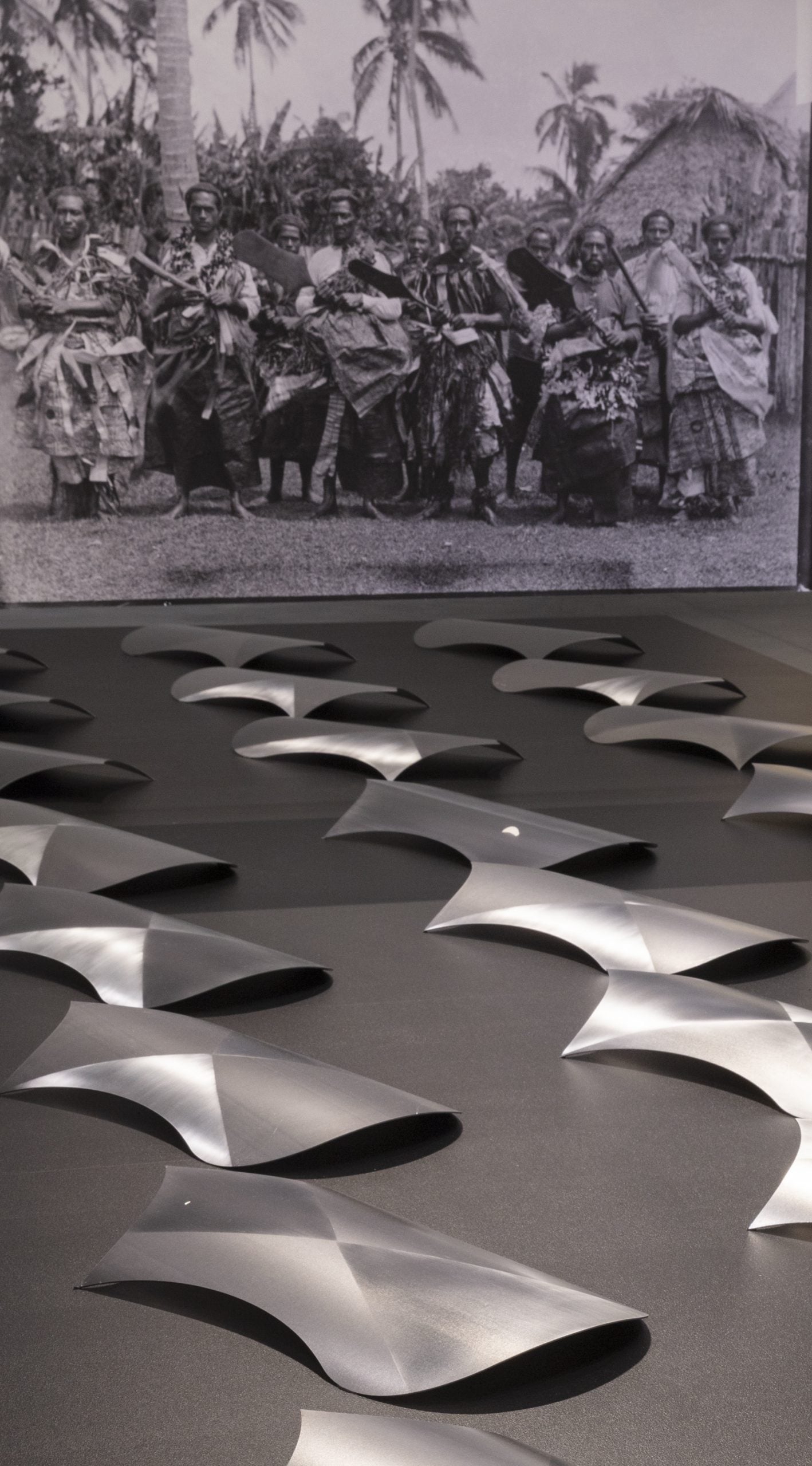
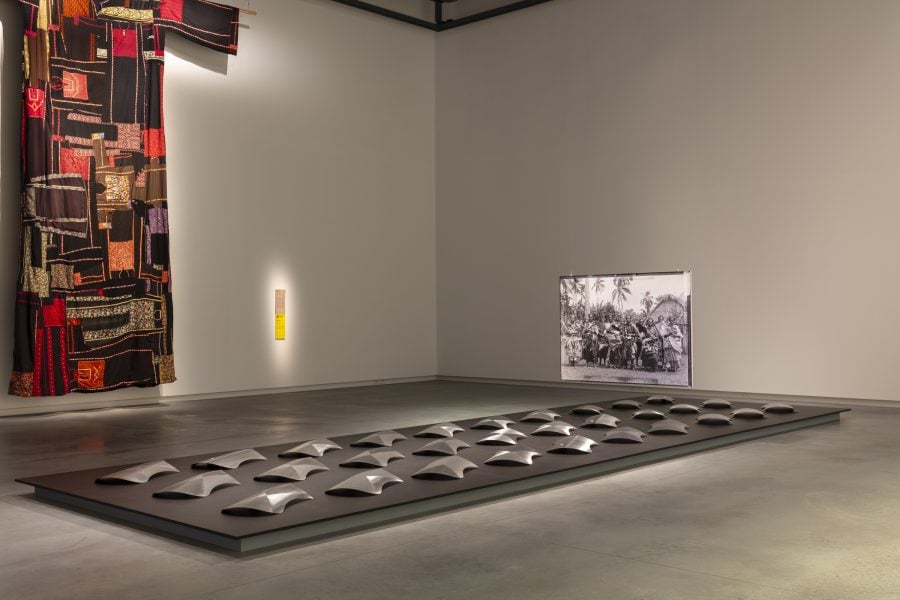
Benjamin Work, PĀPAAKI, 2026. Commissioned by the Biennale of Sydney with generous assistance from Creative New Zealand and The Chartwell Charitable Trust. Courtesy of the artist © Benjamin Work. Installation view, 25th Biennale of Sydney, Rememory, 2026, Chau Chak Wing Museum. Photograph: David James.
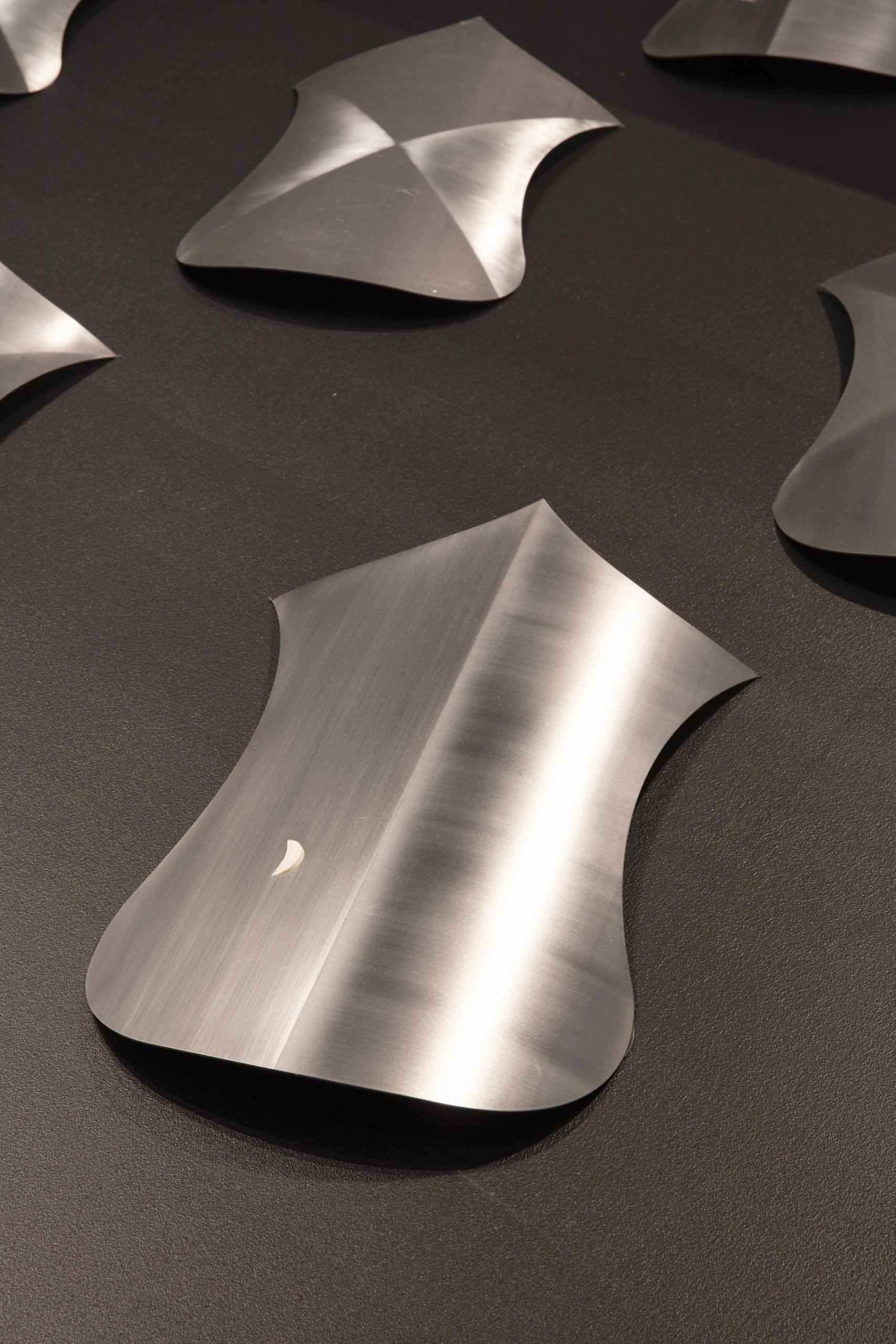
Benjamin Work, PĀPAAKI, 2026. Commissioned by the Biennale of Sydney with generous assistance from Creative New Zealand and The Chartwell Charitable Trust. Courtesy of the artist © Benjamin Work. Installation view, 25th Biennale of Sydney, Rememory, 2026, Chau Chak Wing Museum. Photograph: David James.
Benjamin Work
Born 1979, Aotearoa (New Zealand)
Lives and works in Tāmaki Makaurau (Auckland),
Aotearoa (New Zealand) Tonga/Aotearoa (New Zealand)
PĀPAAKI 2025
tin, steel, aluminium, whale bone, digital print on aluminium Commissioned by the Biennale of Sydney with generous assistance from Creative New Zealand and The Chartwell Charitable Trust
Courtesy of the artist
In 1863, Sydney convict-turned-whaling captain Thomas James McGrath made the callous transition from hunting whales to kidnapping men, women, and children for the Peruvian slave trade. The peoples of Moana Oceania suffered profoundly. McGrath’s deceit saw thirty men from Niuafo‘ou, also known as Tin Can Island, violently taken, along with half the population of the Tongan island of ‘Ata. The remaining survivors were rescued by Tonga’s sovereign, HM King Tupou I and relocated to the larger island of ‘Eua; consequently, apart from the occasional castaway or scientist, ‘Ata has remained uninhabited since McGrath’s violence.
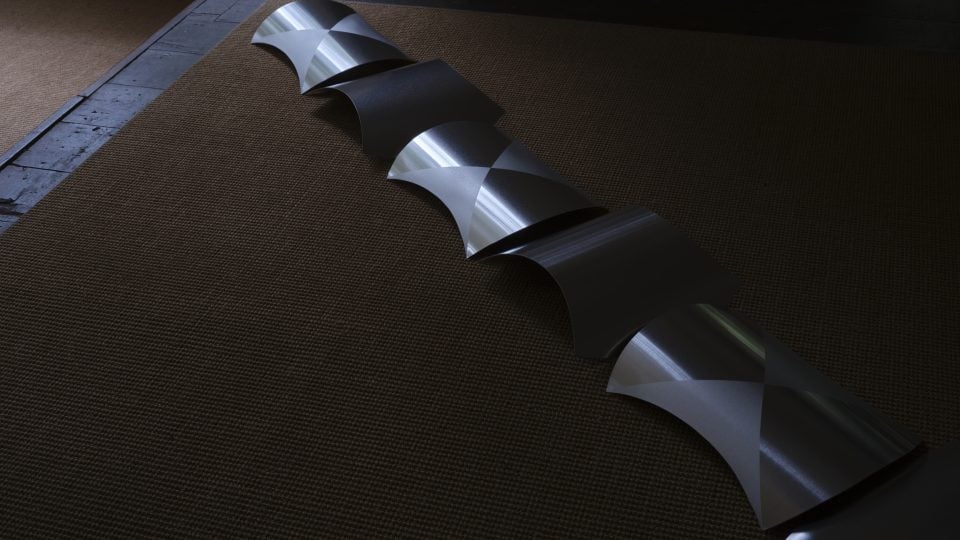
Symptomatic of a wider colonial project across the region, 19th-century archival records from Tonga show artist Benjamin Work’s ancestors combining Western clothing and materials with traditional Tongan dress. These adaptations, together with additional measures, are understood as strategies for maintaining autonomy under the threat of annexation. PĀPAAKI employs the seemingly uncustomary material of tin to create paki (dance paddles), arranged according to ancestral choreography. Following in the footsteps of a resourceful family tradition of salvaging discarded material for relatives back in Tonga, Work continues the adaptive innovations of diasporic Tongan families in tribute to the knowledge and stories that have endured waves of colonial brutality.
Featured in