
Behrouz Boochani
Born:
Kurdistan / Iran
Lives in:
Aotearoa (New Zealand)
Hoda Afshar
Born:
Iran
Lives in:
Australia
Vernon Ah Kee
Born & Lives in:
Australia
Kuku Yalandji, Waanji, Yidinji and Gugu Yimithirr peoples.
Location
- Campbelltown Arts Centre
- Chau Chak Wing Museum at the University of Sydney
Behrouz Boochani is an award-winning Kurdish writer, scholar, cultural advocate and filmmaker. His memoir No Friend But the Mountains (Pan Macmillan 2018, trans. Omid Tofighian) was written during his seven years of incarceration by the Australian government in Papua New Guinea’s Manus Island prison. His newest book, a collection of short fiction stories, is scheduled to be published in 2026. Overall, his work represents an attempt to produce knowledge and ideas within the context of colonialism — both in Kurdistan and in relation to the history and mentality of colonialism in Australia.
Hoda Afshar is a visual artist whose practice focuses on the intricate relationships between politics and aesthetics, knowledge and representation, visibility and violence. She is interested in the ways that image-making can either reinforce or challenge our common sense, and the forces that shape perception. Her works invite audiences to reflect on and to rethink how and what we see, often by drawing attention to parts of the political and visible order that have previously been excluded.
Vernon Ah Kee’s conceptual text pieces, videos, photographs and drawings form a critique of Australian culture from the perspective of the Aboriginal experience of contemporary life. Ah Kee’s works respond to the history of the romantic and exoticised portraiture of “primitives”, and effectively reposition Aboriginal culture and people in Australia from an “othered thing”, anchored in museum and scientific records to a contemporary people inhabiting real and current spaces and time.
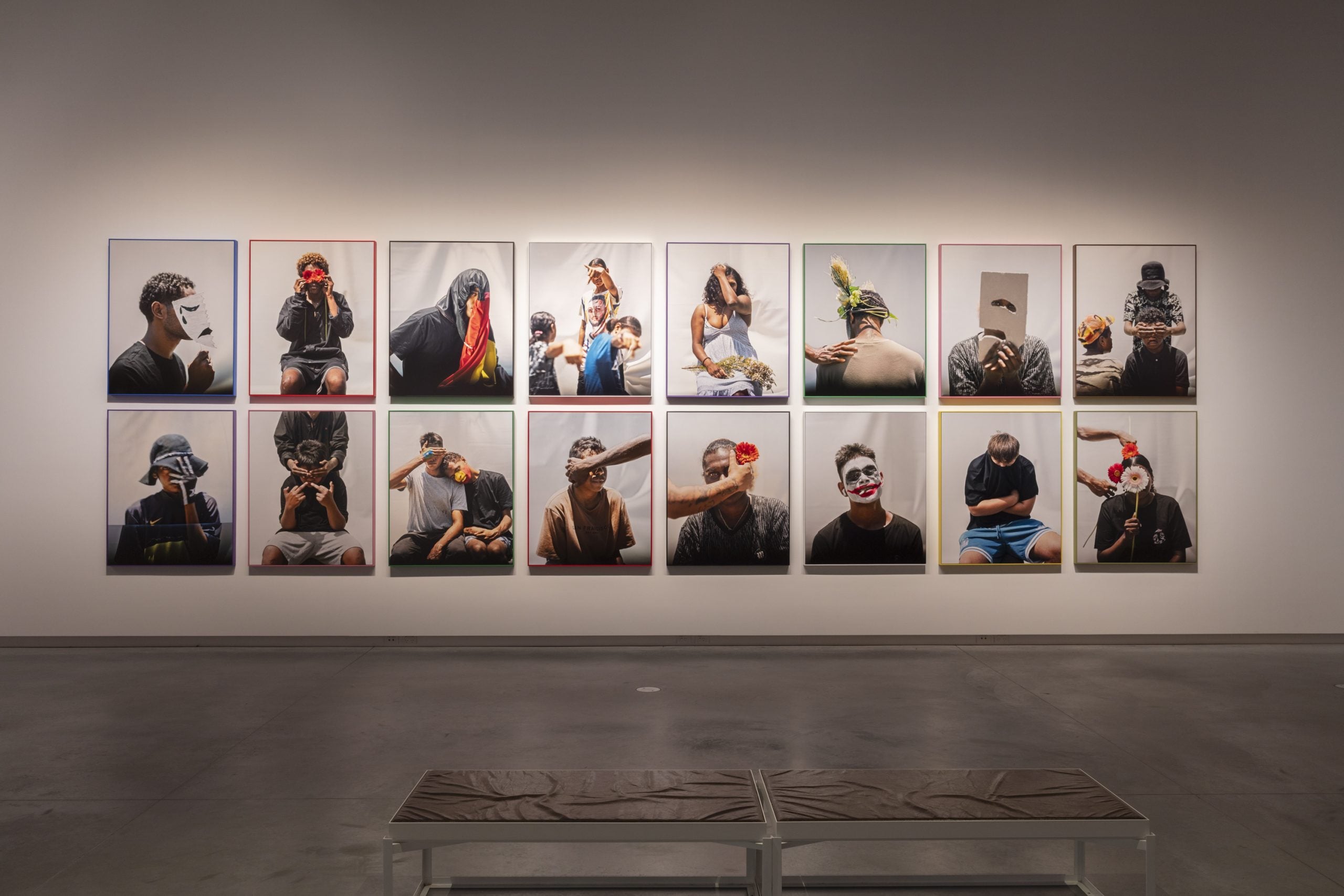
Hoda Afshar, Code Black/Riot (Portraits), 2025. Commissioned by the Biennale of Sydney with generous support from the Australian Government through Creative Australia, its principal arts investment and advisory body, and University of Melbourne, and generous assistance from the Queensland Government through Arts Queensland. Paper sponsored by Hahnemühle Fine Art Paper through Spicers Australia and printing supported by Final Grade. Courtesy of the artist and Milani Gallery, Meanjin (Brisbane) © Hoda Afshar. Installation view, 25th Biennale of Sydney, Rememory, 2026, Chau Chak Wing Museum. Photograph: David James.
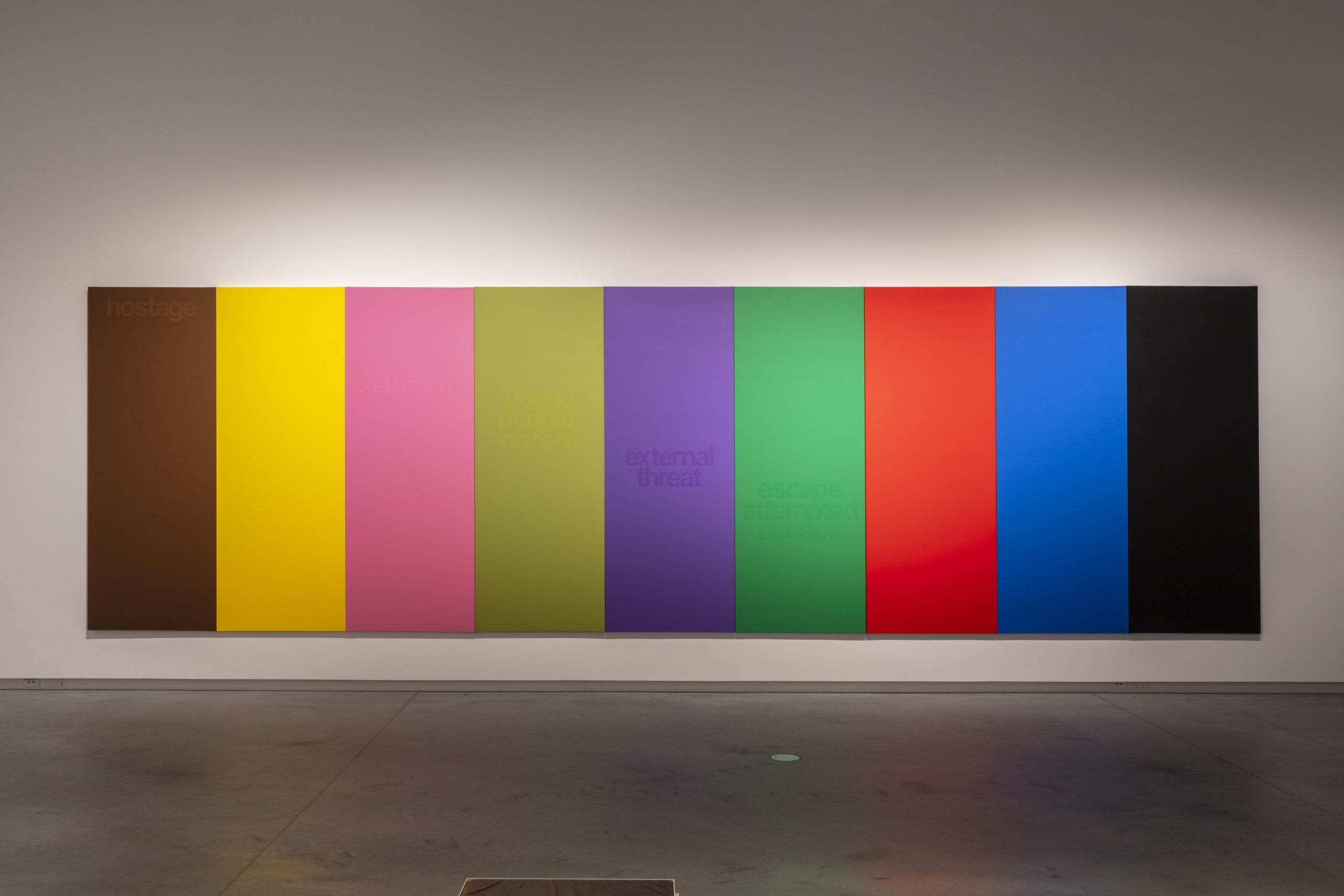
Vernon Ah Kee, Code Black, 2025. Commissioned by the Biennale of Sydney with generous support from the Australian Government through Creative Australia, its principal arts investment and advisory body, and University of Melbourne, and generous assistance from the Queensland Government through Arts Queensland © Vernon Ah Kee. Installation view, 25th Biennale of Sydney, Rememory, 2026, Chau Chak Wing Museum. Photograph: David James.
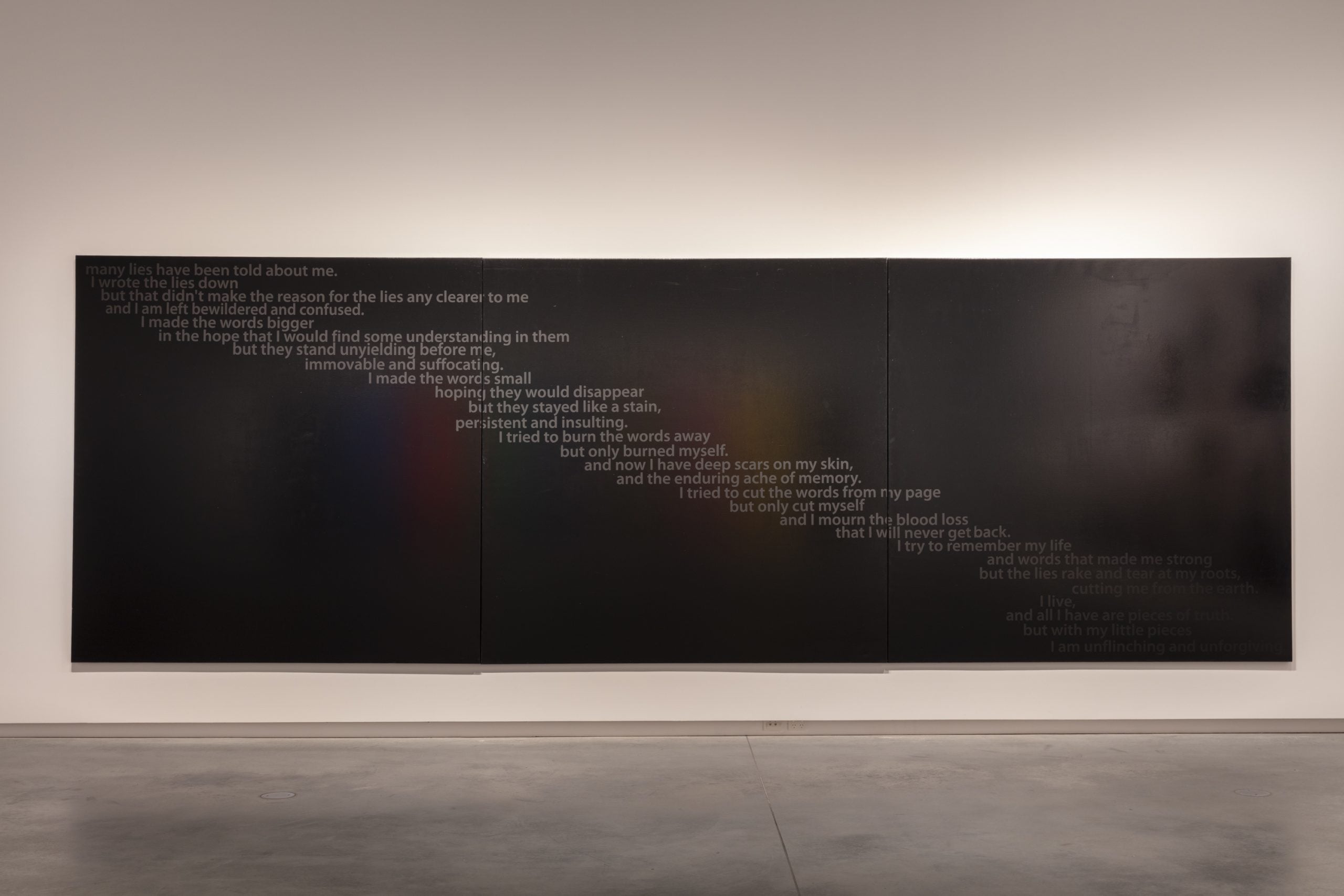
Vernon Ah Kee, Many lies, 2017. Presentation at the 25th Biennale of Sydney was made possible by the Australian Government through Creative Australia, its principal arts investment and advisory body, and University of Melbourne, and generous assistance from the Queensland Government through Arts Queensland. Courtesy of the artist and Milani Gallery, Meanjin (Brisbane) © Vernon Ah Kee. Installation view, 25th Biennale of Sydney, Rememory, 2026, Chau Chak Wing Museum. Photograph: David James.
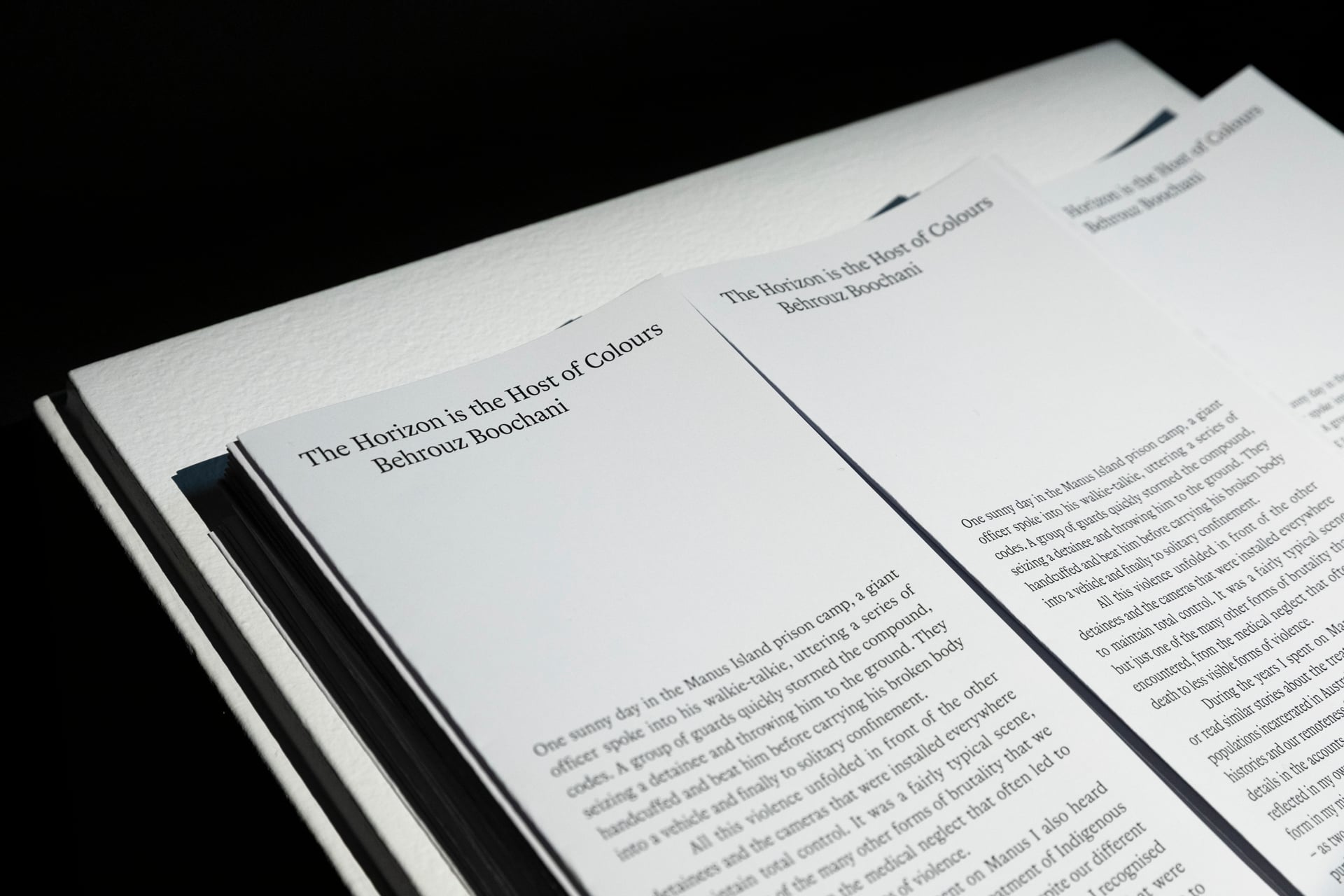
Behrouz Boochani, The Horizon is the Host of Colours, 2025. Commissioned by the Biennale of Sydney with generous support from the Australian Government through Creative Australia, its principal arts investment and advisory body, and University of Melbourne. Courtesy of the artist © Behrouz Boochani. Installation view, 25th Biennale of Sydney, Rememory, 2026, Campbelltown Arts Centre. Photograph: Silversalt Photography.
Behrouz Boochani
Born 1983, Iran
Lives and works in Wellington, Aotearoa (New Zealand)
Hoda Afshar
Born 1983, Iran
Lives and works in Naarm (Melbourne), Australia
Vernon Ah Kee
Born 1967, Australia
Lives and works in Meanjin (Brisbane), Australia
Kuku Yalandji, Waanji, Yidinji and Gugu Yimithirr people
Code Black/Riot 2025
four-channel digital video, colour, sound, looped 33 mins
Commissioned by the Biennale of Sydney with generous support from the Australian Government through Creative Australia, its principal arts investment and advisory body, and University of Melbourne, and generous assistance from the Queensland Government through Arts Queensland.
Courtesy of the artists (Hoda Afshar and Vernon Ah Kee) and Milani Gallery, Meanjin (Brisbane)
This project was developed through a series of community visits, relational dialogue and time on Country, facilitated and supported by First Nations-led advocacy organisation Change the Record with additional support from YETI (Youth Empowered Towards Independence).
Director: Hoda Afshar
Producers: Vernon Ah Kee & Hoda Afshar
Cinematography: James Wright
Editors: Hoda Afshar & James Wright
Sound design: Byron Dean & Timothy Johannessen
Colourist: Peter Hatzipavlis
Research: Behrouz Boochani, Vernon Ah Kee & Hoda Afshar
Cultural advisors: Change the Record and Vernon Ah Kee Music by: Timothy Johanessen
The Horizon is the Host of Colours 2025
Commissioned by the Biennale of Sydney with generous support from the Australian Government through Creative Australia, its principal arts investment and advisory body, and University of Melbourne
Courtesy of the artist (Behrouz Boochani)
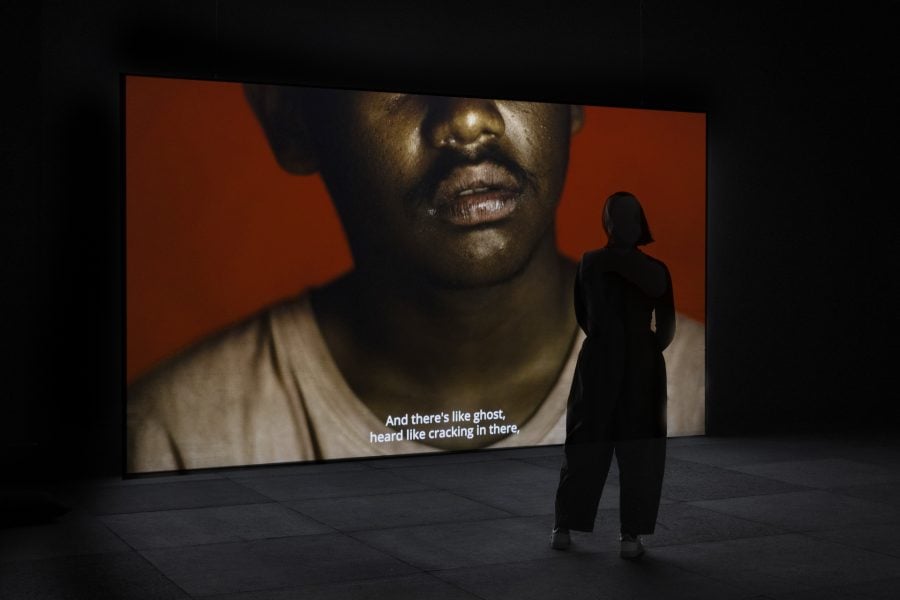
Making visible a violent system designed to be invisible, Code Black/Riot is a seminal collaboration between visual artists Hoda Afshar and Vernon Ah Kee and writer Behrouz Boochani, with support from First Nations advocacy organisation Change the Record, that exposes how youth detention systems target and violate the human rights of First Nations children in Australia.
Taking its name from the language used within these institutions, the work presents interviews with children and staff, interspersed with film taken of the subjects at play, revealing the violence inherent in a system that works to deprive children of a future.
While Code Black/Riot considers youth incarceration broadly, filming took place in North Queensland, Country connected to Vernon Ah Kee, with support from YETI (Youth Empowered Towards Independence) and Change the Record.
The decision of Hoda Afshar, Vernon Ah Kee and Behrouz Boochani to work together on this project reflects their shared belief that the crisis of mass incarceration of First Nations youth in Australia is an issue that demands not only national attention, but also collective action.
Also part of the Code Black/Riot project is an original text from Behrouz Boochani in which the writer reflects on his lived experience inside an Australian immigration detention centre on Manus Island and the parallels he sees with the system of First Nations youth detention; a series of collaborative portrait photographs by Hoda Afshar; and a group of colour field paintings by Vernon Ah Kee. These works are presented at the 25th Biennale of Sydney at the Chau Chak Wing Museum, University of Sydney.
For more information about Change the Record, and their campaign to end systemic violence against First Nations people, please visit: www.changetherecord.org.au
Behrouz Boochani
Born 1983, Iran
Lives and works in Wellington, Aotearoa (New Zealand)
The Horizon is the Host of Colours 2026
text
Commissioned by the Biennale of Sydney with generous support from the Australian Government through Creative Australia, its principal arts investment and advisory body, and University of Melbourne
Courtesy of the artist
This project was developed through a series of community visits, relational dialogue and time on Country, facilitated and supported by First Nations-led advocacy organisation Change the Record with additional support from YETI (Youth Empowered Towards Independence).
It occurred to artists Hoda Afshar and Vernon Ah Kee, following reports of the experiences of those living through the genocide in Palestine, that the targeting and detention of children is a proven strategy for enforcing Settler-Colonial power systems both abroad and at home. Making visible a violent system intended to be invisible, Code Black/Riot exposes how youth detention systems target and violate the human rights of First Nations children in Australia.
Created in consultation with First Nations led organisations and communities, workers and children impacted by youth detention in Queensland, Ah Kee’s paintings recall the secretive colour ‘codes’ used internally by these institutions, including Code Black for riot, Code Pink for medical emergency or suicide, and Code Yellow for prisoner violence. The vibrancy of these tones stands in stark juxtaposition to the darkness of their symbology, while the embedded text speaks to the absurdity of a child’s innocent vitality forced into submission.
Hoda Afshar
Born 1983, Iran
Lives and works in Naarm (Melbourne), Australia
Code Black/Riot (Portraits) 2025
inkjet prints
Commissioned by the Biennale of Sydney with generous support from the Australian Government through Creative Australia, its principal arts investment and advisory body, and University of Melbourne, and generous assistance from the Queensland Government through Arts Queensland. Paper sponsored by Hahnemühle Fine Art Paper through Spicers Australia and printing supported by Final Grade
Courtesy of the artist (Hoda Afshar) and Milani Gallery, Meanjin (Brisbane)
Vernon Ah Kee
Born 1967, Australia
Lives and works in Meanjin (Brisbane), Australia
Kuku Yalandji, Waanji, Yidinji and Gugu Yimithirr people
Code Black 2025
acrylic on canvas
Commissioned by the Biennale of Sydney with generous support from the Australian Government through Creative Australia, its principal arts investment and advisory body, and University of Melbourne, and generous assistance from the Queensland Government through Arts Queensland
Many lies 2017
acrylic and enamel on linen
Presentation at the 25th Biennale of Sydney was made possible by the Australian Government through Creative Australia, its principal arts investment and advisory body, and University of Melbourne, and generous assistance from the Queensland Government through Arts Queensland
Courtesy of the artist and Milani Gallery, Meanjin (Brisbane)
Alongside these works, Afshar’s self-anonymised portraits of children with lived experience of incarceration are a testament to the humanity, energy and character of First Nations young people who refuse to be defined by the systemic and state violence facing them. Participants were invited to have their portraits taken, using some means of their own choosing to conceal their identities while making a personal statement.
Each subject brings to life the strength and spirit of these young First Nations people whose very existence resists the attempted erasure by the colonial ideologies that are built into modern Australia.
Featuring an original text from Behrouz Boochani, reflecting his lived experience inside an Australian immigration detention centre on Manus Island in Papua New Guinea, and the parallels he sees with the system of indigenous youth detention.
The decision of the artists to work together on this project reflects their shared belief that the crisis of mass incarceration of First Nations youth in Australia is an issue that demands not only national attention, but also collective action.
The works are accompanied by a newly commissioned video installation, presented as part of the 25th Biennale of Sydney at Campbelltown Arts Centre.
Written by Hoor Al Qasimi, Artistic Director, 25th Biennale of Sydney: Rememory
For more information about Change the Record, and their campaign to end systemic violence against First Nations people, please visit: www.changetherecord.org.au