Hui Ye
Born:
China
Lives in:
Vienna
Location
- White Bay Power Station
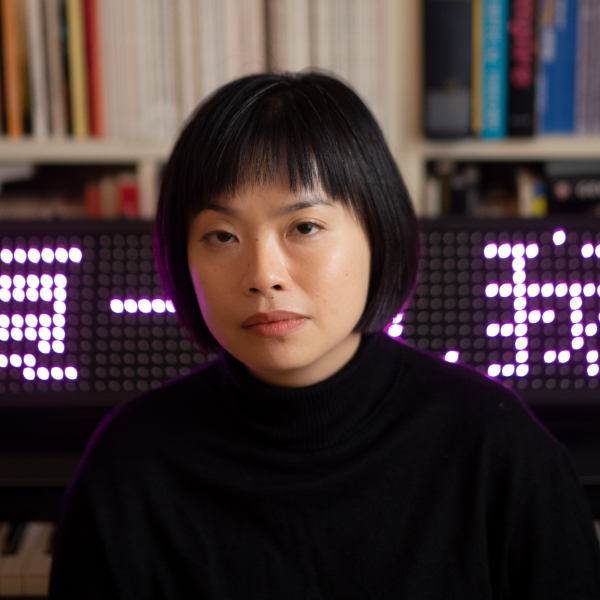
Hui Ye is an artist and composer based in Vienna. Working across video, sound installation, and sonic composition, her practice explores the intersections of sound, history, and identity. Listening lies at the centre of her work—as a political, social, and emotional act shaping both collective and individual experience. Her recent research focuses on the human and machinic voice, examining how diverse forms of vocalisation and aural memory become acts of self-articulation and the reclaiming of institutional narratives.
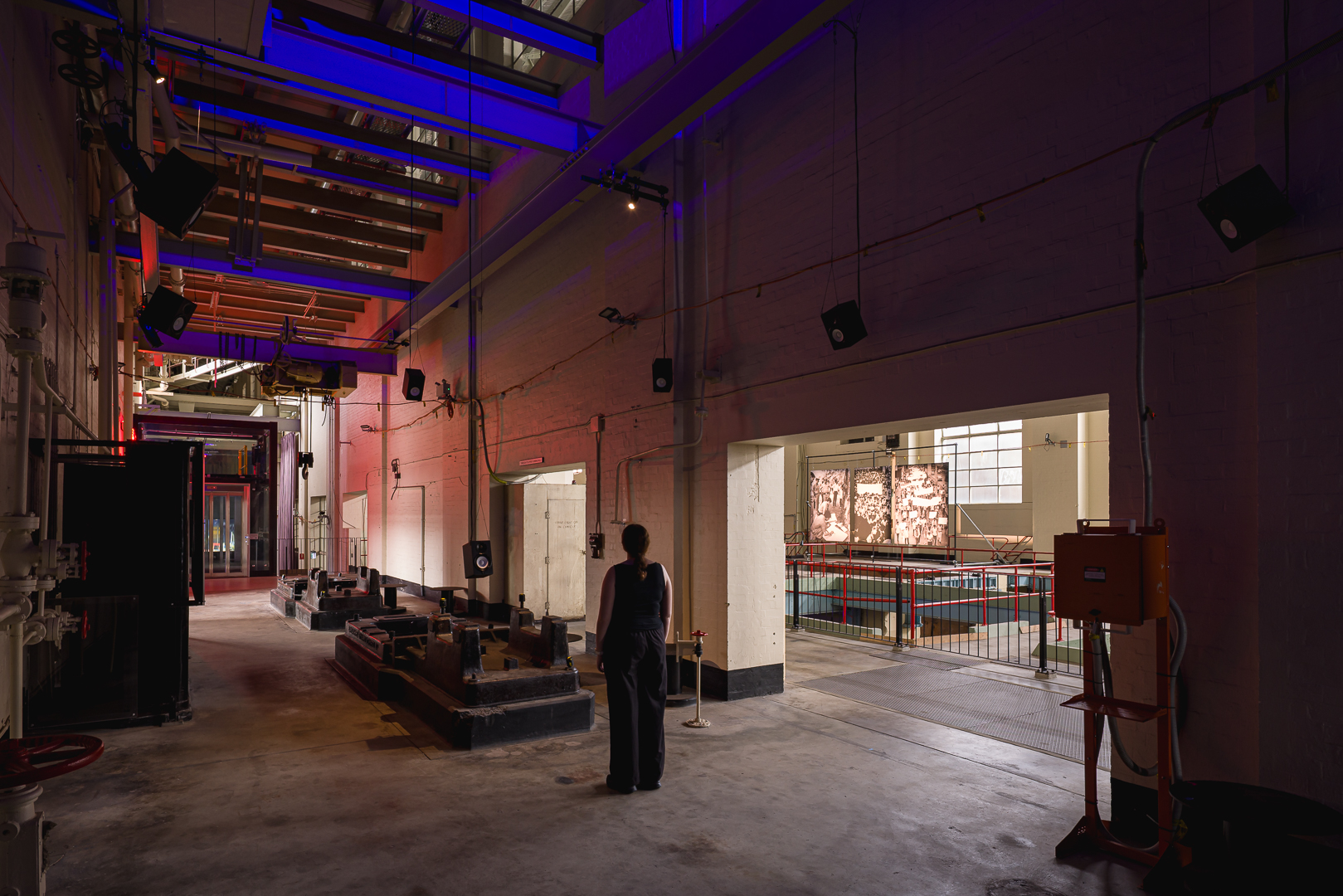
Hui Ye, The Chant, 2024–2025. This version was created for the Biennale of Sydney with generous support from Phileas – The Austrian Office for Contemporary Art, and Federal Ministry Housing, Arts, Culture, Media, and Sport Republic of Austria. Originally commissioned by Times Museum, Guangzhou. Courtesy of the artist © Hui Ye. Installation view, 25th Biennale of Sydney, Rememory, 2026, White Bay Power Station. Photograph: Document Photography.
Hui Ye
Born 1981, Guangzhou, China
Lives and works in Vienna, Austria
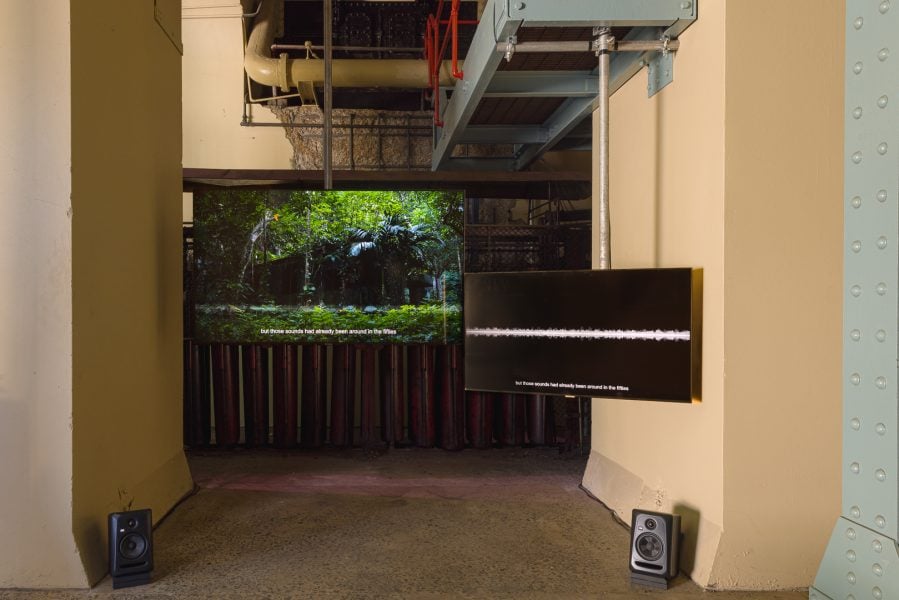
Songs of Oblivion: Prelude 2019 – 2026
two channel video installation with mixed media, looped 20 mins
This version was created for the Biennale of Sydney with generous support from Phileas – The Austrian Office for Contemporary Art, and Federal Ministry Housing, Arts, Culture, Media, and Sport Republic of Austria
Originally supported by the artistic research project Creative (Mis)understanding (2018-2022) at the University of Music and Performing Arts Vienna
Courtesy of the artist
Interested in the socio-political elements of listening, artist Hui Ye interrogates the way sonic cultures can shape identities.
Songs of Oblivion: Prelude documents the unique songs of the Tao people, a small group of Indigenous Taiwanese people native to the island Lanyu. The Tao people’s general exclusion from the Taiwanese socio-political system was exacerbated in 1952, when the Taiwanese government placed the island under military administration, and further intensified in 1958 with the establishment of ten correctional labour camps collectively referred to as the Lanyu Farm.
Enduring more than three decades of violent and oppressive operation, the impact of Lanyu Farm, and the associated isolation from broader Taiwanese culture, resonates in the lives and singing traditions of the Tao people to this day. Capturing the stories and poetry of a hushed history, Hui Ye’s Songs of Oblivion: Prelude is a dedication to the transformative and political power of singing and listening. Bringing together fragments of a shattered history, Hui Ye asks how personal and collective memory can be reshaped through sound and music.
The Chant 2024 – 2025
multichannel audio installation with mixed media, looped 11:18 mins
This version was created for the Biennale of Sydney with generous support from Phileas – The Austrian Office for Contemporary Art, and Federal Ministry Housing, Arts, Culture, Media, and Sport Republic of Austria
Originally commissioned by Times Museum, Guangzhou Courtesy of the artist
Interested in the socio-political elements of listening, artist Hui Ye interrogates the way sonic cultures can shape identities.
Her audio piece The Chant draws upon the stories from the Tao community, a small group of Indigenous Taiwanese people native to the island Lanyu. Isolated from the mainland during Japanese colonisation (1895–1945), Lanyu remained largely outside the Taiwanese socio-political system until 1952, when the Nationalist government established the Lanyu Command Headquarters and placed the island under military rule. In 1958, ten correctional labour camps, collectively known as the Lanyu Farm, were set up and spread over almost the whole island.
Over three decades of operation, the local people (the Tao community) witnessed the prisoners’ suffering under forced, intensive physical labour, while their own lives and cultural traditions were being severely disrupted by the presence of the facility and its inmates. The trauma of this cultural rupture is still felt on the island, and it is the community’s recollections of this period which are translated in The Chant. Traditionally a tool for the transmission of knowledge, experience, and emotion, the Tao people’s singing is interrupted throughout The Chant by abstracted auditory “memories” which point to the ways in which political forces both corrupt, and reshape, collective histories.
Featured In